
The City of Jerash: A Complete Travel Guide to Jordan’s Ancient Roman Wonder
A Traveler’s First Experience in The City of Jerash
"When I arrived at The City of Jerash, I felt like I had stepped into another time. Walking between the massive Roman columns, ancient streets, and impressive temples, I could almost imagine the sounds of life from thousands of years ago. The scale of the ruins surprised me — it was not just a historical site, but a real ancient city that still tells its story through every stone. Exploring Jerash became one of the most unforgettable parts of my Jordan journey."
The City of Jerash is one of the best-preserved ancient Roman cities in the world and one of Jordan’s most important archaeological treasures. Located in northern Jordan, Jerash is famous for its remarkable Roman architecture, impressive ruins, and fascinating history that stretches back more than two thousand years.
Often called the “Pompeii of the East,” Jerash offers visitors the chance to explore ancient temples, theaters, colonnaded streets, and public spaces that reveal the greatness of the Roman civilization.
Today, The City of Jerash is one of Jordan’s most popular cultural attractions, welcoming travelers who want to experience history, architecture, and ancient life in an extraordinary setting.
What Is The City of Jerash?
The City of Jerash is an ancient archaeological site located near the modern city of Jerash in Jordan.
It was once a thriving Roman city known as Gerasa, and it became one of the most important cities of the Decapolis — a group of ten cities influenced by Greek and Roman culture.
The ancient city is famous for its incredible preservation, including:
- Roman streets
- Temples
- Theaters
- Public squares
- Ancient gates
- Colonnaded avenues
Unlike many archaeological sites where only small remains survive, Jerash allows visitors to imagine what daily life looked like during the Roman period.
Quick Facts About The City of Jerash
Location
The City of Jerash is located in northern Jordan.
Approximate distances:
- Around 50 km north of Amman
- About 45–60 minutes by car from Amman
- Close to Ajloun and other northern Jordan attractions
Its location makes it an easy day trip from the capital.
Opening Hours
Jerash Archaeological Site is generally open:
- Morning until afternoon or early evening
Opening hours may change depending on:
- Season
- Holidays
- Special events
Entrance Prices
Entrance fees vary depending on visitor categories and current regulations.
Tickets usually include access to the main archaeological areas.
Visit Duration
Most travelers spend:
- 2–3 hours exploring the site
- Half a day if combined with nearby attractions
Best Time to Visit
The best seasons to visit Jerash are:
Spring (March–May)
Perfect weather for walking through the ruins.
Autumn (September–November)
Comfortable temperatures and beautiful scenery.
Winter
A quieter period with cooler weather.
Summer can be hot, especially during midday.
History and Background of The City of Jerash
The history of Jerash dates back thousands of years.
Before becoming a Roman city, the area was inhabited by ancient communities. However, Jerash reached its greatest importance during the Roman period.
After Roman influence expanded into the region, Gerasa became part of the Roman Empire and developed into a wealthy and organized city.
During the 1st and 2nd centuries AD, Jerash experienced a golden age.
The city grew with:
- Grand temples
- Roads
- Public buildings
- Entertainment spaces
- Commercial areas
Its prosperity came from trade, agriculture, and its strategic location.
Jerash During the Roman Period
During Roman rule, Jerash became one of the most impressive cities in the eastern Mediterranean.
The city was designed according to Roman urban planning principles.
It included:
- A central forum
- A main street called the Cardo Maximus
- Religious temples
- Theaters
- Public baths
The Romans created a city that reflected their engineering skills and cultural influence.
The Golden Age of Jerash
The 2nd century AD is considered the peak period of Jerash.
During this time, many of the monuments visitors see today were built.
The city became famous for:
- Beautiful architecture
- Advanced infrastructure
- Cultural activities
Its wealth allowed citizens to build impressive structures that still stand today.
What to Expect When Visiting The City of Jerash
A visit to Jerash is a journey through ancient Roman history.
The Hadrian’s Arch
One of the first landmarks visitors see is Hadrian’s Arch.
Built to honor Emperor Hadrian’s visit to Jerash in 129 AD, the arch was designed as a grand entrance to the city.
Its size and decoration show the importance of Jerash during the Roman era.
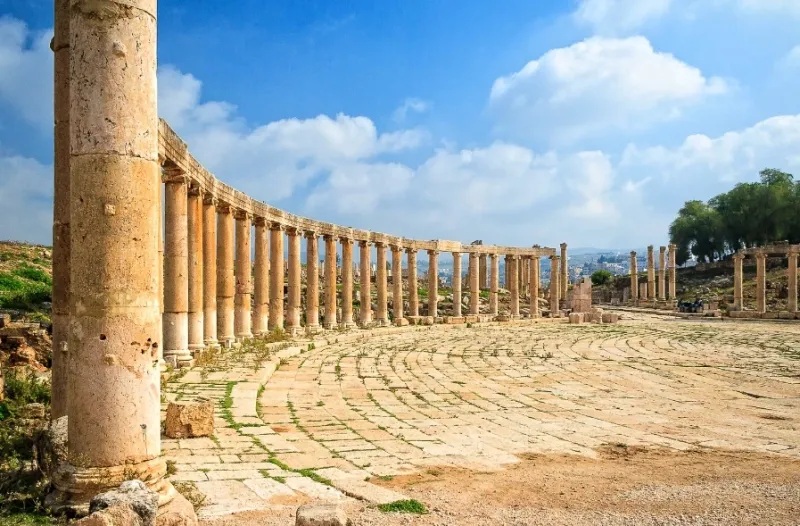
The Oval Plaza
The Oval Plaza is one of Jerash’s most unique features.
Surrounded by columns, this large open space was used for:
- Public gatherings
- Events
- Social activities
Its unusual oval design makes it one of the most recognizable areas of the city.
The Cardo Maximus
The Cardo Maximus was the main street of ancient Jerash.
Walking along this ancient road, visitors can see:
- Hundreds of columns
- Stone paving
- Remains of ancient shops and buildings
It provides a strong feeling of what Roman city life was like.
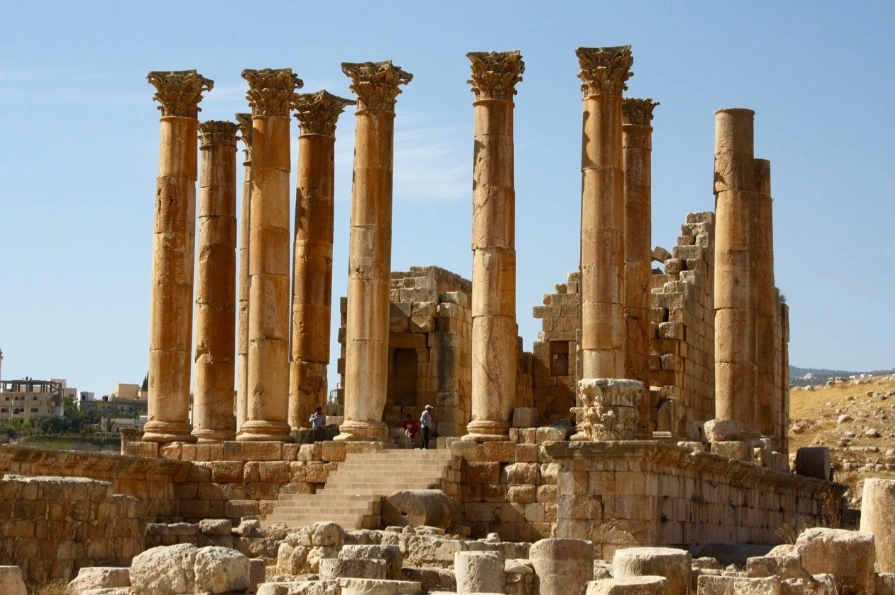
The Temple of Artemis
The Temple of Artemis is one of the most impressive monuments in Jerash.
Dedicated to Artemis, the goddess of hunting and nature, the temple was one of the most important religious centers in the ancient city.
Visitors can admire:
- Massive Corinthian columns
- Beautiful architectural details
- Incredible views over the archaeological site
The temple shows the importance of religion in Roman society and the high level of engineering used by ancient builders.
The Temple of Zeus
Another important landmark in Jerash is the Temple of Zeus.
Located on a hill overlooking the city, the temple offers visitors beautiful views of the surrounding area.
The structure reflects the religious traditions of the Roman period and highlights Jerash’s importance as a major ancient city.
The South Theater
The South Theater is one of the best-preserved theaters in Jerash.
Built during the Roman period, it could accommodate thousands of spectators.
Visitors today can still see:
- Stone seating areas
- The stage area
- Excellent acoustics
During special events, performances are sometimes held here, allowing visitors to experience the atmosphere of ancient Roman entertainment.
The North Theater
The North Theater is another impressive structure in Jerash.
Although smaller than the South Theater, it played an important role in the city’s cultural life.
The theater demonstrates how entertainment and public gatherings were important parts of Roman society.
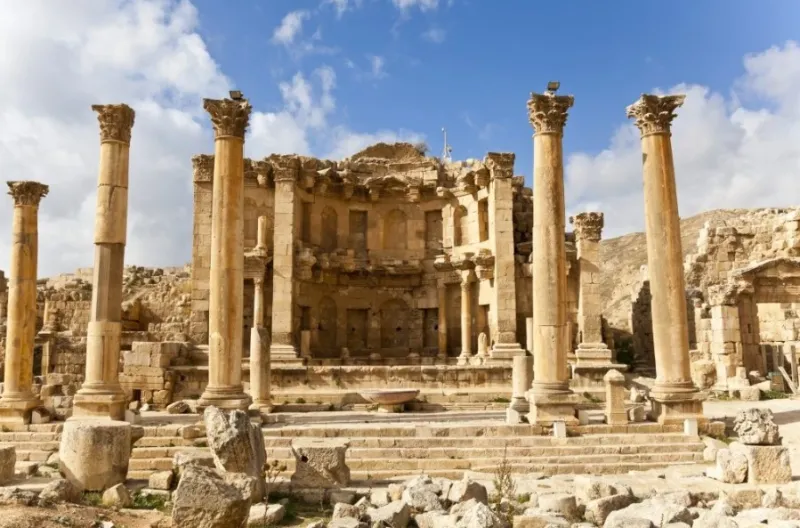
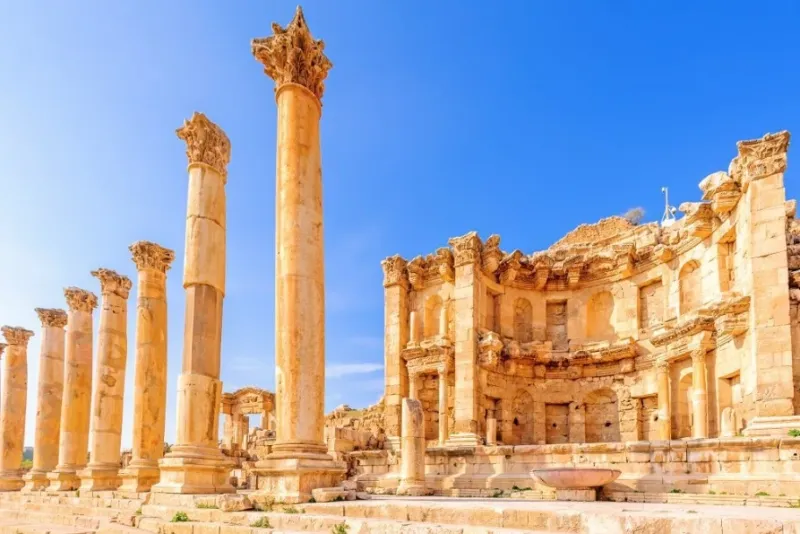
The Nymphaeum
The Nymphaeum was a beautiful public fountain dedicated to water nymphs.
In ancient times, it was decorated with:
- Statues
- Decorative stonework
- Water features
The structure reflects the advanced water systems and public architecture of Roman cities.
The Ancient Gates and Streets of Jerash
Walking through Jerash feels like exploring a real ancient city.
Visitors can discover:
- Monumental gates
- Long streets
- Public buildings
- Ancient marketplaces
The layout of the city allows travelers to understand how people lived, worked, and gathered thousands of years ago.
Facts About The City of Jerash: Crowds, Distance, Weather & Tips
Crowds at Jerash
Jerash is one of Jordan’s most visited historical attractions, but it usually feels more relaxed than some of the country’s most famous sites.
The busiest times are:
- Spring travel season
- Holidays
- Midday hours
For the best experience:
- Arrive early
- Visit during cooler hours
- Allow enough time to explore
Distance from Major Jordan Attractions
Jerash has a convenient location for travelers.
Approximate distances:
- Amman: 50 km
- Ajloun Castle: around 30 minutes
- Dead Sea: around 1.5–2 hours
- Petra: around 3 hours
Many visitors include Jerash in a northern Jordan day tour from Amman.
Weather in Jerash
Jerash has a Mediterranean climate.
Spring
The ideal season for walking around the ruins.
Summer
Hot and sunny.
Travelers should:
- Carry water
- Wear a hat
- Use sunscreen
Autumn
Comfortable temperatures and excellent sightseeing conditions.
Winter
Cooler weather with occasional rain.
Practical Travel Tips for Visiting The City of Jerash
Wear Comfortable Shoes
The archaeological site is large and requires walking on:
- Stone paths
- Ancient streets
- Uneven surfaces
Comfortable shoes will make your visit easier.
Bring Water
Jerash is an outdoor attraction, and exploring the ruins can take several hours.
Visit With a Guide
A guide can help explain:
- Roman history
- Architectural details
- Stories behind the monuments
This makes the experience much more meaningful.
Take Your Time
Do not rush through Jerash.
Some of the best moments come from noticing small details:
- Ancient carvings
- Column designs
- Stone inscriptions
Real Traveler Insights About Jerash
One of our travelers mentioned:
"Jerash was one of the biggest surprises of my Jordan trip. I expected ruins, but I found a complete ancient city. Walking through the Roman streets made history feel real."
Visitors often say that Jerash feels different because the site is not only a collection of monuments — it is a place where you can imagine ancient life continuing around you.
Many travelers recommend spending enough time to explore beyond the main areas.
Why Visit The City of Jerash?
The City of Jerash is a perfect destination for travelers who love:
- Ancient history
- Archaeology
- Architecture
- Cultural experiences
Its incredible preservation makes it one of the best places in the Middle East to experience Roman civilization.
Unlike many archaeological sites that require imagination, Jerash allows visitors to walk through a city that still reveals its original design.
Frequently Asked Questions About The City of Jerash
What is The City of Jerash famous for?
Jerash is famous for its exceptionally preserved Roman ruins, including temples, theaters, streets, and public buildings.
How old is Jerash?
Jerash has a history stretching back thousands of years, with its greatest development occurring during the Roman period.
How long does it take to visit Jerash?
Most visitors need around 2–3 hours to explore the main attractions.
Is Jerash worth visiting?
Yes. Jerash is one of Jordan’s most important historical sites and offers a unique look into Roman civilization.
Can families visit Jerash?
Yes, Jerash is suitable for families, but comfortable shoes and water are recommended.
What is the best time to visit Jerash?
Spring and autumn are the best seasons because the weather is ideal for outdoor exploration.
Can Jerash be visited from Amman?
Yes, Jerash is one of the easiest day trips from Amman, taking around 45–60 minutes by car.
Conclusion: Explore The City of Jerash and Walk Through Ancient History
The City of Jerash is one of Jordan’s greatest historical treasures. From its impressive Roman streets and ancient theaters to its magnificent temples and peaceful atmosphere, Jerash offers a journey into a world that existed thousands of years ago.
Every column, stone pathway, and monument tells a story about the people who built and lived in this remarkable city.
For travelers visiting Jordan, Jerash is an unforgettable destination that combines history, culture, and incredible architecture.
Book your Jordan Holiday Packages with us today and discover the ancient wonders of Jerash with expert guides, comfortable transportation, and unforgettable memories.