
North Theater of Jerash: A Complete Travel Guide to Jordan’s Ancient Roman Performance Venue
A Traveler’s First Experience at the North Theater of Jerash
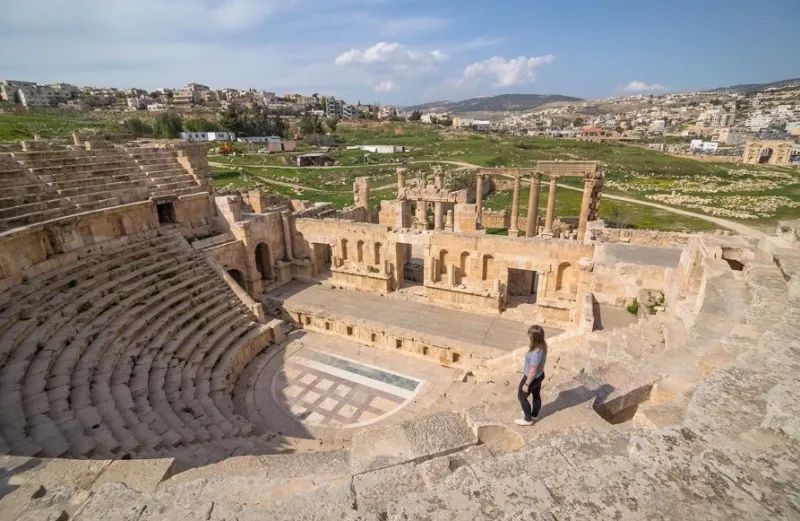
"As I continued exploring the ancient streets of Jerash, I followed the colonnaded Cardo Maximus until I reached a beautiful stone theater tucked into the hillside. Unlike the larger South Theater, the North Theater felt quieter and more intimate. Standing on its ancient stage, I imagined Roman speeches echoing through the rows of limestone seats while citizens gathered to discuss politics and celebrate important events. It wasn't just another ruin—it was a place where the voices of an ancient civilization once came to life."
The North Theater of Jerash is one of the most fascinating monuments inside the ancient city of Jerash, Jordan. Built during the Roman Empire, this beautifully preserved theater once hosted civic meetings, performances, and public gatherings. Although smaller than the famous South Theater, the North Theater offers visitors a more intimate glimpse into daily life in ancient Gerasa.
Today, the theater is one of the highlights of the Jerash Archaeological Site, attracting history lovers, photographers, archaeologists, and travelers eager to experience one of the world's best-preserved Roman cities.
What Is the North Theater of Jerash?
The North Theater of Jerash is an ancient Roman theater located inside the archaeological city of Jerash in northern Jordan.
Originally constructed during the 2nd century AD, the theater was primarily used for:
- Public meetings
- Political gatherings
- Cultural performances
- Musical presentations
- Civic ceremonies
Unlike the much larger South Theater, the North Theater served smaller audiences and was closely associated with the city's local government and elite citizens.
Its excellent preservation allows visitors to admire Roman engineering, architectural design, and remarkable acoustics nearly two thousand years after it was built.
Quick Facts About the North Theater of Jerash
Location
The North Theater is located inside the Jerash Archaeological Site, near the Cathedral of Jerash and the Temple of Artemis.
Approximate distances include:
- 50 km north of Amman
- Around 45–60 minutes by car
- Easily reached while walking through the archaeological park
Opening Hours
The theater follows the official opening hours of the Jerash Archaeological Site.
Generally open:
- Morning until late afternoon
Hours may vary depending on:
- Season
- Public holidays
- National celebrations
Entrance Fee
Access to the North Theater is included in the Jerash entrance ticket.
Visitors using the Jordan Pass usually enter without paying an additional fee.
Recommended Visit Duration
Most visitors spend:
- 20–30 minutes exploring the theater
- Around 3–4 hours exploring the complete archaeological city
Best Time to Visit
Spring (March–May)
Ideal weather for sightseeing and photography.
Autumn (September–November)
Comfortable temperatures with fewer crowds.
Winter
Cool and peaceful.
Summer
Morning visits are recommended before temperatures become too high.
History of the North Theater of Jerash
The North Theater was constructed around 165 AD, during the reign of Emperor Marcus Aurelius.
Initially, it contained approximately 14 rows of seating and was designed to accommodate around 1,500 spectators.
Unlike theaters built mainly for dramatic performances, historians believe the North Theater functioned primarily as a venue for city council meetings and official civic events.
Later, during the 3rd century AD, the theater was expanded with additional seating as Jerash continued to prosper under Roman rule.
Throughout the Byzantine period, the theater remained part of the city's urban landscape before eventually falling into disuse following earthquakes and changing political conditions.
Architecture of the North Theater
The North Theater is an excellent example of Roman engineering.
Visitors can admire:
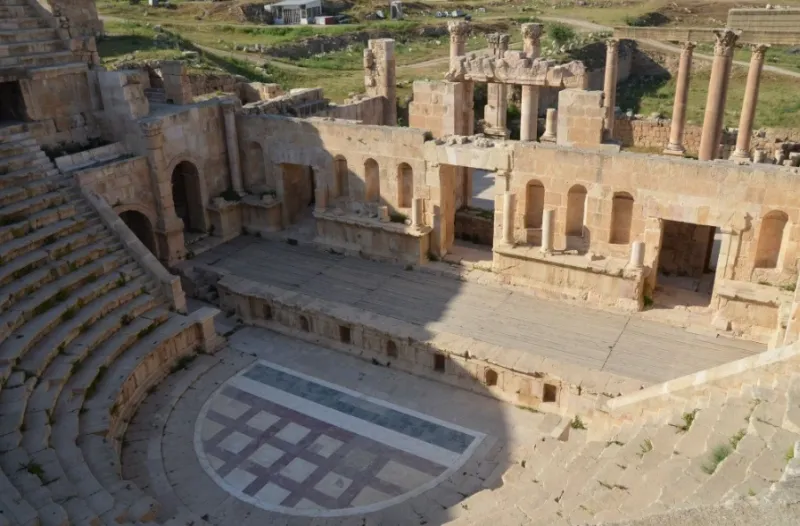
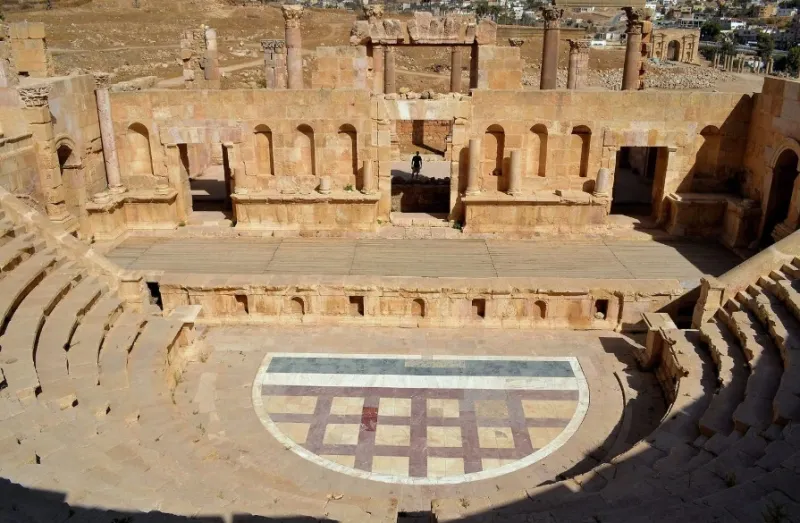
- Semi-circular seating arrangement
- Limestone construction
- Beautiful stone stairways
- Orchestra area
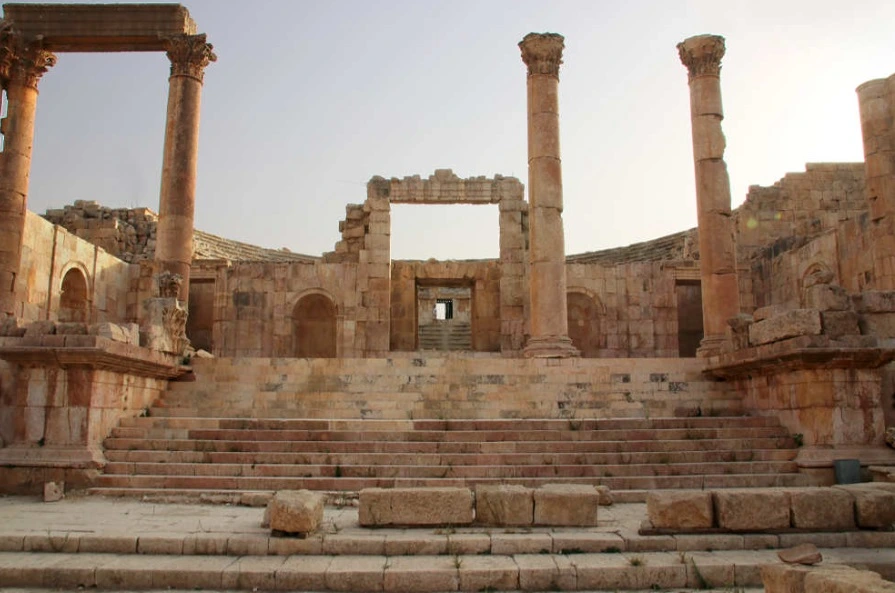
- Stage remains
- Decorative architectural elements
- Excellent acoustics
The Romans carefully designed the theater so voices projected naturally without modern amplification.
Even today, visitors standing on the stage can clearly hear conversations from the upper seating rows.
What to Expect When Visiting the North Theater
The North Theater offers a quieter experience compared to other major monuments inside Jerash.
Visitors can expect:
Excellent Acoustics
Test the remarkable Roman engineering by speaking softly from the stage.
Beautiful Views
The upper seating provides panoramic views across the archaeological city.
Historic Atmosphere
Unlike modern theaters, every stone reflects centuries of history.
Easy Walking Access
The theater is located along the main visitor route through Jerash, making it easy to include during your tour.
Outstanding Photography
Morning and late afternoon light beautifully illuminate the limestone seating and surrounding ruins.
Why the North Theater Is Different from the South Theater
Although both theaters were built by the Romans, they served different purposes.
North Theater
- Smaller
- Civic meetings
- Political gatherings
- Local ceremonies
- Approximately 1,500 spectators
South Theater
- Larger
- Public entertainment
- Musical performances
- Festivals
- Approximately 3,000–5,000 spectators
Together, they demonstrate the importance of public life in ancient Gerasa.
Facts About the North Theater of Jerash: Crowds, Distances, Weather & Travel Tips
The North Theater of Jerash is one of the city's hidden treasures. While many visitors head first to the Oval Plaza or the Temple of Artemis, the North Theater offers a quieter and more intimate experience that showcases the civic and cultural life of ancient Gerasa. Its excellent preservation, remarkable acoustics, and historical importance make it a must-see attraction within the Jerash Archaeological Site.
Crowds at the North Theater of Jerash
Compared to the South Theater, the North Theater generally attracts fewer visitors, making it one of the most peaceful places to explore in Jerash.
The busiest times are:
- Spring (March to May)
- Weekends
- Public holidays
- Between 10:00 AM and 1:00 PM
For a quieter experience, consider visiting:
- Early in the morning
- Late afternoon
- Weekdays
Since most tour groups spend more time at the larger South Theater, visitors often enjoy the North Theater without large crowds.
Distance from Major Attractions
The North Theater is centrally located within the archaeological city and can easily be combined with Jerash's other famous landmarks.
Approximate distances include:
- Amman: 50 km (45–60 minutes)
- Queen Alia International Airport: 75 km
- Ajloun Castle: 30 km
- Dead Sea: Approximately 110 km
- Petra: Around 230 km
Nearby attractions within Jerash include:
- Temple of Artemis
- Cathedral of Jerash
- Cardo Maximus
- Nymphaeum
- Oval Plaza
- Temple of Zeus
- South Theater
Because everything is within walking distance, visitors can comfortably explore the entire archaeological city in a single day.
Weather at the North Theater
The theater is completely open-air, making weather an important factor when planning your visit.
Spring (March–May)
Spring is considered the best season thanks to:
- Mild temperatures
- Comfortable walking conditions
- Blooming landscapes
- Excellent visibility
Summer (June–August)
Summer temperatures often exceed 35°C (95°F).
Visitors should:
- Arrive early
- Wear lightweight clothing
- Carry drinking water
- Use sunscreen
- Wear sunglasses and a hat
Autumn (September–November)
Autumn provides pleasant temperatures and ideal conditions for sightseeing and photography.
Winter (December–February)
Winter is cooler with occasional rainfall.
The smaller number of tourists makes the experience even more enjoyable.
Practical Travel Tips
Wear Comfortable Walking Shoes
The archaeological site covers a large area with:
- Ancient stone streets
- Uneven limestone pavement
- Historic staircases
Supportive footwear is highly recommended.
Bring Plenty of Water
Exploring Jerash usually involves several hours of walking.
Staying hydrated is essential, especially during warmer months.
Test the Acoustics
One of the highlights of the North Theater is its exceptional sound quality.
Stand in the center of the stage and speak normally—you'll notice how your voice naturally carries throughout the seating area without any amplification.
Hire a Professional Guide
A licensed guide can explain fascinating details about:
- Roman civic life
- Theater construction
- Ancient performances
- Political meetings
- Archaeological discoveries
These insights greatly enhance the overall experience.
Take Your Time
Although smaller than the South Theater, the North Theater contains many architectural details worth observing, including:
- Seating arrangement
- Stone stairways
- Orchestra floor
- Stage remains
- Decorative carvings
- Viewing platforms
Nearby Attractions
The North Theater is surrounded by some of Jerash's most important archaeological monuments.
These include:
Temple of Artemis
The city's largest and most impressive Roman temple.
Cathedral of Jerash
A beautiful Byzantine church reflecting Jerash's Christian heritage.
Cardo Maximus
The famous colonnaded Roman street that formed the city's main commercial avenue.
Nymphaeum
An elegant Roman public fountain showcasing advanced hydraulic engineering.
Oval Plaza
Jerash's iconic oval-shaped public square surrounded by magnificent columns.
South Theater
The city's largest Roman theater, still used today for concerts and cultural performances.
Real Traveler Insights
One of our travelers mentioned:
"The North Theater became one of my favorite places in Jerash because it felt much more personal than the larger monuments. Sitting on the ancient stone seats while overlooking the ruins made it easy to imagine life here nearly two thousand years ago."
Visitors often say the North Theater is one of Jerash's hidden gems. While many travelers hurry toward the larger attractions, those who spend time here often discover one of the most authentic and peaceful corners of the ancient city.
Photographers especially appreciate the elevated viewpoints overlooking the surrounding archaeological landscape.
Why Visit the North Theater of Jerash?
The North Theater offers a unique opportunity to experience Roman civic architecture in a peaceful setting.
Reasons to visit include:
- Excellent preservation
- Remarkable acoustics
- Rich Roman history
- Beautiful panoramic views
- Fewer crowds
- Outstanding photography opportunities
Together with the South Theater, it demonstrates the importance of entertainment, politics, and public life in ancient Gerasa.
Frequently Asked Questions
What is the North Theater of Jerash?
The North Theater is an ancient Roman theater built around 165 AD inside the archaeological city of Jerash.
Why was the North Theater built?
It was primarily used for civic meetings, official gatherings, speeches, and smaller performances.
How old is the North Theater?
It is nearly 1,900 years old, dating back to the 2nd century AD.
How many people could it hold?
After later expansions, the theater could accommodate approximately 1,500 spectators.
Is it different from the South Theater?
Yes. The North Theater is smaller and was mainly used for civic purposes, while the South Theater hosted larger public performances and festivals.
Is admission included with the Jerash ticket?
Yes. Entry to the North Theater is included in the Jerash Archaeological Site admission ticket and the Jordan Pass.
How much time should I spend there?
Most visitors spend 20–30 minutes, although history enthusiasts and photographers often stay longer.
What is the best season to visit?
Spring and autumn offer the most comfortable weather for exploring Jerash.
Conclusion: Experience the Historic North Theater of Jerash
The North Theater of Jerash is one of Jordan's finest examples of Roman civic architecture and a remarkable reminder of daily life in the ancient city of Gerasa. Although smaller than the South Theater, it offers visitors an intimate atmosphere, exceptional acoustics, and fascinating historical significance. From political gatherings and cultural performances to breathtaking views over the archaeological site, every corner of the theater tells part of Jerash's extraordinary story.
Whether you are passionate about Roman history, archaeology, architecture, or photography, the North Theater deserves a place on your Jordan itinerary.
Book your Jordan Holiday Package with us today and discover the North Theater of Jerash along with Jordan's most remarkable archaeological landmarks through expertly guided tours and unforgettable travel experiences.