
Treasury of Petra: A Complete Travel Guide to Jordan’s Most Famous Ancient Wonder
A Traveler’s First Experience at the Treasury of Petra
"I still remember the first moment I walked through the narrow passage of the Siq in Petra. After a long walk surrounded by towering sandstone cliffs, the path suddenly opened, and there it was — the Treasury of Petra standing proudly in front of me. The incredible details carved into the rock, the golden colors of the stone, and the feeling of discovering an ancient hidden city made it one of the most unforgettable moments of my travels."
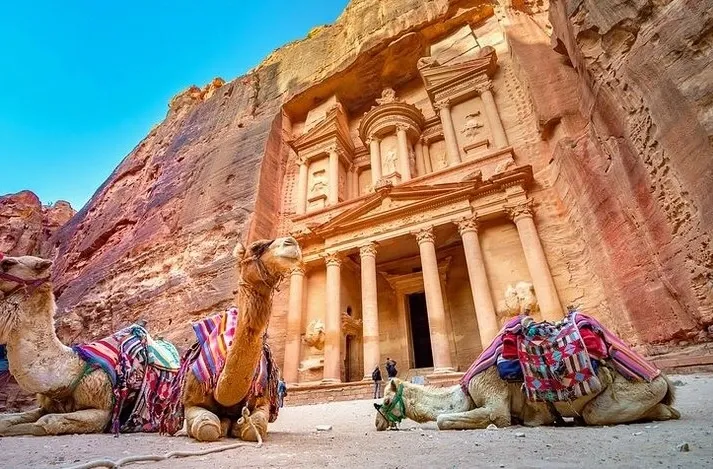
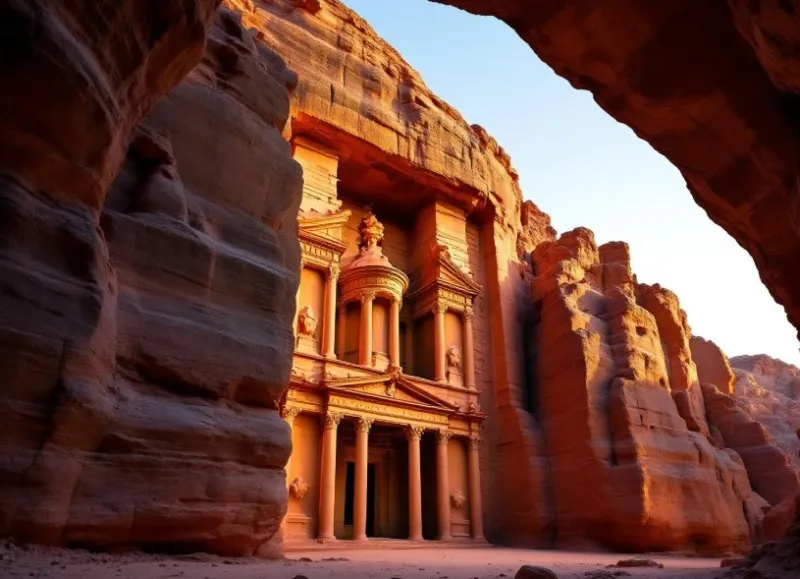
The Treasury of Petra, also known as Al-Khazneh, is the most famous monument in Jordan and one of the world’s greatest archaeological treasures. Located inside the ancient city of Petra, this breathtaking structure was carved directly into the rose-colored sandstone cliffs by the Nabataeans more than 2,000 years ago.
Recognized as one of the New Seven Wonders of the World, the Treasury attracts millions of visitors who come to admire its incredible architecture, mysterious history, and unique desert landscape.
What Is the Treasury of Petra?
The Treasury of Petra is a magnificent rock-cut monument located at the entrance of the ancient Nabataean city of Petra.
Despite its name, the Treasury was not actually a place where treasure was stored. The name came from local legends that suggested hidden treasures were kept inside the stone urn located at the top of the facade.
The monument was originally built as a royal tomb, and historians believe it was created during the 1st century BC during the peak of the Nabataean Kingdom.
Today, the Treasury is Petra’s most iconic attraction and the first image many travelers imagine when they think of Jordan.
Quick Facts About the Treasury of Petra
Location
The Treasury is located inside Petra Archaeological Park near Wadi Musa, Jordan.
Visitors reach it by walking through the famous Siq, a narrow canyon that leads directly to the monument.
Opening Hours
Petra usually opens:
- Morning until sunset
- Hours may change depending on season
Night Petra events may have separate schedules.
Entrance Prices
The Treasury is included in the Petra entrance ticket.
Ticket prices depend on:
- Number of visiting days
- Visitor category
- Travel arrangements
Visit Duration
Most travelers spend:
- 20–60 minutes at the Treasury area
- More time if exploring nearby attractions
Best Time to Visit
The best seasons are:
Spring (March–May)
Perfect weather for walking and exploring.
Autumn (September–November)
Comfortable temperatures and beautiful photography conditions.
Early morning and late afternoon are the best times for fewer crowds and amazing light.
The History of the Treasury of Petra
The story of the Treasury begins with the Nabataeans, an ancient Arab civilization that created Petra and turned it into a powerful trading center.
The Nabataeans controlled important trade routes connecting:
- Arabia
- Egypt
- Syria
- The Mediterranean world
Their success allowed them to build a remarkable city surrounded by mountains and desert.
Petra became famous for:
- Advanced water systems
- Impressive architecture
- Rock-cut monuments
- International trade
The Treasury was built during the golden age of the Nabataean Kingdom, most likely around the 1st century BC.
Why Was the Treasury Built?
Although many people call it the Treasury, its original purpose was most likely a royal tomb.
The monument was designed to honor important members of Nabataean society.
Its impressive size and detailed decoration show the importance of the person or family connected to it.
The structure combines different artistic influences, including:
- Greek architecture
- Egyptian elements
- Local Nabataean styles
This combination reflects Petra’s position as a meeting point between different cultures.
The Architecture of Al-Khazneh
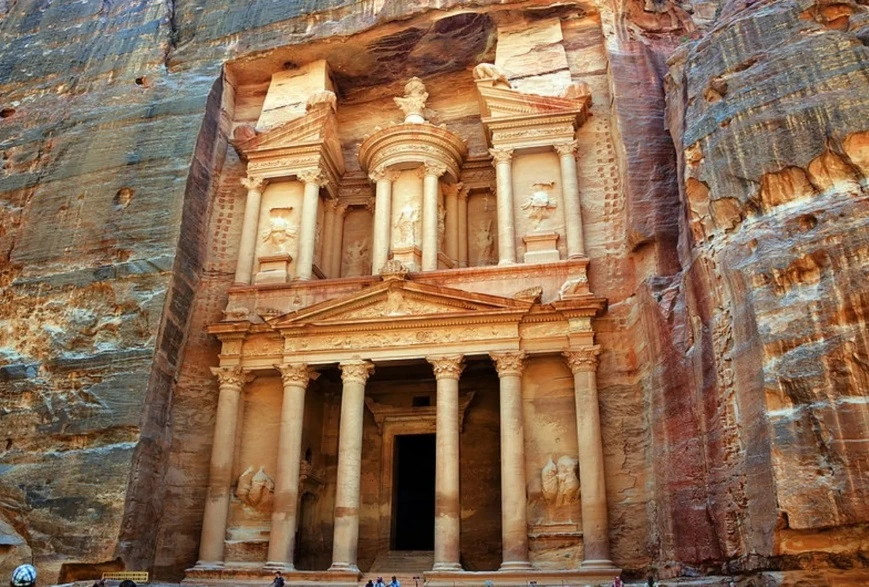
The Treasury is famous for its incredible facade carved directly into the mountain.
The monument reaches around 40 meters high and features detailed designs that have survived for centuries.
Visitors can admire:
The Upper Level
The top section includes the famous urn decoration that inspired the name “Treasury.”
Local stories claimed the urn contained hidden treasure, although there is no evidence of this.
The Lower Level
The lower part includes:
- Columns
- Sculptures
- Decorative carvings
- Ancient architectural details
Rock-Cut Design
Instead of building with separate stones, Nabataean craftsmen carved the entire monument from the sandstone cliff.
This technique demonstrates their extraordinary engineering skills.
What to Expect When Visiting the Treasury of Petra
A visit to the Treasury is more than seeing a famous monument — it is a complete historical experience.
Visitors can expect:
The Siq Walk
The journey begins through the Siq, a dramatic canyon stretching about 1.2 kilometers.
The walk itself is one of Petra’s most memorable experiences.
You will see:
- Colorful rock formations
- Ancient water channels
- Narrow canyon walls
The First View of the Treasury
The moment the Treasury appears between the cliffs is unforgettable.
Many travelers describe this reveal as the highlight of their Petra visit.
Photography Opportunities
The Treasury is one of the most photographed landmarks in the world.
The best photos are usually taken:
- Early morning
- Before sunset
- From nearby viewpoints
Facts About the Treasury of Petra: Crowds, Distance, Weather & Helpful Tips
Before visiting the Treasury of Petra, knowing some practical details can make your experience easier and more enjoyable.
Crowds at the Treasury of Petra
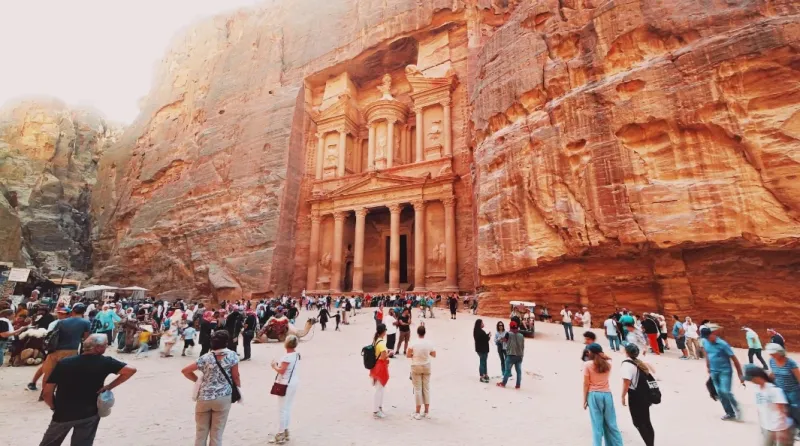
The Treasury is the most visited monument in Petra, so it can become crowded, especially during:
- Peak travel seasons
- Midday hours
- Public holidays
For a quieter experience, visitors often recommend arriving early in the morning when the Siq is peaceful and the sunlight creates beautiful colors on the sandstone.
Late afternoon is also a great time because the temperature becomes cooler and the lighting is perfect for photography.
Distance and How to Reach the Treasury
The Treasury is located inside the Petra Archaeological Site.
The journey includes:
- Walking through the Siq: approximately 1.2 km
- Total walking distance depends on additional Petra attractions you explore
From nearby cities:
- From Amman: around 3 hours by car
- From Aqaba: around 2 hours by car
- From Wadi Rum: around 2 hours by car
Many travelers choose to visit Petra as part of a Jordan tour that combines Amman, Wadi Rum, and the Dead Sea.
Weather at Petra
Petra has a desert climate, so temperatures can change significantly.
Summer
Summer months can be very hot, especially during the afternoon.
Visitors should:
- Carry water
- Wear comfortable clothes
- Avoid the strongest midday sun
Winter
Winter weather is cooler and sometimes rainy.
A jacket and comfortable walking shoes are recommended.
Spring and Autumn
These are considered the best times to visit because the weather is pleasant for long walks and sightseeing.
Practical Travel Tips for Visiting the Treasury of Petra
Wear Comfortable Shoes
Petra requires walking on different surfaces, including:
- Stone paths
- Sand
- Uneven areas
Comfortable walking shoes are essential.
Bring Water
The site is large, and exploring can take several hours.
Carry enough water, especially during warmer months.
Start Early
Arriving early helps you:
- Avoid crowds
- Enjoy cooler temperatures
- Take better photos
Plan Enough Time
Many visitors focus only on the Treasury, but Petra offers much more, including:
- The Monastery
- Royal Tombs
- High Place of Sacrifice
- Ancient streets
A full-day visit allows you to discover more of this incredible city.
Real Traveler Insights and Experiences
Many visitors describe the Treasury of Petra as a once-in-a-lifetime experience.
One of our travelers mentioned:
"Walking through the Siq and suddenly seeing the Treasury was the most magical moment of our Jordan trip. Photos cannot show how impressive it feels in real life."
Visitors often say that the combination of history, nature, and architecture makes Petra different from any other archaeological site they have visited.
Many travelers also recommend taking time to explore beyond the Treasury because every corner of Petra reveals another part of its ancient story.
Nearby Attractions Around the Treasury of Petra
A visit to the Treasury can be combined with other amazing places inside Petra.
The Siq
The dramatic entrance canyon of Petra, famous for its colorful rock walls and ancient engineering.
The Street of Facades
A historic area filled with carved tombs and impressive Nabataean architecture.
The Royal Tombs
A collection of large tombs carved into the mountainside.
The Monastery (Ad Deir)
One of Petra’s largest and most impressive monuments.
Although reaching it requires climbing many steps, the view is worth the effort.
Why Is the Treasury of Petra So Famous?
The Treasury became globally famous because of its:
- Extraordinary beauty
- Ancient mystery
- Unique location
- Amazing preservation
Its appearance in films and documentaries also introduced Petra to millions of people worldwide.
However, the true magic of the Treasury is standing in front of it and experiencing the connection between nature and human creativity.
Travel Tips for a Better Petra Experience
- Visit early morning or late afternoon
- Book a licensed guide for deeper historical information
- Wear sun protection
- Bring a camera
- Respect the archaeological site
- Allow enough time for walking
- Check weather conditions before your visit
For travelers planning a Jordan holiday, adding Petra with professional arrangements can make the experience smoother and more memorable.
Frequently Asked Questions About the Treasury of Petra
What is the Treasury of Petra?
The Treasury of Petra, also called Al-Khazneh, is a famous ancient monument carved into the sandstone cliffs of Petra, Jordan. It was built by the Nabataeans and is believed to have been a royal tomb.
Why is it called the Treasury?
The name comes from a local legend that claimed treasure was hidden inside the stone urn at the top of the monument. Archaeologists believe it was not actually used as a treasury.
How long does it take to visit the Treasury of Petra?
Most visitors spend around one hour at the Treasury area, but exploring Petra properly usually requires a full day.
Can visitors enter inside the Treasury?
The interior of the Treasury is not open for general visitors. The main attraction is the impressive exterior facade.
What is the best time to visit Petra?
Spring and autumn are the best seasons because temperatures are comfortable. Early morning and sunset provide the best experience.
Is Petra suitable for families?
Yes, families can visit Petra, but children should be prepared for walking. Comfortable shoes and breaks are recommended.
How far is the Treasury from Amman?
The Treasury is approximately a 3-hour drive from Amman.
Conclusion: Experience the Magic of the Treasury of Petra
The Treasury of Petra is more than an ancient monument — it is a journey into one of the greatest civilizations of the past. From the dramatic walk through the Siq to the unforgettable view of the carved sandstone facade, every moment creates a lasting memory.
Whether you are interested in history, photography, adventure, or cultural exploration, the Treasury of Petra offers an experience unlike anywhere else.
Plan your Jordan adventure and discover this incredible ancient wonder with a memorable travel experience.
Book your Jordon Holiday Packages with us today and explore Jordan’s legendary treasures in comfort and style.