
Urn Tomb in Petra: Exploring One of the Most Beautiful Royal Monuments of Jordan
A Traveler’s Experience at the Urn Tomb in Petra
"I still remember walking through the ancient paths of Petra and feeling surrounded by thousands of years of history. After visiting the famous Treasury, I continued toward the Royal Tombs area where I discovered the Urn Tomb. Standing in front of its enormous carved facade, surrounded by the pink sandstone mountains, I felt amazed by the creativity of the Nabataean civilization. The quiet atmosphere, the impressive architecture, and the incredible views made this place one of the most memorable moments of my Petra journey."
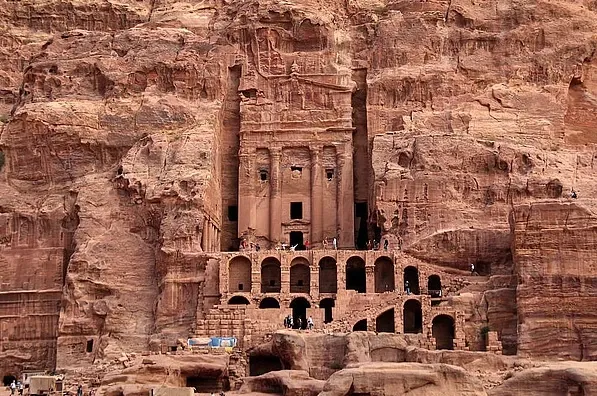
The Urn Tomb in Petra is one of the most remarkable monuments in Jordan’s legendary Rose City. Carved directly into the sandstone cliffs, this ancient royal tomb represents the architectural brilliance and cultural achievements of the Nabataeans, the civilization that created Petra more than 2,000 years ago.
Although many travelers visit Petra mainly to see the Treasury, the Urn Tomb offers a deeper look into the history, traditions, and artistic skills that made this ancient city one of the greatest wonders of the world.
What Is the Urn Tomb in Petra?
The Urn Tomb is one of the largest and most impressive monuments in Petra’s Royal Tombs area.
Built by the Nabataeans during the 1st century AD, it was originally designed as a royal burial place. The monument gets its name from the large urn-shaped decoration located above the entrance.
The tomb is famous for:
- Its massive rock-cut facade
- Beautiful sandstone colors
- Ancient Nabataean design
- Historical importance
The Urn Tomb is not only an archaeological site but also a place where visitors can experience the atmosphere of ancient Petra.
Quick Facts About the Urn Tomb in Petra
Location
The Urn Tomb is located in the Royal Tombs area inside Petra Archaeological Park, near Wadi Musa, Jordan.
Opening Hours
The Urn Tomb follows Petra’s opening schedule, usually from morning until sunset.
Entrance Price
The monument is included within the Petra entrance ticket.
Visit Duration
Most visitors spend around 30–45 minutes exploring the tomb and taking photos.
Best Time to Visit
The best seasons are:
- Spring (March to May)
- Autumn (September to November)
These months offer comfortable weather for walking and exploring.
History of the Urn Tomb in Petra
The story of the Urn Tomb begins with the Nabataeans, an ancient Arab civilization that transformed Petra into a powerful trading center.
Petra was located on important trade routes connecting:
- Arabia
- Egypt
- The Mediterranean world
The Nabataeans became wealthy through trade and used their resources to create impressive monuments carved into the mountains.
The Urn Tomb was one of the royal monuments created during Petra’s golden age. Its size and location suggest that it was built for an important figure in Nabataean society.
The Architecture of the Urn Tomb
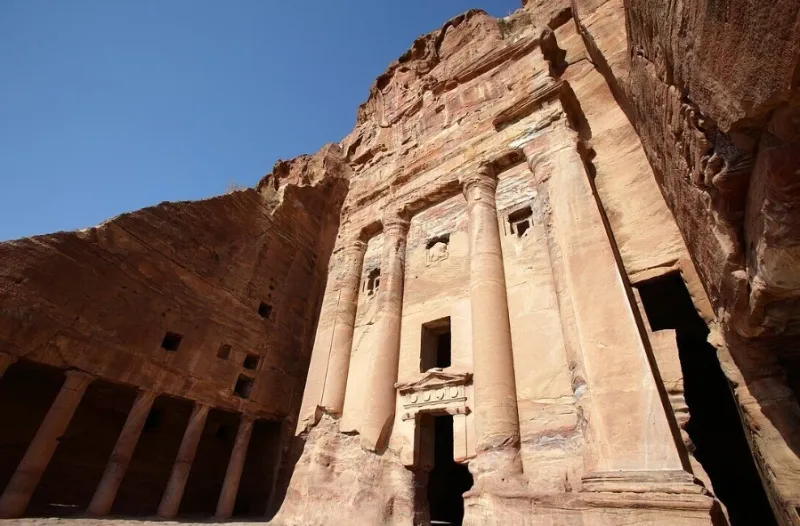
The most impressive feature of the Urn Tomb is its enormous facade.
The Nabataeans used the natural mountain rock to create detailed structures without building with separate stones.
Visitors can admire:
The Large Facade
The facade shows the incredible skill of ancient craftsmen.
Its design includes:
- Columns
- Decorative elements
- Symmetrical patterns
- Classical influences
The Interior Chambers
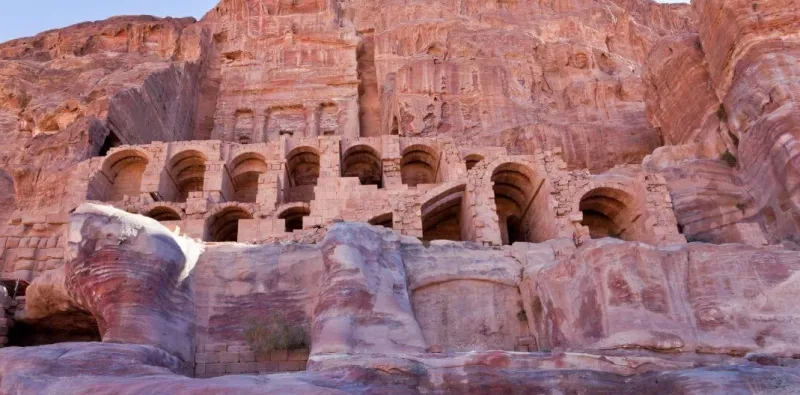
Inside the tomb, visitors can see spaces carved directly into the rock.
These chambers reflect ancient burial traditions and the importance of honoring the dead.
The Sandstone Colors
The changing sunlight creates beautiful shades across the monument, making the Urn Tomb a favorite place for photography.
Visiting the Royal Tombs Area in Petra
The Urn Tomb is part of Petra’s famous Royal Tombs area, which includes several impressive monuments.
Other nearby tombs include:
Silk Tomb
Known for its colorful sandstone layers.
Corinthian Tomb
Inspired by classical architectural styles.
Palace Tomb
One of the largest facades in Petra.
Exploring these monuments together gives visitors a better understanding of Nabataean architecture and royal traditions.
What to Expect When Visiting the Urn Tomb
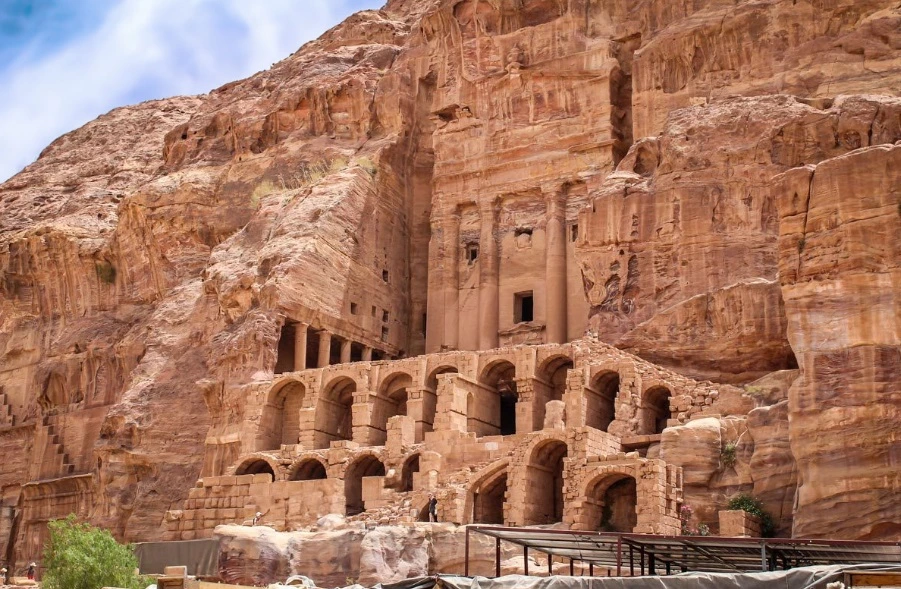
A visit to the Urn Tomb offers a combination of history, nature, and adventure.
Visitors can expect:
Amazing Views
The location provides beautiful views over Petra’s mountains and valleys.
Ancient History
Travelers can discover how the Nabataeans carved an entire city from stone.
Peaceful Atmosphere
Compared with the Treasury area, the Urn Tomb is often quieter, allowing visitors to enjoy the monument at their own pace.
Crowds, Weather, and Travel Tips
Crowds
Petra is one of Jordan’s most visited attractions, but the Urn Tomb usually has fewer crowds compared with the Treasury.
For a better experience:
- Arrive early
- Avoid peak afternoon hours
- Take your time exploring
Weather
Petra has a desert climate.
Summer
Hot and dry, especially at midday.
Winter
Cooler with possible rain.
Spring and Autumn
The most comfortable seasons for walking.
Practical Tips for Visiting the Urn Tomb
Wear Comfortable Shoes
Petra requires walking on uneven paths, so comfortable shoes are important.
Carry Water
The archaeological site is large and walking can be tiring.
Bring Sun Protection
Recommended:
- Hat
- Sunglasses
- Sunscreen
Take Your Time
Petra is not a place to rush. The details of the monuments are what make the experience special.
Hire a Guide
A local guide can explain:
- Nabataean history
- Hidden details
- Stories behind the monuments
Real Traveler Experience
One of our travelers mentioned:
"The Urn Tomb was one of my favorite places in Petra because it felt peaceful and mysterious. The huge facade and mountain views were unforgettable."
Visitors often say:
"The Treasury is famous, but the Royal Tombs show another side of Petra’s beauty and history."
Many travelers recommend spending enough time in this area because it offers amazing photography opportunities and a deeper connection with ancient Jordan.
Interesting Facts About the Urn Tomb
- It is one of Petra’s largest royal tombs.
- It was carved directly into the sandstone mountain.
- It reflects the advanced skills of Nabataean architects.
- It later had religious importance during the Byzantine period.
- It is one of the most photographed monuments in Petra.
Frequently Asked Questions
Why is the Urn Tomb famous?
The Urn Tomb is famous for its huge carved facade and importance as a Nabataean royal monument.
Is the Urn Tomb included in Petra tickets?
Yes, it is part of the Petra archaeological site.
How long does it take to visit?
Around 30–45 minutes is usually enough.
Is the Urn Tomb difficult to reach?
It requires walking inside Petra but is accessible for most visitors.
What is the best time to visit?
Spring and autumn are the best times because of pleasant weather.
Final Thoughts
The Urn Tomb in Petra is a hidden treasure within one of the world’s greatest archaeological destinations. While Petra’s Treasury attracts global attention, the Urn Tomb reveals another incredible chapter of Nabataean history.
Its massive facade, ancient stories, and peaceful surroundings make it a must-visit attraction for anyone exploring Jordan.
Discover the ancient wonders of Petra with us. Visit our Jordon Holiday Packages today and book your unforgettable Jordan travel experience.