
Hassan II Mosque: Casablanca’s Iconic Landmark in Morocco
Morocco is a country known for its rich history, vibrant culture, stunning architecture, and breathtaking landscapes. Among its many attractions, the Hassan II Mosque stands out as one of the most remarkable landmarks in North Africa. Located in the heart of Casablanca, this architectural masterpiece is not only a place of worship but also a symbol of Moroccan heritage, craftsmanship, and ambition. Every year, millions of visitors come to admire its grandeur, learn about its history, and experience its unique atmosphere.
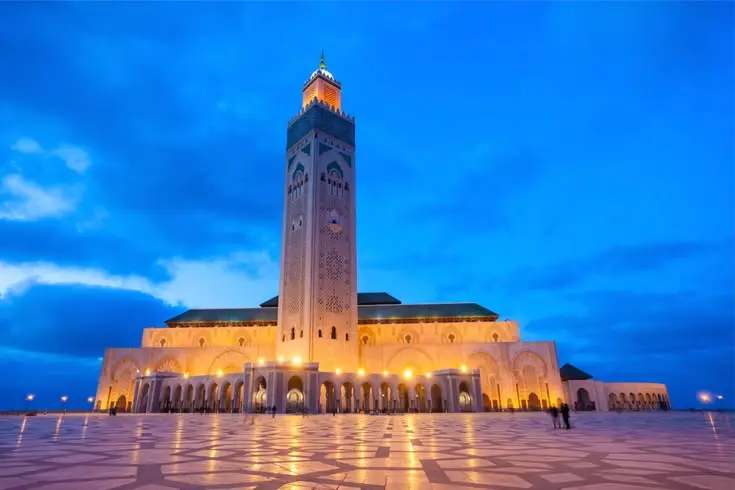
The Hassan II Mosque is one of the largest mosques in the world and among the few in Morocco that allow non-Muslim visitors to enter on guided tours. Its magnificent minaret, intricate decorations, and dramatic location overlooking the Atlantic Ocean make it one of the most photographed sites in the country. Whether you are a history enthusiast, an architecture lover, or a traveler exploring Morocco, this iconic monument deserves a place on your itinerary.
Overview of Hassan II Mosque
The Hassan II Mosque is a monumental religious and cultural landmark located in Casablanca, Morocco’s largest city. Commissioned by King Hassan II, the mosque was built to commemorate the king’s 60th birthday and to showcase the finest examples of Moroccan craftsmanship.
Construction began in 1986 and was completed in 1993. Thousands of artisans, engineers, and craftsmen worked together to create a structure that reflects traditional Moroccan artistry while incorporating modern engineering techniques. The mosque was designed by French architect Michel Pinseau and built using materials sourced primarily from Morocco.
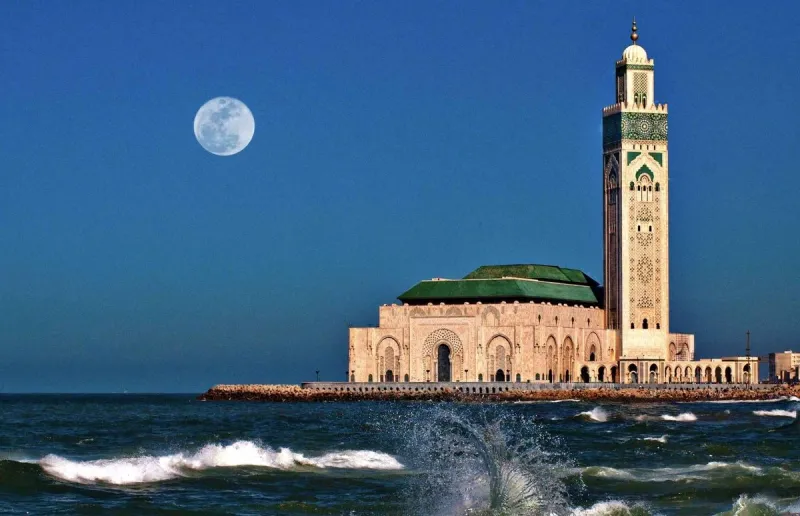
One of the mosque’s most impressive features is its location. Part of the structure extends over the Atlantic Ocean, creating a stunning visual effect and symbolizing the Quranic verse that states God’s throne was built upon water.
Explore Hassan II Mosque and uncover the beauty of Morocco through Morocco Private Tours.
Location
Address: Boulevard de la Corniche, Casablanca, Morocco
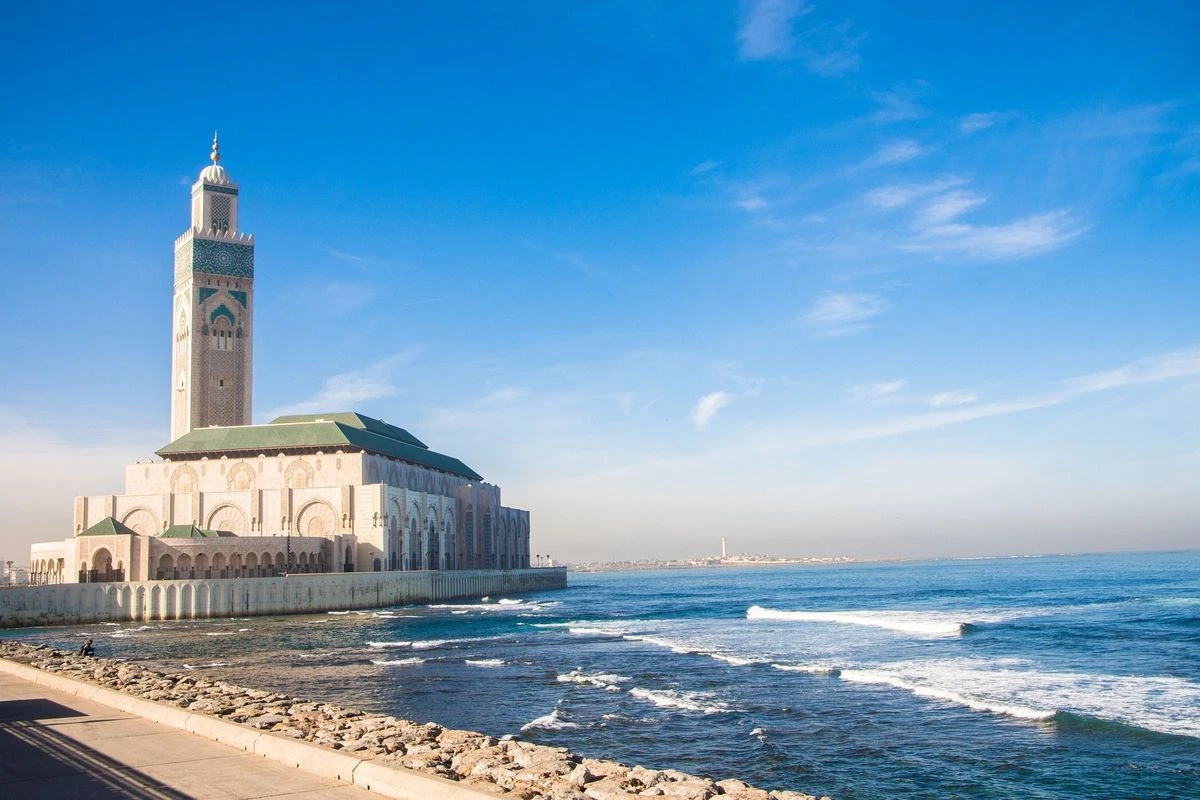
The mosque is situated on Casablanca’s coastline, overlooking the Atlantic Ocean. Its central location makes it easily accessible from most parts of the city.
How to Get There
-
By Taxi: The easiest and most common option.
-
By Tram: Casablanca’s tram system provides convenient access to nearby stations.
-
By Car: Parking is available in the surrounding area.
-
On Foot: Visitors staying in central Casablanca can often walk to the mosque while enjoying views of the coastline.
The mosque’s waterfront location provides excellent opportunities for photography, especially during sunrise and sunset.
History and Significance
King Hassan II envisioned a mosque that would become a symbol of Morocco’s spiritual and cultural identity. He wanted the structure to represent the nation's devotion to Islam while highlighting the extraordinary skills of Moroccan artisans.
More than 10,000 craftsmen contributed to the decorative elements, including carved wood, hand-painted ceilings, marble floors, mosaics, and intricate plasterwork. The project employed approximately 35,000 workers during its construction.
The mosque quickly became one of Morocco’s most recognizable landmarks and remains a source of national pride. It serves both as a place of worship and as a cultural attraction that welcomes visitors from around the world.
Hassan II Mosque Architecture and Design
The architectural beauty of the Hassan II Mosque is one of its greatest attractions. Every detail reflects exceptional craftsmanship and artistic precision.
The Minaret
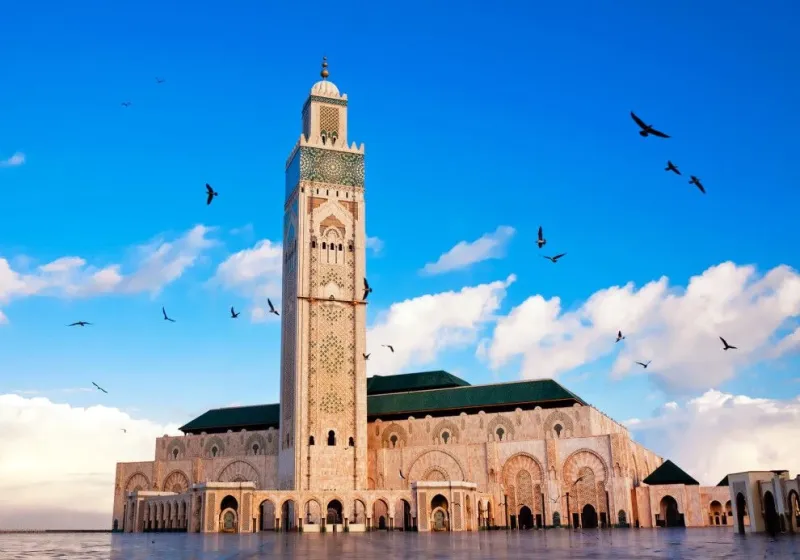
The mosque boasts the tallest minaret in Africa, standing approximately 210 meters (689 feet) high. It is visible from many parts of Casablanca and serves as a defining feature of the city skyline.
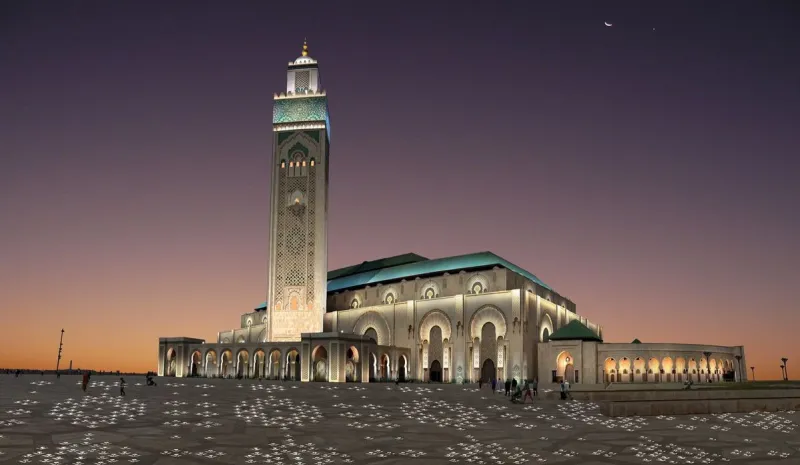
A laser beam installed at the top of the minaret points toward Mecca, symbolizing the direction of prayer.
Prayer Hall
The prayer hall can accommodate around 25,000 worshippers, while the surrounding courtyards can hold an additional 80,000 people. The hall features:
-
Handcrafted marble floors
-
Cedar wood ceilings
-
Stunning chandeliers
-
Decorative mosaics
-
Intricate geometric patterns
The sheer scale of the interior leaves visitors in awe.
Retractable Roof
One of the mosque’s most innovative features is its retractable roof. During favorable weather, the roof can open, allowing worshippers to pray under the sky.
Oceanfront Setting
Part of the mosque extends over the Atlantic Ocean. Large glass sections in the floor provide views of the water below, creating a unique connection between architecture and nature.
Opening Hours
The mosque is open for worshippers throughout the day according to prayer schedules.
For non-Muslim visitors, entry is generally possible through guided tours at designated times.
Typical Guided Tour Hours
-
Morning tours
-
Midday tours
-
Afternoon tours
Tour schedules may vary depending on religious events, public holidays, and seasonal changes. Visitors are encouraged to verify current schedules before arrival.
Entrance Prices
The mosque charges an admission fee for guided tours.
Prices may change over time, so it is advisable to check the latest information before visiting.
The entrance fee includes access to various sections of the mosque and insights provided by knowledgeable guides.
Best Time to Visit
Choosing the right time can significantly enhance your experience.
Best Season
The ideal months to visit are:
-
March
-
April
-
May
-
September
-
October
-
November
During these months, temperatures are pleasant and sightseeing conditions are comfortable.
Best Time of Day
Early Morning
-
Fewer crowds
-
Softer lighting
-
Cooler temperatures
Late Afternoon
-
Beautiful golden-hour photography
-
Spectacular ocean views
-
Stunning sunset opportunities
Photographers often prefer sunrise and sunset because the changing light highlights the mosque’s intricate details and creates dramatic reflections on the ocean.
Recommended Visit Duration
Most visitors spend:
-
1.5 to 2 hours on a guided tour
-
2 to 3 hours if including photography and exploration of the surrounding area
Those interested in architecture or photography may choose to stay longer.
Interior Highlights
Visitors are often amazed by the remarkable details found throughout the mosque.
Marble and Granite
The mosque contains high-quality marble and granite sourced from different regions of Morocco.
Cedar Wood Carvings
The ceilings feature beautifully carved cedar wood, showcasing traditional Moroccan craftsmanship.
Zellige Tilework
Moroccan mosaic tiles known as zellige cover walls and decorative surfaces throughout the structure.
Chandeliers
Large chandeliers imported from Europe add elegance and grandeur to the prayer hall.
Traditional Artistry
Every decorative element was handcrafted by skilled artisans, preserving centuries-old artistic traditions.
Cultural and Religious Importance
The mosque remains an active place of worship and plays a central role in Casablanca’s religious life.
Thousands of worshippers gather during:
-
Daily prayers
-
Friday prayers
-
Ramadan
-
Eid celebrations
-
Special religious events
Beyond its religious significance, the mosque promotes cultural understanding by welcoming visitors from diverse backgrounds.
Photography Opportunities
Photography enthusiasts will find endless opportunities around the mosque.
Best Photography Spots
Oceanfront Plaza
Offers panoramic views of the mosque against the Atlantic Ocean.
Corniche Area
Provides excellent angles for capturing the entire structure.
Sunset Viewpoints
Golden-hour lighting creates spectacular images.
Reflection Shots
After rainfall, the surrounding surfaces often create beautiful reflections.
For the best results, bring a wide-angle lens if using a professional camera.
What to Wear
Since the mosque is a religious site, visitors should dress respectfully.
Recommended Clothing
For Women:
-
Long skirts or pants
-
Dresses covering shoulders and knees
-
Light scarf (optional but useful)
For Men:
-
Long pants
-
Shirts with sleeves
-
Modest attire
Avoid
-
Short shorts
-
Revealing clothing
-
Beachwear
-
Clothing with offensive messages
Respectful dress enhances the visitor experience and demonstrates cultural sensitivity.
What to Bring
Preparing properly can make your visit more enjoyable.
Essentials
-
Comfortable walking shoes
-
Camera or smartphone
-
Sunglasses
-
Sunscreen
-
Water bottle
-
Light jacket during cooler months
-
Small amount of local currency
Optional Items
-
Travel guidebook
-
Portable charger
-
Wide-angle camera lens
-
Notebook for architecture enthusiasts
Common Mistakes to Avoid
Many travelers make simple mistakes that can affect their experience.
Arriving Without Checking Tour Times
Guided tours operate on specific schedules. Confirm times before your visit.
Wearing Inappropriate Clothing
Respectful attire is expected.
Visiting During Peak Crowds
Late mornings and weekends can be busy.
Skipping the Guided Tour
The tour provides valuable historical and architectural insights.
Rushing Through the Visit
Allow enough time to appreciate the details and surroundings.
Ignoring the Exterior
Many visitors focus only on the interior and miss the stunning oceanfront setting.
Nearby Attractions
After visiting the mosque, consider exploring other attractions in Casablanca.
The Corniche
A lively waterfront district with restaurants and ocean views.
Mohammed V Square
One of Casablanca’s most important public squares.
Old Medina
A historic area featuring traditional markets and local culture.
Morocco Mall
One of Africa’s largest shopping centers.
Combining these attractions with your mosque visit creates a more complete Casablanca experience.
Why Hassan II Mosque Is a Must-Visit Destination?
Few landmarks in Morocco combine spiritual significance, architectural brilliance, and scenic beauty as successfully as the Hassan II Mosque. Its unique position overlooking the Atlantic Ocean, paired with its extraordinary craftsmanship, makes it unlike any other mosque in the world.
Visitors often describe their experience as one of the highlights of their trip to Morocco. The combination of artistic detail, cultural heritage, and breathtaking views leaves a lasting impression.
Whether you are interested in religion, architecture, photography, or history, the mosque offers something memorable for every traveler.
FAQ
Is Hassan II Mosque open to non-Muslims?
Yes. Non-Muslim visitors can enter the mosque through organized guided tours offered at specific times.
How much time should I spend at the mosque?
Most visitors spend between 1.5 and 3 hours exploring the site and surrounding areas.
What is the best time to visit?
Spring and autumn provide the most comfortable weather, while early morning and late afternoon offer the best lighting for photography.
Is photography allowed?
Photography is generally permitted in designated areas, but visitors should follow the guidance provided during tours.
Can I visit independently?
Access to the interior is usually available through guided tours, while the exterior areas can often be explored independently.
Is the mosque suitable for families?
Yes. Families, couples, solo travelers, and groups all enjoy visiting this landmark.
Why is the mosque famous?
It is famous for its size, oceanfront location, tallest minaret in Africa, and exceptional Moroccan craftsmanship.
Conclusion
The Hassan II Mosque is much more than a religious building; it is a symbol of Morocco’s cultural identity, artistic excellence, and architectural ambition. Rising majestically above the Atlantic coastline of Casablanca, it offers visitors a rare combination of history, spirituality, and breathtaking beauty. From its towering minaret and intricate mosaics to its remarkable oceanfront setting, every aspect of the mosque reflects extraordinary craftsmanship. Whether you are visiting Morocco for the first time or returning to discover more of its treasures, the Hassan II Mosque deserves a place at the top of your travel itinerary and remains one of the country’s most unforgettable landmarks.
Explore the best of Morocco with Morocco Holiday Packages.