
Marrakech Museum: A Cultural Treasure in the Heart of Morocco
What Is Marrakech Museum and Why Should You Visit It?
Marrakech Museum is one of Morocco's most fascinating cultural landmarks, offering visitors an immersive journey through the country's history, architecture, art, and traditions. Situated in the historic Medina of Marrakech, Marrakech Museum occupies a magnificent palace that beautifully combines traditional Moroccan craftsmanship with cultural exhibitions that tell the story of the nation's heritage.
The moment you step inside Marrakech Museum, the atmosphere changes. The noise of the busy Medina fades away, replaced by a sense of calm and wonder. Elegant arches, colorful mosaics, carved cedar wood, and intricate plasterwork immediately capture the attention of visitors. Whether you are an art enthusiast, a history lover, or simply a curious traveler, Marrakech Museum provides a memorable experience that showcases the richness of Moroccan culture.
Unlike many modern museums, Marrakech Museum is not only about the objects displayed inside. The building itself is one of the main attractions. Every room, courtyard, and corridor reflects centuries of artistic traditions, making a visit to Marrakech Museum both educational and visually inspiring.
Discover the beauty of Marrakech Museum and immerse yourself in Morocco’s rich history, art, and architecture, through visiting Morocco Private Tours 2026.
Quick Facts About Marrakech Museum
Location
Marrakech Museum is located in the heart of Marrakech's Medina, close to Ben Youssef Madrasa and several important historical landmarks.
Opening Hours
Marrakech Museum is generally open daily from morning until late afternoon. Opening hours may vary slightly during holidays and special events.
Ticket Prices
Visitors can purchase entry tickets directly at Marrakech Museum. Prices are affordable compared to many major museums worldwide.
Best Time to Visit
The ideal time to explore Marrakech Museum is during spring and autumn when temperatures are pleasant and sightseeing conditions are excellent.
Recommended Duration
Most travelers spend between one and two hours inside Marrakech Museum, although photography enthusiasts and history lovers often stay longer.
History of Marrakech Museum
The building that now houses Marrakech Museum was originally constructed in the late nineteenth century as Dar Mnebhi Palace. The palace belonged to Mehdi Mnebhi, a powerful minister who played an important role in Moroccan politics during his era.
As one of the most luxurious residences in Marrakech at the time, the palace demonstrated the wealth and influence of its owner. The architecture featured within Marrakech Museum today reflects the finest examples of traditional Moroccan design, including Andalusian influences and local artistic techniques.
Over the years, the palace experienced various transformations. Eventually, extensive restoration efforts preserved the structure and converted it into Marrakech Museum, ensuring that future generations could appreciate its beauty and historical significance.
Today, Marrakech Museum serves as a cultural institution that celebrates Moroccan heritage through art exhibitions, historical collections, and educational programs. Its transformation from a private residence into a public museum represents an important chapter in preserving Morocco's cultural legacy.
What to Expect at Marrakech Museum
The Place
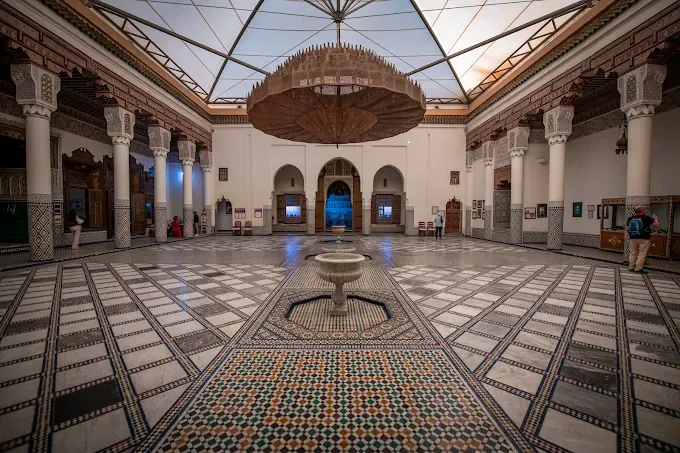
As soon as you enter Marrakech Museum, you are welcomed by a breathtaking central courtyard. This space is often considered the highlight of the museum thanks to its elegant fountain, detailed tilework, and impressive chandelier suspended beneath a beautifully decorated ceiling.
Walking through Marrakech Museum, visitors encounter a series of galleries showcasing traditional Moroccan artifacts, contemporary artworks, ancient manuscripts, ceramics, jewelry, and decorative objects. Every room within Marrakech Museum offers a unique perspective on the country's artistic and historical development.
One of the most remarkable aspects of Marrakech Museum is the harmony between the exhibits and the building itself. The architecture enhances the collections, creating an environment where visitors can fully appreciate Morocco's cultural achievements.
Crowds
Crowd levels at Marrakech Museum are generally manageable compared to some of Marrakech's more crowded attractions. Early mornings are usually the quietest time to visit Marrakech Museum, allowing guests to explore at a leisurely pace.
During peak tourist seasons, Marrakech Museum may attract larger groups, particularly in the late morning and early afternoon. However, because the museum contains multiple rooms and courtyards, visitors rarely feel overwhelmed by crowds.
For photographers seeking uninterrupted views of the architecture, arriving shortly after Marrakech Museum opens is highly recommended.
Distances
Exploring Marrakech Museum does not require extensive walking, making it accessible for visitors of various ages and fitness levels. Most exhibits are located within a compact palace complex that can be comfortably explored within a few hours.
Despite its moderate size, Marrakech Museum offers plenty of details to admire. Visitors often find themselves spending additional time examining decorative ceilings, carved doors, and intricate mosaics throughout the building.
Because Marrakech Museum is located in the Medina, many travelers combine their visit with nearby attractions, creating a full day of cultural exploration.
Weather
One advantage of visiting Marrakech Museum is that much of the experience takes place indoors. During hot summer days, Marrakech Museum offers a comfortable refuge from the intense Moroccan sun.
The interior design of Marrakech Museum naturally helps regulate temperature through traditional architectural techniques that have been used in Morocco for centuries.
Spring and autumn provide particularly enjoyable conditions for visiting Marrakech Museum, while winter remains mild enough to make sightseeing comfortable.
Tips
- Visit Marrakech Museum early in the morning.
- Bring a camera to capture architectural details.
- Spend time in the central courtyard.
- Read exhibit descriptions carefully.
- Combine Marrakech Museum with nearby attractions.
- Wear comfortable walking shoes.
- Carry water when exploring the Medina.
Why Is Marrakech Museum Famous?
One of the reasons Marrakech Museum has become such a popular attraction is its remarkable architecture. The building itself serves as a masterpiece of Moroccan craftsmanship, featuring decorative plasterwork, carved cedar wood, and colorful geometric mosaics.
Another factor contributing to the popularity of Marrakech Museum is its diverse collection of exhibits. Visitors can explore artifacts that represent different periods of Moroccan history, gaining insight into the country's artistic, religious, and social development.
Photography enthusiasts are particularly drawn to Marrakech Museum because nearly every room offers stunning compositions and unique decorative details. The museum's central courtyard is among the most photographed locations in Marrakech.
Furthermore, Marrakech Museum provides an educational experience that helps visitors understand the cultural context behind many of Morocco's traditions and artistic achievements.
Step inside Morocco Private Tours 2026 and explore a world of cultural treasures, stunning craftsmanship, and fascinating stories from Morocco’s past.
.Webp)
Highlights of Marrakech Museum
Traditional Moroccan Art
Marrakech Museum features impressive collections of traditional artworks that demonstrate the creativity and craftsmanship of Moroccan artisans.
Historical Artifacts
The historical collections inside Marrakech Museum include objects that illustrate daily life, trade, education, and cultural practices throughout Morocco's history.
Calligraphy and Manuscripts
Visitors to Marrakech Museum can admire beautifully preserved manuscripts and examples of Arabic calligraphy that highlight the intellectual heritage of the region.
Jewelry Collections
Several exhibits within Marrakech Museum showcase traditional jewelry from various Moroccan communities, revealing the diversity of local artistic traditions.
Architectural Beauty
The palace itself remains one of the greatest attractions of Marrakech Museum, offering visitors an opportunity to experience authentic Moroccan architecture firsthand.
Practical Travel Tips
Best Time to Go
- Spring (March to May)
- Autumn (September to November)
- Early morning visits
These periods provide the most comfortable conditions for exploring Marrakech Museum and the surrounding Medina.
What to Wear
- Comfortable walking shoes
- Lightweight clothing
- Sunglasses
- A hat for outdoor exploration
What to Bring
- Camera
- Water bottle
- Portable charger
- Entrance ticket
- Small backpack
Common Mistakes
- Rushing through Marrakech Museum
- Focusing only on exhibits and ignoring the architecture
- Visiting during the busiest hours
- Missing nearby attractions
- Forgetting to bring a camera
Real Visitor Insights
One of our travelers mentioned that the central courtyard of Marrakech Museum exceeded expectations, describing it as one of the most beautiful interiors they had seen in Morocco.
Visitors often say that Marrakech Museum offers a welcome contrast to the busy atmosphere of the Medina, providing a peaceful environment where they can appreciate Moroccan culture at a slower pace.
Another traveler shared that the architectural details inside Marrakech Museum were so impressive that they spent more time photographing the building than viewing the exhibits.
Many guests leave Marrakech Museum with a deeper appreciation for Moroccan history and craftsmanship.
Related Places and Tours
After exploring Marrakech Museum, visitors often continue their journey by visiting:
- Ben Youssef Madrasa
- Bahia Palace
- Majorelle Garden
- Koutoubia Mosque
- Saadian Tombs
- El Badi Palace
- Marrakech Medina
- Traditional Moroccan Cultural Tours
- Guided Walking Tours of Marrakech
These attractions complement the cultural experience offered by Marrakech Museum and provide a broader understanding of Marrakech's rich heritage.
Frequently Asked Questions
How long does it take?
Most visitors spend between one and two hours exploring Marrakech Museum, although history enthusiasts may stay longer.
Is it crowded?
Marrakech Museum can become busy during peak tourist periods, but it generally feels less crowded than many outdoor attractions.
Is it worth visiting?
Absolutely. Marrakech Museum offers a unique combination of history, art, architecture, and cultural education.
Can I take photos?
Photography is generally permitted inside Marrakech Museum, making it an excellent destination for photographers.
Is it suitable for families?
Yes. Marrakech Museum is suitable for visitors of all ages and provides an educational experience for families.
Conclusion
A visit to Marrakech Museum offers far more than a typical museum experience. Housed within a magnificent historical palace, Marrakech Museum combines stunning architecture, fascinating exhibits, and deep cultural significance to create one of Marrakech's most rewarding attractions.
Whether you are interested in Moroccan history, traditional craftsmanship, architecture, or photography, Marrakech Museum provides countless opportunities for discovery. Its peaceful atmosphere and rich collections make it an essential stop for anyone seeking to understand the cultural heritage of Morocco.
If you are planning a trip to Marrakech, consider including Marrakech Museum alongside nearby historical landmarks and guided cultural tours. Together, these experiences will help you gain a deeper appreciation for one of North Africa's most fascinating cities.
Make your Marrakech adventure even more memorable with a visit to Morocco Private Tours 2026 and experience one of the city's most remarkable landmarks.