
Royal Palace of Rabat: Exploring Morocco's Majestic Royal Palace and Its Historical Significance
Morocco is a country renowned for its rich history, vibrant culture, and breathtaking architecture. Among its most remarkable landmarks stands the Royal Palace of Rabat, an emblem of Morocco's monarchy and national identity. Situated in the country's capital city, this magnificent complex reflects centuries of political power, artistic achievement, and religious heritage. For travelers seeking to understand Morocco beyond its colorful markets and scenic landscapes, visiting the Royal Palace offers a fascinating glimpse into the nation's royal traditions and historical evolution.
The Royal Palace of Rabat, also known as Dar al-Makhzen, is more than simply a residence for the Moroccan royal family. It represents the continuity of the Alaouite dynasty, the administrative heart of the kingdom, and a symbol of national unity. Although visitors cannot enter the palace itself, the grandeur of its exterior, surrounding gardens, and nearby attractions make it one of Rabat's most important sites.
The History of the Royal Palace of Rabat
The current Royal Palace was built in 1864 during the reign of Sultan Mohammed IV. However, the site has served as a royal residence for much longer, reflecting Morocco's long-standing monarchical traditions.
The Alaouite dynasty, which has ruled Morocco since the seventeenth century, established Rabat as an important administrative center. As the political significance of the city grew, the need for a prestigious royal residence became increasingly apparent. The palace was therefore designed to serve not only as a home for the monarch but also as a center for governmental affairs.
Throughout Morocco's modern history, the Royal Palace has witnessed significant events, including diplomatic meetings, official ceremonies, and national celebrations. Successive monarchs expanded and maintained the complex, ensuring that it continued to reflect the prestige of the Moroccan state.
Today, King Mohammed VI uses the palace for official functions, receiving foreign dignitaries and conducting state affairs within its grounds.
Discover the top attractions in Rabat before your visit through Morocco Excursions.
Architectural Beauty and Design
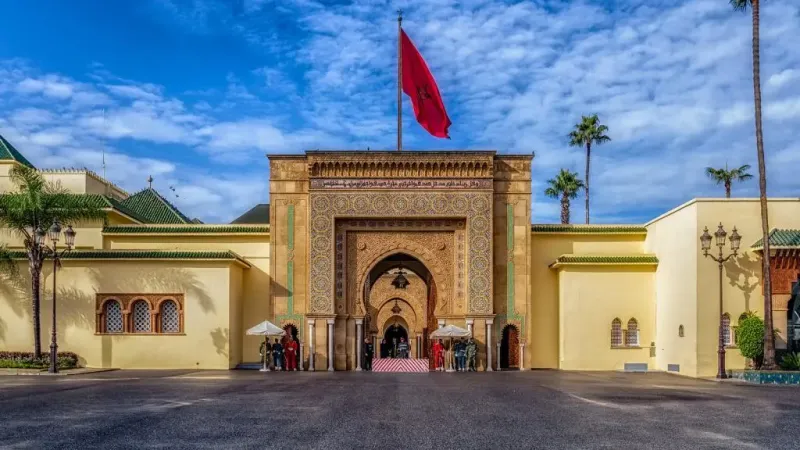
The Royal Palace showcases the elegance of traditional Moroccan craftsmanship. The monumental entrance gate is perhaps its most famous feature, adorned with intricate geometric patterns, carved cedar wood, colorful zellige tilework, and finely detailed decorative motifs.
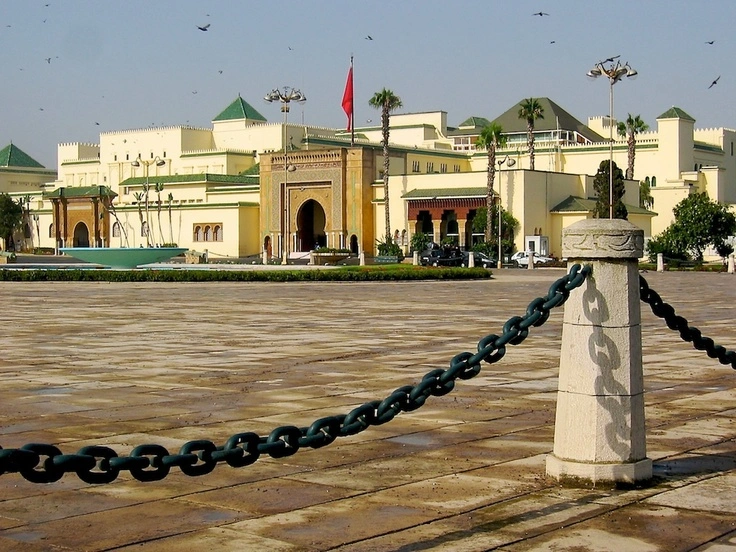
The palace complex covers an extensive area enclosed by impressive walls. Inside are government offices, reception halls, ceremonial spaces, a mosque, and beautifully landscaped gardens.
The architectural style reflects a harmonious blend of Islamic artistry and Moroccan identity. Visitors standing outside the palace gates often admire the exquisite details that symbolize centuries of artistic excellence.
Even though interior access is restricted, the exterior alone provides an unforgettable visual experience.
Historical Importance of the Palace Mosque
One of the lesser-known yet significant aspects of the palace complex is its mosque. The mosque within the Royal Palace grounds serves both religious and symbolic purposes.
Historically, mosques associated with royal residences played essential roles in Islamic governance. They were places where rulers demonstrated their commitment to faith while reinforcing their legitimacy as leaders of the Muslim community.
The palace mosque reflects the close relationship between religion and monarchy in Morocco. Friday prayers, religious ceremonies, and important occasions have historically been linked to royal participation, emphasizing the king's role as "Commander of the Faithful."
Its presence highlights how Islam has shaped Moroccan institutions, architecture, social values, and governance throughout the centuries.
What Is Inside the Royal Palace of Rabat?
Although the Royal Palace of Rabat is not open to the public, historical records and official information reveal that the vast complex contains much more than the king's private residence. It functions as an administrative, ceremonial, and religious center of the Moroccan monarchy.
Within the palace grounds are the official offices where royal affairs and state matters are conducted. These spaces host meetings with government officials, foreign ambassadors, and international dignitaries during important diplomatic events. The palace also includes reception halls used for national ceremonies, formal audiences, and celebrations marking significant occasions in Morocco.
Another important feature of the complex is the royal mosque. The mosque serves as a place of worship for members of the royal household and palace staff, while also symbolizing the close relationship between the Moroccan monarchy and Islam. Religious ceremonies and prayers held within the palace emphasize the king's constitutional role as the "Commander of the Faithful."
The palace grounds are also known to contain beautifully landscaped gardens designed in traditional Moroccan style. These green spaces feature palm trees, ornamental plants, fountains, and carefully maintained pathways that create a peaceful atmosphere amid the busy capital city.
In addition, the complex houses residential quarters for members of the royal household and accommodations for certain palace personnel. Security facilities and administrative buildings are integrated throughout the estate to support the daily operations of this active royal institution.
Because the Royal Palace of Rabat remains an official working residence of King Mohammed VI, access to these areas is restricted. As a result, much of the interior is not publicly documented in detail. This limited access has contributed to the palace's aura of mystery and prestige, making it one of Morocco's most intriguing landmarks.
Rather than functioning solely as a luxurious residence, the Royal Palace represents the heart of Morocco's constitutional monarchy—a place where governance, tradition, religion, and national identity come together within one historic complex.
Location
The Royal Palace of Rabat is located in the Touarga district of Rabat, Morocco's capital city.
Address: Touarga, Rabat, Morocco.
Its strategic location places it near several of Rabat's most important attractions, making it convenient to include in a city itinerary.
Nearby landmarks include:
-
Hassan Tower
-
Mausoleum of Mohammed V
-
Kasbah of the Udayas
-
Chellah Necropolis
-
Rabat Medina
The palace area is accessible by taxi, tram, or private transportation.
Opening Hours
The palace itself is not open to the general public for interior visits due to its status as an active royal residence and administrative center.
However, visitors can admire the exterior and surrounding areas throughout the day.
Recommended visiting hours:
-
Morning: 9:00 AM – 12:00 PM
-
Afternoon: 2:00 PM – 5:00 PM
Morning visits generally offer cooler temperatures and better lighting for photographs.
Prices
Viewing the exterior of the Royal Palace is completely free of charge.
There is no admission ticket required to admire the gates and surrounding public areas.
Costs may only include:
-
Transportation to the site.
-
Optional guided tours of Rabat.
-
Entrance fees for nearby attractions.
This makes the palace an excellent destination for travelers on various budgets.
Best Time to Visit
Morocco experiences varying climates depending on the season. Choosing the right time can greatly enhance your experience.
Spring (March to May)
Spring is widely considered the best time to visit Rabat. Temperatures remain pleasant, gardens bloom beautifully, and sightseeing conditions are ideal.
Autumn (September to November)
Autumn also offers comfortable weather with fewer crowds than summer.
Summer (June to August)
Summer can become quite warm, especially during midday. Early morning visits are advisable.
Winter (December to February)
Winter remains relatively mild compared to many European destinations. Occasional rainfall may occur but rarely disrupts travel plans.
Recommended Duration
Although visitors cannot enter the palace itself, allocating approximately 30 to 60 minutes allows sufficient time to:
-
Admire the architecture.
-
Take photographs.
-
Explore the surrounding district.
-
Learn about the palace's historical significance.
Travelers combining nearby attractions may spend half a day exploring this part of Rabat.
Other Attractions in Morocco Worth Visiting
A journey to Morocco extends far beyond the Royal Palace. The country offers an extraordinary diversity of experiences.
Hassan Tower
Located in Rabat, Hassan Tower is one of Morocco's most iconic monuments. Built during the twelfth century, it was intended to become the world's largest mosque before construction ceased.
Its unfinished minaret and surrounding columns create a striking historical landscape.
Mausoleum of Mohammed V
Adjacent to Hassan Tower, this magnificent mausoleum houses the tombs of King Mohammed V and his sons.
Its elegant white marble, green tiled roof, and ornate interior demonstrate exceptional Moroccan craftsmanship.
Kasbah of the Udayas
Perched above the Atlantic Ocean, this historic fortress charms visitors with narrow blue-and-white streets, Andalusian gardens, and panoramic views.
Chellah
Chellah combines Roman ruins with medieval Islamic structures. The site offers a peaceful atmosphere and fascinating insights into Morocco's layered history.
Marrakech
Known as the "Red City," Marrakech captivates travelers with bustling souks, traditional riads, and vibrant cultural performances.
Fes
Fes preserves one of the world's oldest continuously operating medinas. Its maze-like streets reveal centuries of craftsmanship and scholarship.
Chefchaouen
Famous for its blue-painted buildings, Chefchaouen provides a tranquil escape in the Rif Mountains.
Sahara Desert
Camel treks across golden dunes remain among Morocco's most unforgettable experiences.
Travel Advice for Visiting the Royal Palace
What to Wear
Morocco is relatively moderate, yet respectful attire is recommended.
Visitors should consider:
-
Lightweight clothing.
-
Comfortable walking shoes.
-
Modest outfits covering shoulders and knees.
-
Sunglasses.
-
A hat during warmer months.
What to Bring
Essentials include:
-
Water bottle.
-
Camera or smartphone.
-
Sunscreen.
-
Small amount of cash.
-
Identification documents.
-
Portable charger.
-
Travel guide or map.
Common Mistakes to Avoid
Many tourists unintentionally make avoidable errors.
Common mistakes include:
Expecting interior access.
The palace functions as an active royal residence and remains closed to public entry.
Ignoring local customs.
Respectful behavior and appropriate clothing contribute to positive interactions.
Visiting during peak heat.
Midday temperatures can be uncomfortable, especially in summer.
Skipping nearby attractions.
The surrounding monuments collectively enrich understanding of Rabat's heritage.
Failing to carry cash.
Some local vendors and taxi drivers may not accept cards.
FAQ
Can tourists enter the Royal Palace of Rabat?
No. Visitors cannot access the interior because it remains an official royal residence and government facility.
Is visiting the Royal Palace free?
Yes. Viewing the exterior and surrounding public areas does not require an admission fee.
How much time should I spend there?
Approximately 30 to 60 minutes is sufficient for most visitors.
Is photography allowed?
Photography of the exterior is generally permitted, although visitors should always respect security instructions.
What is the best season to visit?
Spring and autumn provide the most pleasant weather conditions.
Is the palace suitable for families?
Yes. Families can comfortably explore the surrounding areas and combine the visit with nearby attractions.
Can I visit the palace independently?
Absolutely. The site is easily accessible without a guide, although guided city tours may provide additional historical context.
Conclusion
The Royal Palace of Rabat stands as one of Morocco's most significant national landmarks. While its doors remain closed to the public, its historical importance, architectural beauty, and symbolic value continue to attract travelers from around the world. From understanding the enduring legacy of the Moroccan monarchy to appreciating the religious significance of the palace mosque, visitors gain valuable insight into the country's identity and heritage.
Combined with Rabat's remarkable monuments and Morocco's diverse attractions, a visit to the Royal Palace becomes far more than a sightseeing stop. It offers a meaningful encounter with a nation where tradition and modernity coexist gracefully. Whether you are passionate about history, architecture, or cultural exploration, the Royal Palace deserves a place on every Moroccan travel itinerary.
Don't miss the country's most breathtaking landmarks and explore Morocco Holiday Packages.