
Abu Simbel Temple Egypt
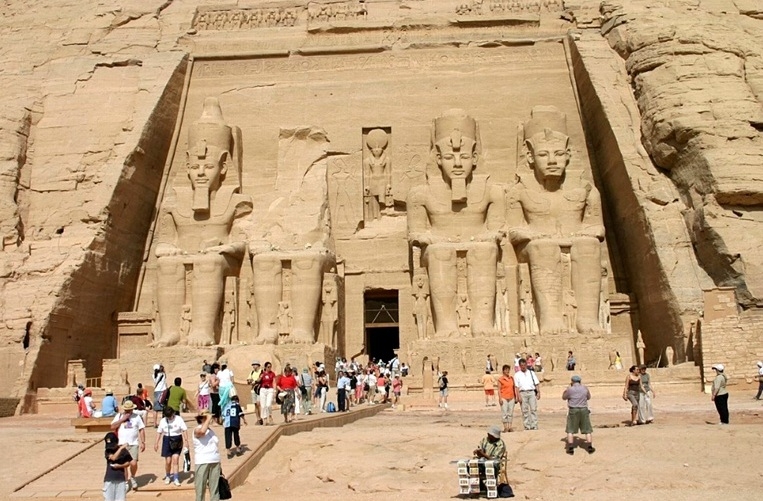
Abu Simbel Temple Egypt stands as one of the most iconic monuments of ancient Egyptian architecture, history, and religious significance. Located in southern Egypt, near the border with Sudan, this colossal temple complex was originally carved into a mountainside during the reign of Pharaoh Ramses II in the 13th century BCE. It is renowned for its monumental statues, intricate carvings, and historical significance, reflecting the power and influence of one of Egypt’s greatest pharaohs. Today, Abu Simbel is a top destination for travelers seeking an unforgettable glimpse into Egypt’s rich past, and it often features prominently in various Egypt tour packages.
The Abu Simbel complex consists of two main temples: the Great Temple, dedicated to Ramses II himself and the gods Amun, Ra-Horakhty, and Ptah, and the Small Temple, dedicated to Ramses II’s chief queen, Nefertari, and the goddess Hathor. The site is particularly famous for its colossal statues of Ramses II that flank the entrance to the Great Temple. These statues, each measuring over 20 meters in height, were intended to awe visitors and demonstrate the pharaoh’s divine power. Inside, the temple walls are adorned with detailed bas-reliefs depicting the pharaoh’s military campaigns, religious rituals, and interactions with the gods. The Small Temple, although more modest in scale, is equally impressive with its beautifully sculpted statues of Nefertari and the pharaoh, emphasizing the importance of the queen in the ancient Egyptian court.
Historical Background
The halls of the Abu Simbel Temple in Egypt extend far into the mountain. The walls are decorated with intricate sculptures that show religious rituals, military scenes, and offerings to the gods. Ramesses II's accomplishments were preserved for all time through these sculptures, which functioned as visual narratives. Because of its exact solar alignment, the inner sanctuary of Abu Simbel Temple in Egypt is particularly unique. Twice a year, sunlight passes through the temple, illuminating the sacred statues in the back chamber.
Construction of Abu Simbel Temple Egypt began around 1264 BCE during the reign of Ramses II, one of Egypt’s most prolific and celebrated pharaohs. Ramses II, also known as Ramses the Great, ruled for over 60 years and is known for his extensive building projects, military campaigns, and diplomatic achievements. Abu Simbel was constructed primarily to commemorate his victory at the Battle of Kadesh against the Hittites, to honor the gods, and to impress neighboring Nubia, consolidating Egypt’s influence in the region.
The Great Temple was strategically designed so that twice a year, on or around February 22 and October 22, the rising sun would illuminate the inner sanctuary, where the statues of Amun, Ra-Horakhty, and Ramses II stand. This astronomical phenomenon, known as the solar alignment, was an extraordinary demonstration of the Egyptians’ advanced understanding of architecture and astronomy. The precision required to achieve this effect underscores the sophistication of ancient Egyptian engineering and religious practice. Interestingly, the alignment leaves Ptah, the god of the underworld, in shadow, which many scholars interpret as a symbolic acknowledgment of the god’s connection to the afterlife.
The Small Temple at Abu Simbel was dedicated to Queen Nefertari and the goddess Hathor, symbolizing both divine and royal femininity. Its façade features six statues, four of Ramses II and two of Nefertari, which is unusual in Egyptian temple design, as it was uncommon for queens to be depicted at the same scale as the pharaoh. This inclusion highlights Nefertari’s esteemed position and reflects the pharaoh’s respect and love for his queen.
.webp)
Rediscovery and Modern Significance
Over the centuries, the temples of Abu SImbel Egypt were left unattended and gradually covered by drifting desert sands, causing them to disappear from common knowledge. In the early nineteenth century, the site began to attract renewed attention.
The modern history of Abu Simbel is particularly remarkable due to its relocation in the 1960s. The construction of the Aswan High Dam threatened to submerge the temples under the rising waters of Lake Nasser. In a massive international effort led by UNESCO, the temples were carefully dismantled and relocated to a higher site, approximately 65 meters above their original location and 200 meters back from the river. This extraordinary feat of engineering involved cutting the temple into over a thousand blocks, weighing up to 30 tons each, and reconstructing it with meticulous precision. Today, the relocated Abu Simbel stands as a testament not only to ancient Egyptian ingenuity but also to modern engineering and global cooperation.
Architecture and Artistic Features
The architecture of Abu Simbel Temple Egypt is a striking example of New Kingdom design, characterized by grandeur, symmetry, and symbolic meaning. The Great Temple’s façade features four colossal seated statues of Ramses II, each accompanied by smaller statues representing his family members, including his queen, sons, and daughters. The pharaoh is depicted wearing the double crown of Upper and Lower Egypt, symbolizing his authority over the entire kingdom. The entrance is flanked by hieroglyphic inscriptions detailing the pharaoh’s achievements, military victories, and devotion to the gods.
Inside the Great Temple, the walls are covered with intricate carvings illustrating key events from Ramses II’s reign. The most famous relief depicts the Battle of Kadesh, showing the pharaoh in a chariot leading his troops into combat. This dramatic portrayal emphasizes Ramses II’s bravery and skill as a warrior and reinforces his image as a divinely appointed ruler. The temple’s inner sanctum contains statues of the gods alongside a statue of Ramses II himself, highlighting the close association between the pharaoh and the divine.
The Small Temple, while more intimate, features equally impressive artistry. Its façade is adorned with statues of Ramses II and Nefertari, and the interior walls contain detailed scenes of the queen and pharaoh making offerings to the gods. The temple also includes columns carved in the shape of Hathor-headed figures, reflecting the goddess’s role as a protector and patron of love and music. Together, the Great and Small Temples of Abu Simbel provide a comprehensive display of Egyptian religious belief, artistic skill, and royal power.
Visiting Abu Simbel
For modern travelers, visiting Abu Simbel Temple Egypt is a unique and unforgettable experience. The site is located approximately 280 kilometers southwest of Aswan, and the journey itself offers stunning views of the Nubian desert landscape. Most travelers reach Abu Simbel via guided tours, which often include transportation by car, bus, or even domestic flights from Aswan. These tours provide context and historical background, ensuring that visitors gain a deep appreciation for the temple’s significance.
The temples are open to visitors year-round, but the best time to visit is during the cooler months from October to April, when temperatures in southern Egypt are more comfortable. Many travelers also time their visit to witness the solar alignment phenomenon, which occurs twice a year and is one of the most awe-inspiring aspects of the temple. Photography is allowed in most areas, and guided tours often provide insights into the symbolic meanings behind the carvings and statues.
For those seeking convenience and comprehensive planning, Egypt tour packages frequently include Abu Simbel as a highlight, often combined with visits to other famous sites in southern Egypt, such as Philae Temple, the Aswan High Dam, and Nubian villages. These packages typically provide transportation, accommodations, and knowledgeable guides, allowing travelers to fully immerse themselves in the history and culture of the region without logistical challenges.
Cultural and Religious Significance
Abu Simbel holds profound cultural and religious significance, both historically and today. The temples were designed not merely as monuments but as expressions of religious devotion, political authority, and national pride. Ramses II intended the temples to serve as a lasting legacy, ensuring that his name and achievements would endure for generations. The inclusion of statues and reliefs depicting interactions with the gods reinforced the pharaoh’s role as an intermediary between the divine and mortal worlds.
The temples also demonstrate the importance of celestial events in Egyptian religious practice. The twice-yearly solar alignment not only showcases the Egyptians’ astronomical knowledge but also emphasizes the connection between the pharaoh, the gods, and the natural world. Such precision highlights the integration of religion, science, and art in ancient Egyptian culture—a theme that continues to fascinate historians, archaeologists, and tourists alike.
Today, Abu Simbel Egypt serves as a symbol of Egypt’s enduring legacy and attracts visitors from around the world. It has inspired countless books, documentaries, and research studies, contributing to a broader understanding of ancient Egyptian civilization. Furthermore, the successful relocation of the temples in the 1960s stands as a testament to international collaboration in the preservation of cultural heritage.
Preservation and Tourism
Preserving Abu Simbel has always been a priority for both Egyptian authorities and the global community. Beyond the monumental relocation effort, ongoing maintenance ensures that the temples remain structurally sound and visually impressive. Conservation work involves careful monitoring of temperature, humidity, and potential erosion, as well as the protection of delicate carvings from the impact of tourism.
Tourism plays a crucial role in supporting the preservation of Abu Simbel. By including the site in Egypt tour packages, travel agencies help generate revenue that can be reinvested in conservation efforts. At the same time, these tours educate visitors about the importance of preserving cultural heritage. Responsible tourism practices, such as limiting the number of visitors at peak times, providing clear guidelines for behavior, and employing local guides, help ensure that Abu Simbel can be enjoyed by future generations.
The economic impact of tourism at Abu Simbel extends beyond the temples themselves. Local communities benefit from increased employment opportunities in hospitality, transportation, and guided services, while travelers gain a richer understanding of Nubian culture and history. Many tour packages also include visits to nearby Nubian villages, offering authentic cultural experiences such as traditional music, dance, and crafts.
Conclusion
A visit to Abu Simbel Temple Egypt is far more than a stop at a historic landmark—it is an unforgettable encounter with the brilliance of ancient Egyptian civilization and the lasting legacy of Ramesses II. The towering statues, finely carved reliefs, and the extraordinary story of the temple’s relocation make it one of Egypt’s most awe-inspiring treasures, drawing visitors from around the world.
With Flying Carpet Tour’s exceptional travel packages, exploring Abu Simbel becomes a smooth, comfortable, and truly enriching experience. Explore Abu Simbel Temple through our Egypt tour packages that's Carefully designed itineraries allow travelers to discover the magnificence of southern Egypt while enjoying professional guidance, seamless transportation, and thoughtfully arranged services. Whether standing before the colossal figures at the entrance, admiring the detailed artwork within, or witnessing the remarkable solar alignment phenomenon, guests can fully immerse themselves in the grandeur of the site.
Choosing Flying Carpet Tour means turning a simple trip into a memorable journey through history where culture, comfort, and value come together to create an extraordinary Egyptian adventure.