
Funduq Al Najjarin: Discover the Historic Jewel of Fez, Morocco
Few places capture the spirit of Morocco's rich heritage as beautifully as Funduq Al Najjarin. Located in the heart of the ancient medina of Fez, this magnificent historic building is one of the country's finest examples of traditional Moroccan architecture. Once serving as a bustling inn for traveling merchants, Funduq Al Najjarin has evolved into a fascinating museum that preserves centuries of craftsmanship, commerce, and cultural exchange.
Whether you are passionate about history, architecture, photography, or authentic cultural experiences, visiting Funduq Al Najjarin offers an unforgettable journey into Morocco's past. Its beautifully carved cedar wood, intricate zellige tilework, peaceful courtyard, and panoramic rooftop views make it one of the most rewarding attractions in Fez.
In this comprehensive guide, you'll learn about the history of Funduq Al Najjarin, why it deserves a place on every travel itinerary, practical visitor information, travel tips, common mistakes to avoid, and everything you need to know before planning your visit.
What Is Funduq Al Najjarin?
The word "funduq" comes from Arabic and refers to a caravanserai or merchant inn. Throughout the medieval Islamic world, funduqs played a vital role by providing lodging, storage facilities, and trading spaces for merchants traveling long distances.
Funduq Al Najjarin is among the best-preserved examples of these historic inns in Morocco. Today, it serves as the Nejjarine Museum of Wooden Arts and Crafts, showcasing Morocco's centuries-old woodworking traditions while preserving the original structure.
Situated inside the UNESCO-listed Medina of Fez, the building stands as a remarkable reminder of the city's importance as one of the greatest commercial and intellectual centers of the medieval world.
Planning to explore Fez in depth? Discover the city's hidden gems with our Fez Day Tours and enjoy an unforgettable guided experience through Morocco's cultural capital.
The Fascinating History of Funduq Al Najjarin
The history of Funduq Al Najjarin dates back to the early 18th century during the reign of Sultan Moulay Ismail. At the time, Fez was one of North Africa's most prosperous trading cities, attracting merchants from across Africa, Europe, and the Middle East.
Traveling merchants often spent weeks or even months on dangerous trade routes carrying valuable goods including:
-
Spices
-
Leather
-
Silk
-
Jewelry
-
Carpets
-
Precious metals
-
Cedar wood
-
Textiles
Merchant inns like Funduq Al Najjarin became essential hubs where traders could safely store merchandise, rest with their animals, conduct business negotiations, and exchange news from distant lands.
The building was strategically located near important markets where carpenters and woodworkers practiced their crafts. This explains the name "Al Najjarin," which translates roughly to "the carpenters."
For centuries, the building witnessed countless commercial transactions that helped shape Morocco's economy and cultural identity.
Architectural Beauty That Amazes Every Visitor
One of the biggest reasons tourists visit Funduq Al Najjarin is its breathtaking architecture.
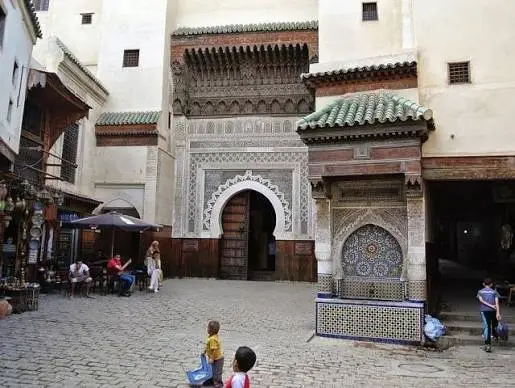
The exterior alone attracts photographers from around the world thanks to its impressive carved cedar entrance, one of the finest examples of Moroccan wood craftsmanship.
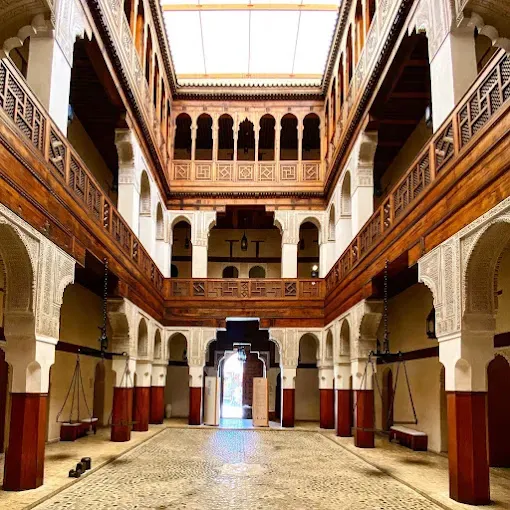
Inside, visitors immediately enter a peaceful central courtyard surrounded by multiple floors supported by beautifully carved wooden balconies.
Some of the architectural highlights include:
-
Hand-carved cedar wood
-
Colorful zellige mosaic tiles
-
Decorative plasterwork
-
Traditional Moroccan arches
-
Elegant wooden galleries
-
Ornate fountains
-
Historic merchant rooms
Every detail reflects the incredible artistic skills passed down through generations of Moroccan craftsmen.
Unlike many historic buildings that have lost their original character, Funduq Al Najjarin remains remarkably authentic thanks to careful restoration efforts completed in the late 20th century.
Why Funduq Al Najjarin Is Historically Important?
The historical significance of Funduq Al Najjarin extends far beyond its beautiful appearance.
It represents several important chapters of Moroccan history.
A Center of Medieval Trade
Fez was one of Africa's most influential commercial cities.
Merchants from:
-
Andalusia
-
Timbuktu
-
Cairo
-
Marrakech
-
Tunis
-
Europe
passed through its markets carrying valuable products.
Funduq Al Najjarin served as one of the city's essential commercial centers where goods were safely stored and business relationships were established.
Preservation of Traditional Crafts
The museum celebrates Morocco's woodworking traditions, displaying antique tools, furniture, doors, musical instruments, and decorative objects crafted by skilled artisans over hundreds of years.
These exhibits demonstrate how woodworking shaped Moroccan architecture and daily life.
Reflection of Islamic Urban Planning
The building perfectly illustrates how medieval Islamic cities were carefully organized.
Markets, workshops, mosques, schools, fountains, and merchant inns were all located within walking distance, creating vibrant communities that balanced commerce, education, and religion.
UNESCO Heritage
Since the Medina of Fez became a UNESCO World Heritage Site, preserving landmarks like Funduq Al Najjarin has become an international priority.
The building helps visitors understand why Fez remains one of the world's greatest surviving medieval cities.
Why Tourists Should Visit Funduq Al Najjarin?
Many travelers overlook this hidden treasure while rushing through the crowded streets of Fez.
However, those who enter discover one of the city's most rewarding experiences.
Here are several reasons why it deserves a place on your itinerary.
Experience Authentic Moroccan Architecture
Few buildings display traditional Moroccan craftsmanship with such perfection.
Every room showcases remarkable attention to detail.
Learn About Morocco's Trading History
Instead of simply reading about history, visitors walk through the same halls once occupied by merchants centuries ago.
Enjoy Peace Away from Busy Streets
The Medina of Fez can be lively and overwhelming.
The peaceful courtyard inside the museum provides a welcome escape from the bustling alleys outside.
Visit the Rooftop Terrace
Many visitors consider the rooftop one of the museum's hidden gems.
From here, you can admire panoramic views over the rooftops of the ancient medina.
Excellent Photography Opportunities
Architectural photographers especially appreciate:
-
Wooden balconies
-
Decorative arches
-
Mosaic floors
-
Courtyard symmetry
-
Rooftop scenery
Natural light entering through the courtyard creates beautiful photography conditions throughout the day.
Museum Collections
The museum houses an impressive collection illustrating Morocco's woodworking heritage.
Among the exhibits are:
-
Antique wooden doors
-
Wedding chests
-
Traditional furniture
-
Quran stands
-
Musical instruments
-
Artisan tools
-
Decorative carvings
-
Household objects
-
Historic locks
-
Architectural panels
Each exhibit tells part of Morocco's artistic story and demonstrates the exceptional skills of local craftsmen.
Visitor Information
Location
Funduq Al Najjarin is located inside the historic Medina of Fez, Morocco, near Nejjarine Square and the famous Nejjarine Fountain.
The building is easily reached on foot while exploring the old city.
Opening Hours
Typical opening hours are:
-
Daily: 10:00 AM – 5:00 PM
Hours may vary during religious holidays or special events, so checking before your visit is recommended.
Ticket Prices
Approximate admission fees:
-
Adults: around 20 Moroccan Dirhams
-
Children: reduced rates may apply
-
Local students: discounts may be available
Prices occasionally change, so verify current rates before visiting.
Best Time to Visit
The ideal months are:
-
March
-
April
-
May
-
September
-
October
-
November
These seasons offer pleasant temperatures for exploring the Medina comfortably.
For photography, early morning provides softer lighting and fewer visitors.
Recommended Duration
Allow approximately:
1–2 hours
This gives enough time to:
-
Explore museum exhibits
-
Admire architecture
-
Take photographs
-
Visit the rooftop terrace
-
Read exhibit information
History enthusiasts may wish to stay longer.
What to Wear
Comfort is essential while exploring the old city.
Recommended clothing includes:
-
Comfortable walking shoes
-
Lightweight clothing during summer
-
Layers in cooler months
-
Modest attire respecting local customs
-
Hat during sunny weather
-
Sunglasses
Since the Medina has uneven stone streets, sturdy footwear is highly recommended.
What to Bring
Before heading to Funduq Al Najjarin, consider bringing:
-
Water bottle
-
Camera
-
Smartphone
-
Portable charger
-
Cash for entrance fees
-
Sunscreen
-
Small backpack
-
Travel guide
-
Notebook if interested in history
These essentials make your visit more enjoyable.
Nearby Attractions
Since the museum sits in the heart of Fez, many famous landmarks are within walking distance.
Popular nearby attractions include:
-
Al Quaraouiyine University
-
Bou Inania Madrasa
-
Chouara Tannery
-
Nejjarine Fountain
-
Souks of Fez
-
Traditional artisan workshops
Combining several attractions creates a full day of exploration.
Tips for the Best Experience
To make the most of your visit, follow these helpful suggestions.
Arrive Early
Morning visits are quieter and provide better lighting.
Hire a Local Guide
The Medina's maze-like streets can be confusing.
A knowledgeable guide also explains historical details that many visitors would otherwise miss.
Respect Museum Rules
Avoid touching historical artifacts.
Follow photography guidelines if restrictions exist.
Spend Time on the Rooftop
Many tourists overlook this area, yet it offers some of the best panoramic views in the Medina.
Explore Slowly
The beauty lies in the details.
Take time to admire the wood carvings, mosaics, and craftsmanship.
Common Mistakes Tourists Should Avoid
Many first-time visitors make avoidable mistakes.
Rushing Through the Museum
The building deserves careful exploration rather than a quick visit.
Wearing Uncomfortable Shoes
The Medina's narrow cobbled streets involve considerable walking.
Visiting During Peak Afternoon Heat
Summer afternoons can become extremely hot.
Morning visits are generally more comfortable.
Skipping the Rooftop
Some visitors leave without discovering the rooftop terrace.
This is one of the museum's highlights.
Not Carrying Cash
Small entrance fees and nearby shops may not always accept credit cards.
Getting Lost in the Medina
Downloading an offline map beforehand can save time.
Cultural Etiquette
Respecting local customs enhances your experience.
Some useful etiquette tips include:
-
Dress modestly.
-
Ask permission before photographing people.
-
Be polite when bargaining in nearby markets.
-
Keep noise levels low inside the museum.
-
Respect religious sites located nearby.
Friendly interactions often lead to memorable cultural exchanges.
FAQ
Where is Funduq Al Najjarin located?
It is located in the historic Medina of Fez, Morocco, near Nejjarine Square and the famous Nejjarine Fountain.
Why is Funduq Al Najjarin famous?
It is famous for its outstanding Moroccan architecture, historical importance as a merchant inn, and its museum dedicated to traditional wooden arts and crafts.
How long does a visit take?
Most visitors spend between one and two hours exploring the museum and enjoying the rooftop views.
Is it suitable for children?
Yes. Families often enjoy the architecture, exhibits, and peaceful courtyard. Parents should supervise younger children around the historic structure.
Can visitors take photographs?
Photography is generally permitted for personal use, although rules may vary. It's best to check with museum staff upon arrival.
Is the museum wheelchair accessible?
Due to the historic nature of the building, accessibility may be limited, particularly on upper floors. Visitors with mobility concerns should inquire in advance.
What is the best season to visit?
Spring and autumn offer the most comfortable weather for walking through the Medina and exploring nearby attractions.
Do I need a guide?
While independent visits are enjoyable, a local guide can provide valuable historical context and help navigate the Medina.
Conclusion
A visit to Funduq Al Najjarin is much more than a stop at a museum—it is an opportunity to step back into the vibrant commercial heart of medieval Morocco. From its remarkable architecture and intricate cedar wood carvings to its fascinating exhibits on traditional craftsmanship, every corner of the building tells a story of trade, culture, and artistic excellence. Combined with its prime location in the historic Medina of Fez, stunning rooftop views, and peaceful atmosphere, Funduq Al Najjarin offers an enriching experience for travelers of all interests. Whether you are exploring Morocco for the first time or returning to uncover more of its heritage, this historic landmark deserves a prominent place on your itinerary and promises memories that will last long after your journey ends.
Looking for a complete Moroccan adventure? Browse our Morocco Private Tours 2026 and create a personalized journey to explore the country's most iconic destinations at your own pace.