
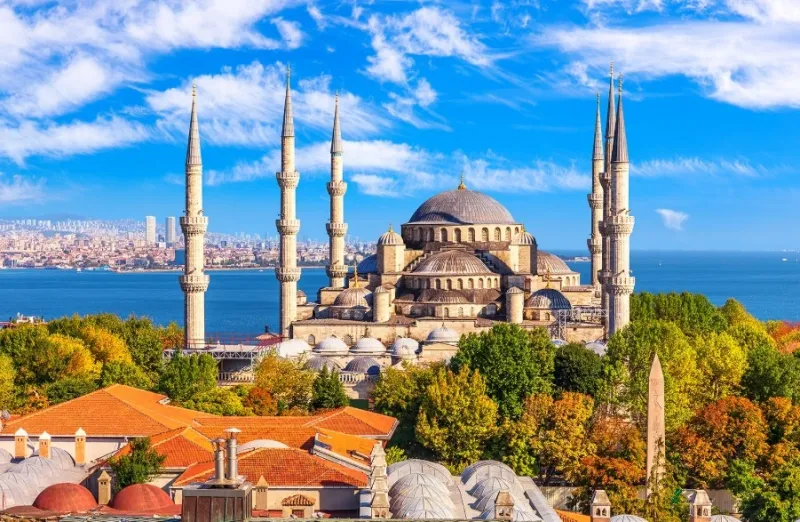
The Blue Mosque, officially known as the Sultan Ahmed Mosque, is one of the most famous landmarks in Istanbul and a masterpiece of Ottoman architecture. Renowned for its elegant domes, six towering minarets, and stunning blue İznik tilework, the mosque is both an active place of worship and one of the most visited tourist attractions in Turkey.
Located in the historic Sultanahmet district, directly facing the world-famous Hagia Sophia, the Blue Mosque represents the peak of classical Ottoman design. It continues to attract millions of visitors every year, offering a unique blend of spiritual atmosphere, artistic beauty, and historical significance.
Historical Background
Construction and Patronage
The Blue Mosque was commissioned by Sultan Ahmed I and built between 1609 and 1616 during the height of the Ottoman Empire. The young sultan aimed to construct a grand imperial mosque that would rival the magnificence of Hagia Sophia and reinforce Ottoman power and prestige.
The mosque was designed by the architect Sedefkâr Mehmed Ağa, a student of the famous Ottoman architect Mimar Sinan. The project reflected the architectural traditions of the empire while introducing new artistic elements that would define the mosque’s unique identity.
Ottoman Significance
At the time of its construction, the Blue Mosque served not only as a religious center but also as part of a larger complex that included:
-
A madrasa (Islamic school)
-
A hospital
-
A marketplace
-
A public kitchen
This made it an important social and cultural hub for the people of Istanbul.
Architectural Design
The Blue Mosque is considered one of the greatest achievements of Ottoman architecture.
Exterior Structure
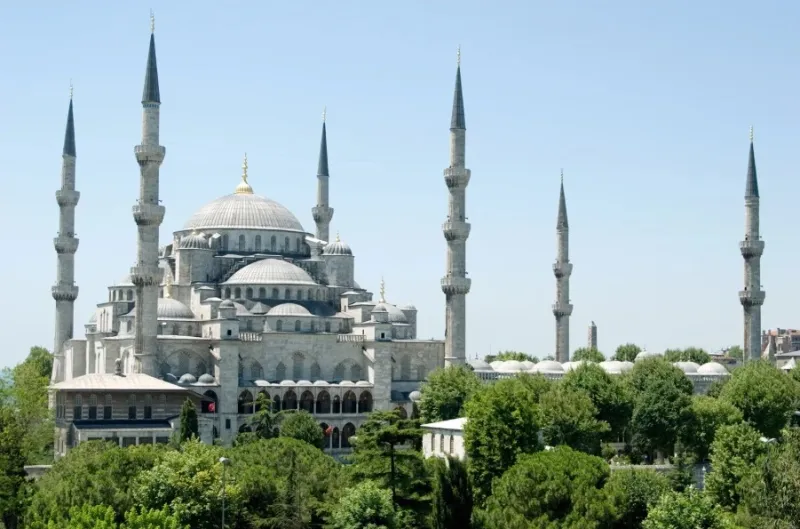
The mosque’s exterior features a cascading arrangement of domes and semi-domes, creating a harmonious and balanced design. Its six minarets were a unique feature at the time, as most mosques had only one or two.
The structure is built from stone and marble, giving it a grand and imposing appearance.
The Six Minarets
One of the most distinctive features of the Blue Mosque is its six minarets. This was unusual when it was built, as only the Great Mosque in Mecca had the same number.
According to historical accounts, an additional minaret was later added to the mosque in Mecca to resolve the controversy.
Interior Design
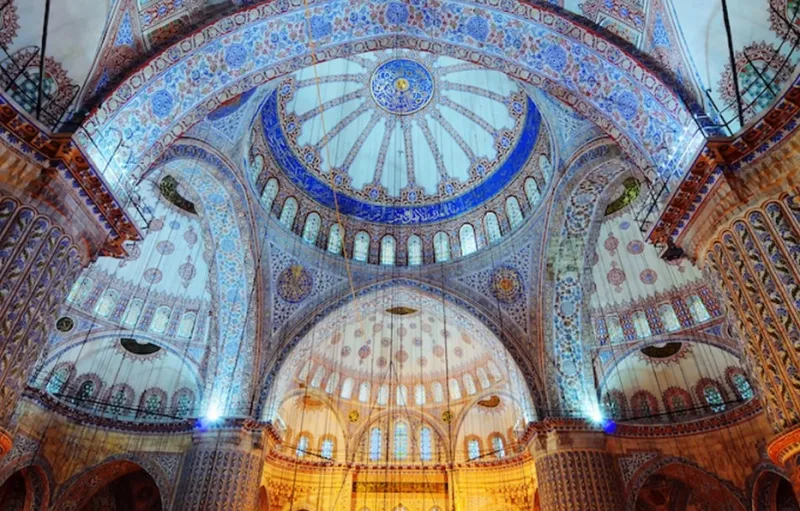
The interior of the Blue Mosque is what gives it its famous name.
It is decorated with more than 20,000 handmade İznik tiles in shades of blue, green, and turquoise. These tiles feature floral patterns, geometric designs, and intricate motifs.
Other key interior features include:
-
A massive central dome supported by four large pillars
-
Over 200 stained glass windows that allow natural light to fill the space
-
Elegant Arabic calligraphy with verses from the Quran
-
A beautifully designed mihrab and minbar
The overall effect is a serene and luminous atmosphere that enhances the spiritual experience.
Religious Importance
The Blue Mosque is an active place of worship and one of the most important mosques in Istanbul.
It plays a central role in:
-
Daily prayers
-
Friday congregational prayers
-
Islamic holidays and celebrations
Visitors are welcome outside of prayer times, but they are expected to respect the religious practices and dress modestly.
Cultural Significance
The Blue Mosque is more than just a religious building—it is a symbol of Istanbul’s cultural identity and Ottoman heritage.
Its design reflects the artistic achievements of the Ottoman Empire and its ability to blend functionality with beauty.
The mosque also represents the historical connection between Islamic and Byzantine influences, particularly due to its proximity to Hagia Sophia.
Location and Surroundings
The Blue Mosque is located in Sultanahmet Square, one of the most historic areas in Istanbul.
Nearby attractions include:
-
Hagia Sophia
-
Topkapi Palace
-
Basilica Cistern
-
Grand Bazaar
This central location makes it easy for visitors to explore multiple landmarks in one day.
Visiting the Blue Mosque
Entry and Dress Code
-
Entry is free
-
Modest clothing is required
-
Women are asked to cover their hair
-
Shoes must be removed before entering
Best Time to Visit
The best times to visit the Blue Mosque are:
-
Early morning
-
Late afternoon
-
Outside of prayer times
These times offer a quieter and more comfortable experience.
The Blue Mosque Today
Today, the Blue Mosque continues to serve as both a place of worship and a major tourist attraction.
It remains one of the most photographed landmarks in Istanbul and a must-visit destination for travelers.
Ongoing restoration efforts ensure that the mosque’s beauty and structure are preserved for future generations.
Why Visit the Blue Mosque
The Blue Mosque offers a unique combination of history, architecture, and spirituality.
Highlights
-
Iconic Ottoman architecture
-
Stunning blue tile interior
-
Central location in Istanbul
-
Cultural and religious significance
Travel Tips
-
Visit early to avoid crowds
-
Dress appropriately
-
Combine with nearby attractions
-
Respect prayer times
Conclusion
The Blue Mosque stands as one of the most beautiful and historically significant landmarks in Istanbul. Its breathtaking design, rich history, and spiritual importance make it an essential destination for any traveler visiting Turkey.
From its elegant domes to its intricate blue tiles, the mosque offers a memorable experience that reflects the grandeur of the Ottoman Empire.
Planning to visit Istanbul Excusions? Visit our website today to explore exclusive Turkey tour packages, guided city tours, and unforgettable travel experiences tailored just for you.