
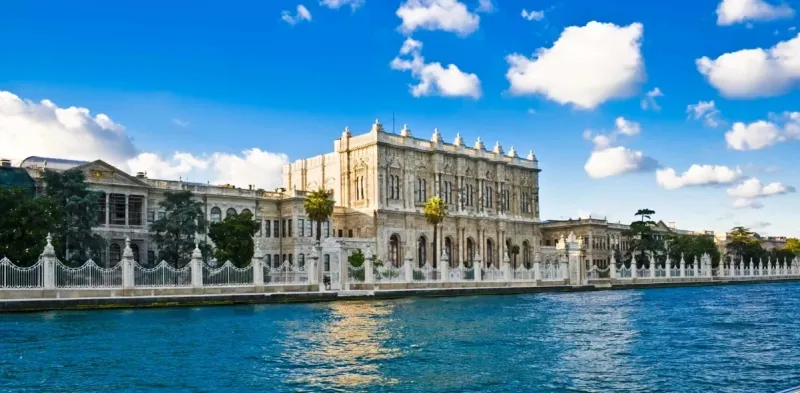
The Dolmabahce Palace, often referred to as Dolmabahce Palace Istanbul, is one of the most magnificent and luxurious palaces in Turkey. Located along the European shore of the Bosphorus Strait, this 19th-century masterpiece represents the final great architectural expression of the Ottoman Empire.
Unlike earlier Ottoman palaces such as Topkapi Palace, Dolmabahce Palace reflects a strong European influence, blending Baroque, Rococo, and Neoclassical styles with traditional Ottoman design. Today, it stands as a museum and a symbol of imperial elegance, attracting visitors from around the world.
Historical Background
Construction and Purpose
Dolmabahce Palace was commissioned by Sultan Abdulmecid I and constructed between 1843 and 1856. The palace was built to replace the older Topkapi Palace as the main administrative center of the Ottoman Empire.
The name “Dolmabahce” means “filled garden”, referring to the area where the palace now stands, which was originally a bay that was filled in during the Ottoman period.
The Late Ottoman Era
Dolmabahce Palace became the official residence of the Ottoman sultans and the center of state affairs during the final years of the empire.
It hosted:
-
Foreign dignitaries
-
Diplomatic meetings
-
Royal ceremonies
The palace symbolized the modernization and Westernization efforts of the Ottoman Empire during the 19th century.
Modern Historical Role
After the establishment of the Turkish Republic, Dolmabahce Palace gained additional importance as the residence of Mustafa Kemal Atatürk during his visits to Istanbul.
Atatürk spent his final days in the palace, and his room is preserved as a place of national significance.
Architectural Design
Dolmabahce Palace is one of the most elaborate architectural structures in Turkey.
Overall Structure
The palace consists of three main sections:
-
The Selamlık (official and administrative area)
-
The Harem (private residence of the royal family)
-
The ceremonial halls
The entire complex includes 285 rooms, 46 halls, 6 baths, and 68 toilets.
European Influence
The design of Dolmabahce Palace reflects strong European styles, including:
-
Baroque
-
Rococo
-
Neoclassical
These styles are combined with traditional Ottoman elements, creating a unique architectural identity.
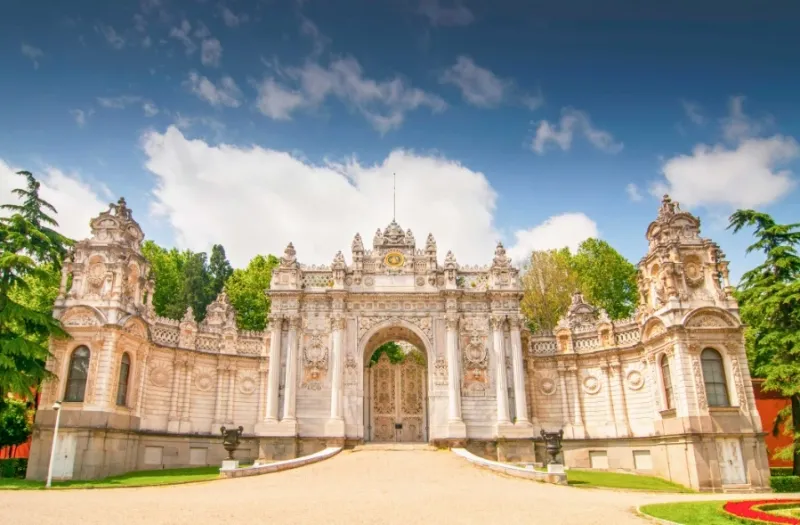
Exterior Design
The palace façade stretches along the Bosphorus and features:
-
Symmetrical design
-
Grand entrances
-
Decorative columns and carvings
The waterfront location enhances its visual impact and elegance.
Interior Highlights
The interior of Dolmabahce Palace is renowned for its luxury and attention to detail.
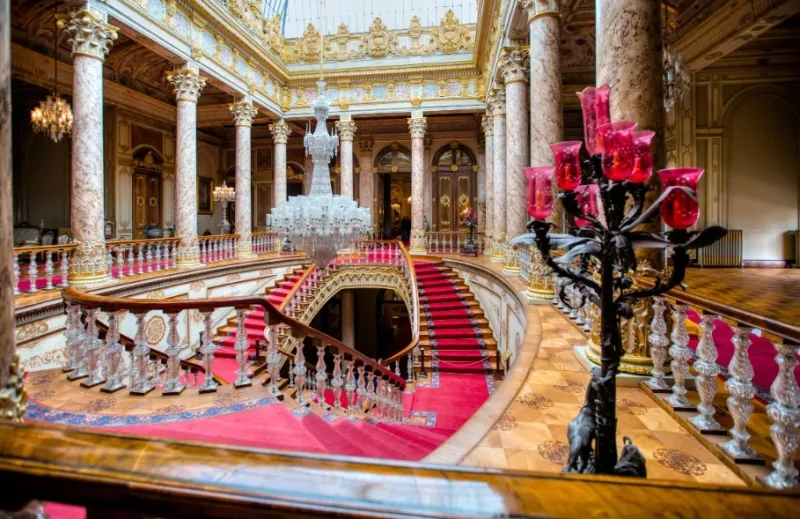
Crystal Staircase
One of the most famous features is the Crystal Staircase, made of Baccarat crystal, brass, and mahogany.
Ceremonial Hall
The Ceremonial Hall is one of the largest rooms in the palace and features:
-
A massive dome
-
A giant chandelier weighing several tons
-
Luxurious decorations and carpets
Chandeliers and Decorations
The palace contains:
-
Hundreds of crystal chandeliers
-
Gold-leaf decorations
-
Fine silk carpets
The interiors reflect the wealth and artistic achievements of the Ottoman Empire.
The Harem Section
The Harem at Dolmabahce Palace was the private living area of the sultan and his family.
It includes:
-
Bedrooms
-
Reception rooms
-
Family living spaces
Compared to the Harem at Topkapi Palace, the Dolmabahce Harem reflects a more modern and European style.
Cultural and Historical Significance
Dolmabahce Palace represents the transformation of the Ottoman Empire during its final century.
It highlights:
-
Western influence on Ottoman culture
-
The transition from traditional to modern governance
-
The lifestyle of the last Ottoman sultans
The palace is also deeply connected to the legacy of Mustafa Kemal Atatürk.
Visiting Dolmabahce Palace
Entry and Tours
Visitors can explore Dolmabahce Palace through guided tours, which provide access to:
-
The Selamlık
-
The Harem
-
The gardens
Best Time to Visit
-
Morning hours for fewer crowds
-
Spring and autumn for pleasant weather
Visitor Experience
A visit to Dolmabahce Palace offers:
-
A glimpse into royal life
-
Insight into Ottoman history
-
Stunning views of the Bosphorus
Gardens and Bosphorus Views
The palace gardens are beautifully landscaped and provide a peaceful environment for visitors.
From the palace grounds, visitors can enjoy panoramic views of the Bosphorus Strait, making it one of the most scenic locations in Istanbul.
Nearby Attractions
Dolmabahce Palace is located near several popular attractions in Istanbul:
-
Taksim Square
-
Istiklal Avenue
-
Galata Tower
These sites can easily be combined in a single itinerary.
Preservation and Restoration
Dolmabahce Palace has undergone extensive restoration efforts to preserve its structure and artwork.
These include:
-
Maintenance of interiors and decorations
-
Restoration of chandeliers and furniture
-
Conservation of historical artifacts
Why Visit Dolmabahce Palace
Dolmabahce Palace is one of the most impressive attractions in Istanbul.
Highlights
-
Luxurious interiors
-
Unique blend of Ottoman and European architecture
-
Historical significance
-
Stunning Bosphorus location
Conclusion
The Dolmabahce Palace stands as a symbol of elegance, power, and transformation in Istanbul. Its breathtaking design, rich history, and cultural importance make it a must-visit destination for travelers.
From its grand halls to its beautiful gardens, Dolmabahce Palace offers an unforgettable journey into the final chapter of the Ottoman Empire.
Planning your trip to Istanbul Excursion? Visit our website today to explore exclusive Turkey travel packages, guided tours, and unforgettable experiences across Istanbul and beyond.