
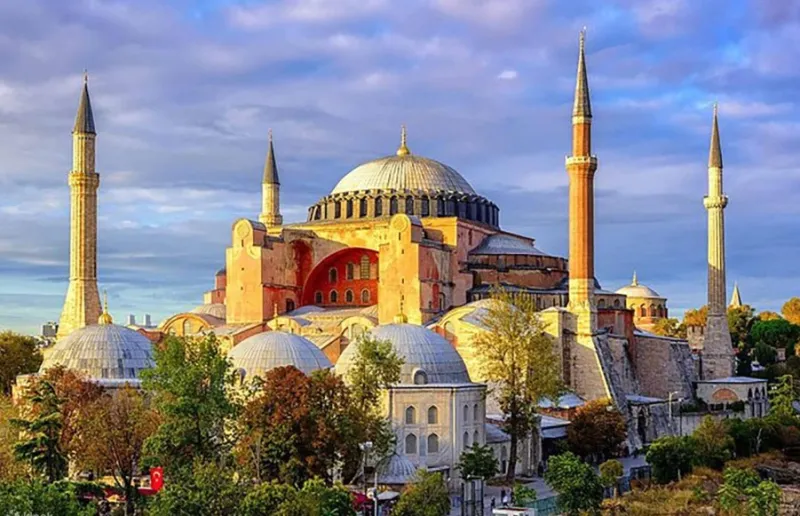
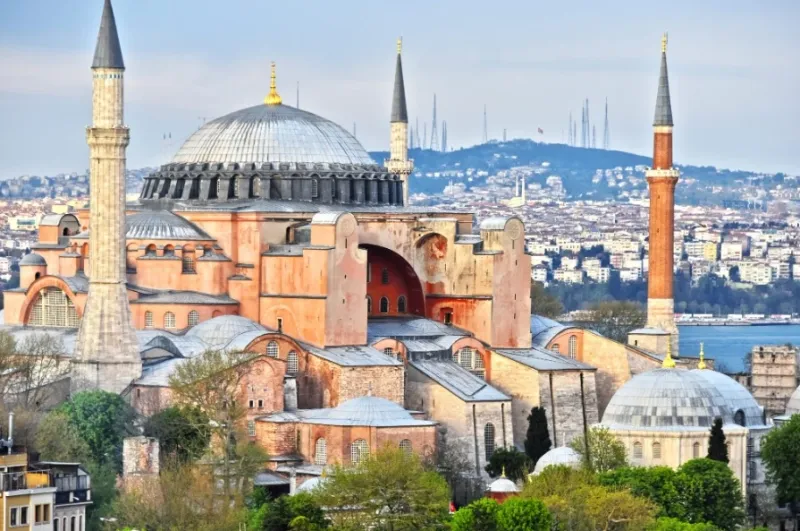
The Hagia Sophia, also known today as the Hagia Sophia Mosque, stands as one of the most iconic and historically significant monuments in the world. Located in the heart of Istanbul, this architectural marvel has witnessed the rise and fall of empires, serving as a cathedral, mosque, museum, and once again a mosque.
Built in the 6th century during the reign of Byzantine Emperor Justinian I, Hagia Sophia has long been celebrated for its massive dome, intricate mosaics, and groundbreaking engineering. Today, it continues to attract millions of visitors annually, offering a unique glimpse into the cultural and religious transformations that shaped both Europe and the Middle East.
Historical Background
Byzantine Era
Hagia Sophia was originally constructed in 537 AD under the direction of Emperor Justinian I. Designed by the architects Anthemius of Tralles and Isidore of Miletus, it was built as a Christian cathedral and served as the center of Eastern Orthodox Christianity for nearly a thousand years.
At the time of its completion, Hagia Sophia was the largest cathedral in the world. Its immense dome symbolized the heavens and represented the architectural brilliance of the Byzantine Empire.
Ottoman Era
In 1453, when Sultan Mehmed II conquered Constantinople, Hagia Sophia was converted into a mosque. During this period, several Islamic elements were added, including minarets, a mihrab, and a minbar.
Despite these additions, many of the original Christian mosaics were preserved, creating a unique blend of Byzantine and Islamic art that remains visible today.
Modern Era
In 1935, under the leadership of Mustafa Kemal Atatürk, Hagia Sophia was transformed into a museum, symbolizing Turkey’s secular identity.
In 2020, it was officially reconverted into a mosque, now known as the Hagia Sophia Mosque, while remaining open to visitors from around the world.
Architectural Significance
Hagia Sophia is widely regarded as one of the greatest architectural achievements in human history.
The Dome
The massive central dome, measuring approximately 31 meters in diameter, appears to float above the structure due to the innovative use of pendentives. This design was revolutionary at the time and influenced architecture for centuries.
Interior Design
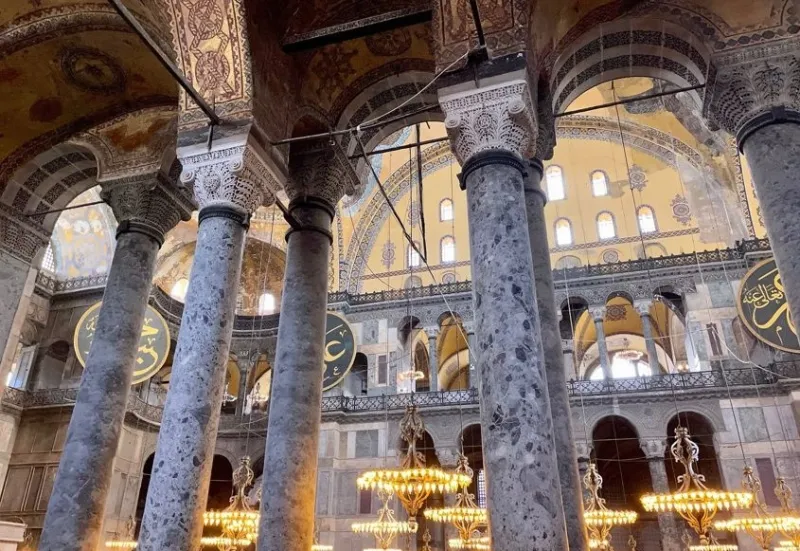
The interior of Hagia Sophia is a stunning combination of:
-
Marble columns and walls
-
Gold mosaics depicting Christian figures
-
Islamic calligraphy panels
-
Intricate geometric patterns
The blend of artistic styles reflects the building’s transformation across different eras.
Exterior Features
The exterior of Hagia Sophia includes:
-
Four minarets added during the Ottoman period
-
A large central dome surrounded by smaller domes
-
Massive buttresses supporting the structure
These elements contribute to its majestic and recognizable silhouette.
Religious and Cultural Importance
Hagia Sophia holds deep significance for both Christianity and Islam.
For Christians, it was the most important cathedral of the Byzantine Empire and a symbol of Orthodox faith.
For Muslims, it has been an important mosque since the Ottoman era, representing Islamic heritage and architectural excellence.
Today, it stands as a powerful symbol of cultural coexistence and historical continuity.
Visiting Hagia Sophia Mosque
Visitors to Hagia Sophia Mosque can experience both its spiritual atmosphere and historical richness.
What to Expect
-
Free entry for visitors
-
Modest dress required
-
Prayer times may limit tourist access
-
Separate areas for worship and tourism
Best Time to Visit
The best times to visit Hagia Sophia are:
-
Early morning to avoid crowds
-
Late afternoon for softer lighting
-
Outside of prayer times for uninterrupted exploration
Hagia Sophia in Art and Culture
Hagia Sophia has inspired countless artists, writers, and historians throughout history.
It has been featured in:
-
Books and historical studies
-
Documentaries
-
Films and photography
Its timeless beauty continues to captivate people from all over the world.
Preservation and Restoration
Over the centuries, Hagia Sophia has undergone numerous restoration projects to preserve its structure and artwork.
Efforts include:
-
Reinforcing the dome
-
Restoring mosaics
-
Maintaining structural stability
These initiatives ensure that future generations can continue to appreciate this historic monument.
Why Hagia Sophia is a Must-Visit
Hagia Sophia offers a unique experience that combines history, religion, and architecture.
Highlights
-
One of the oldest and most important buildings in the world
-
A blend of Byzantine and Ottoman design
-
A symbol of cultural transformation
-
Located in the heart of Istanbul’s historic district
Travel Tips
When visiting Hagia Sophia, keep in mind:
-
Dress modestly (headscarves for women recommended)
-
Visit early to avoid crowds
-
Respect prayer times
-
Combine your visit with nearby attractions like the Blue Mosque and Topkapi Palace
Conclusion
The Hagia Sophia Mosque is more than just a historical monument—it is a living symbol of Istanbul’s rich cultural heritage and its unique position at the crossroads of civilizations.
From its origins as a grand cathedral to its role as a mosque today, Hagia Sophia continues to inspire awe and admiration. Its architectural brilliance, historical significance, and spiritual atmosphere make it one of the most important landmarks in the world.
Visit Istanbul Excursionswebsite today to explore exclusive Turkey Tour packages, guided tours in Istanbul, and unforgettable cultural experiences.