
Agha Khan Mausoleum
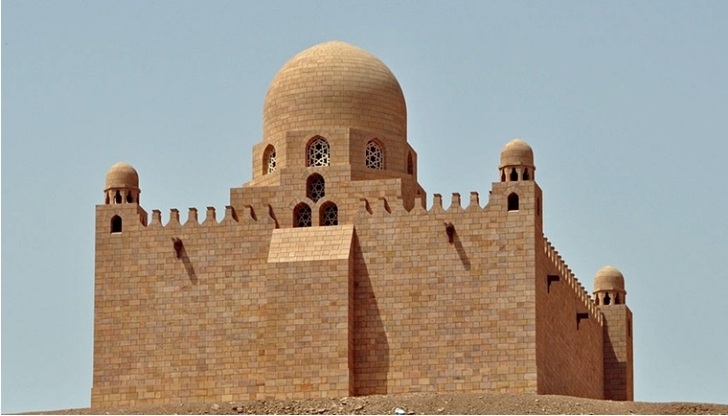
What Is the Aga Khan Mausoleum and Why Does It Matter?
The Aga Khan Mausoleum is one of the most refined and peaceful monuments in southern Egypt, standing proudly on a hill overlooking the Nile in Aswan. The Agha Khan Mausoleum is not just a tomb; it is a symbol of legacy, spirituality, and cultural continuity. Built as the final resting place of Aga Khan III, the Agha Khan Mausoleum reflects a deep connection between Egypt and global Islamic leadership. Its importance lies not only in who is buried there but also in how it represents dignity, simplicity, and timeless architectural elegance.
Who Was Aga Khan III and Why Is the Agha Khan Mausoleum His Final Resting Place?
Aga Khan III was a prominent leader, reformer, and spiritual figure who played a significant role in international affairs and Muslim communities worldwide. The Agha Khan Mausoleum was chosen as his burial site because of his strong connection to Aswan, where he spent considerable time. The Agha Khan Mausoleum reflects his appreciation for Egypt’s tranquil environment and cultural depth. His life’s work in education, diplomacy, and social reform is symbolized in the quiet dignity of the Agha Khan Mausoleum, making it a site of both historical and emotional significance.
Where Is the Agha Khan Mausoleum Located and What Makes Its Setting Unique?
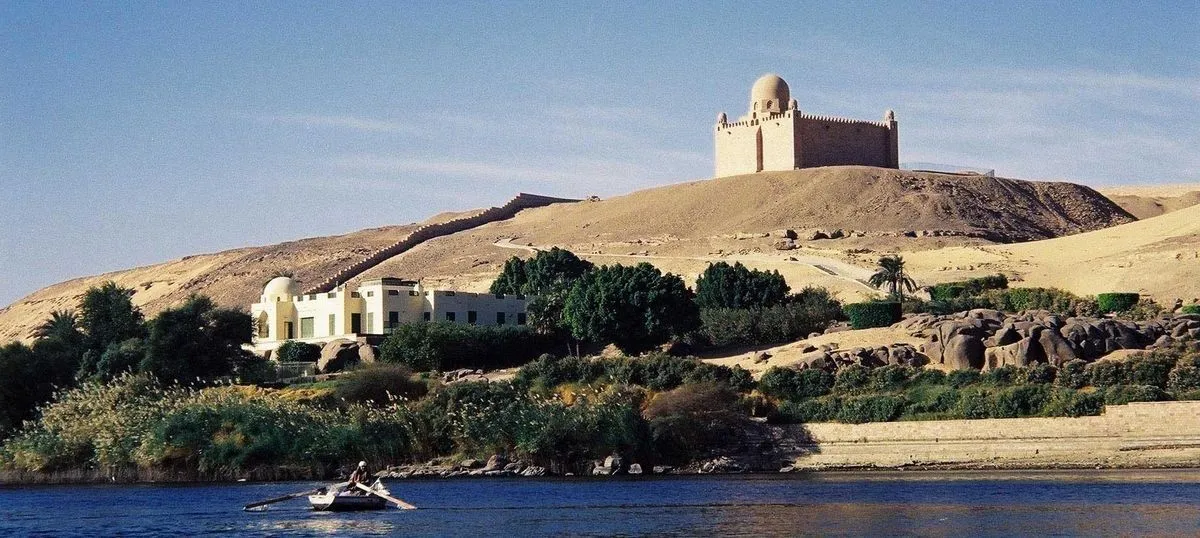
The Agha Khan Mausoleum is located on the west bank of the Nile River in Aswan, offering panoramic views of the river and surrounding desert. The elevated position of the Agha Khan Mausoleum provides a sense of isolation and peace, far removed from the noise of urban life. The natural beauty surrounding the Agha Khan Mausoleum enhances its spiritual atmosphere, making it a perfect place for reflection. Visitors often find that the journey to the Agha Khan Mausoleum is as memorable as the site itself.
What Architectural Style Defines the Agha Khan Mausoleum?
The Agha Khan Mausoleum is designed in a style inspired by Fatimid architecture, characterized by simplicity, symmetry, and elegance. Built from pink limestone, the Agha Khan Mausoleum blends seamlessly with the desert landscape, creating a harmonious visual effect. The dome and geometric structure of the Agha Khan Mausoleum reflect traditional Islamic design principles while maintaining a modern aesthetic. This architectural balance gives the Agha Khan Mausoleum its timeless appeal and distinguishes it from other monuments in Egypt.
What Can Visitors See Inside the Agha Khan Mausoleum?
Although access to the interior of the Agha Khan Mausoleum is limited, it is known to house a beautifully crafted marble tomb. The Agha Khan Mausoleum interior is designed with understated elegance, emphasizing spiritual reverence over decorative excess. Even without entering, visitors can feel the significance of the Agha Khan Mausoleum through its serene exterior and surroundings. The sense of mystery surrounding the Agha Khan Mausoleum adds to its charm and intrigue.
Try this excursion while your visit to Aswan through our Egypt Classic Tours 2026 / 2027
How Did Yvonne Blanche Labrousse Contribute to the Story of the Agha Khan Mausoleum?
Yvonne Blanche Labrousse, the wife of Aga Khan III, played a vital role in maintaining the Agha Khan Mausoleum after his death. For many years, she visited the Agha Khan Mausoleum daily, placing a fresh red rose on his tomb. This heartfelt gesture became a symbol of enduring love and devotion. Her dedication ensured that the Agha Khan Mausoleum remained a place of respect and remembrance, adding a deeply personal dimension to its historical importance.
Why Is the Agha Khan Mausoleum Considered a Place of Peace and Reflection?
The Agha Khan Mausoleum is widely regarded as a sanctuary of calm and introspection. Its location, architecture, and historical significance combine to create a unique atmosphere of tranquility. Visitors to the Agha Khan Mausoleum often describe a sense of stillness and spiritual connection. The quiet environment surrounding the Agha Khan Mausoleum encourages reflection, making it more than just a tourist attraction. It is a place where history and emotion coexist in harmony.
How Does the Agha Khan Mausoleum Attract Tourists Today?
The Agha Khan Mausoleum continues to attract visitors from around the world who are interested in history, architecture, and culture. Its scenic location and historical importance make the Agha Khan Mausoleum a popular stop in Aswan. Tourists are drawn to the Agha Khan Mausoleum not only for its beauty but also for the story it represents. The Agha Khan Mausoleum offers a unique experience that differs from more crowded Egyptian landmarks.
What Role Does the Agha Khan Mausoleum Play in Modern Egyptian Heritage?
The Agha Khan Mausoleum holds a special place in modern Egyptian heritage as it represents a connection between local culture and global influence. The Agha Khan Mausoleum is a reminder of Egypt’s openness to diverse histories and identities. It reflects how international figures have contributed to Egypt’s cultural landscape. The Agha Khan Mausoleum stands as a symbol of unity, bridging different cultures and traditions through its history.
How Does the Landscape Surrounding the Agha Khan Mausoleum Enhance Its Beauty?
The natural environment around the Agha Khan Mausoleum greatly enhances its visual and emotional impact. The contrast between the lush Nile valley and the arid desert creates a stunning backdrop for the Agha Khan Mausoleum. This harmony between nature and architecture adds to the monument’s charm. The peaceful scenery surrounding the Agha Khan Mausoleum makes it a perfect destination for those seeking beauty and tranquility.
Why Should Travelers Visit the Agha Khan Mausoleum?
Visiting the Agha Khan Mausoleum offers a unique opportunity to explore a lesser-known yet deeply meaningful site in Egypt. The Agha Khan Mausoleum provides insight into the life of a remarkable leader while offering breathtaking views of Aswan. Travelers who visit the Agha Khan Mausoleum often leave with a deeper appreciation for history and culture. It is a destination that combines beauty, meaning, and serenity.
What Does the Future Hold for the Agha Khan Mausoleum?
The future of the Agha Khan Mausoleum depends on preservation efforts and responsible tourism. Protecting the Agha Khan Mausoleum ensures that future generations can continue to appreciate its significance. As interest in cultural heritage grows, the Agha Khan Mausoleum will likely gain more recognition. With proper care, the Agha Khan Mausoleum will remain a symbol of history, peace, and architectural elegance for years to come.
Conclusion
What Final Meaning Does the Agha Khan Mausoleum Leave for Visitors?
In conclusion, the Aga Khan Mausoleum stands as a timeless symbol of heritage, serenity, and human legacy. The Agha Khan Mausoleum is more than a historical structure; it represents the life and influence of Aga Khan III and reflects a deep connection between culture, spirituality, and architecture. Overlooking the Nile in Aswan, the Agha Khan Mausoleum offers visitors a rare combination of natural beauty and historical depth. Its peaceful atmosphere invites reflection, while its elegant design highlights the enduring value of simplicity and harmony. Ultimately, the Agha Khan Mausoleum leaves a lasting impression as a place where history, emotion, and identity come together, reminding us of the importance of preserving meaningful landmarks for future generations.
Try this excursion while your visit to Aswan through our Egypt Classic Tours 2026 / 2027