

Salah El Din Citadel Cairo: History, Architecture & Things to See
Imagine standing high above Cairo, looking across a breathtaking landscape of historic mosques, minarets, traditional neighborhoods, and modern city buildings. During my visit to Salah El Din Citadel, what impressed me most was the combination of extraordinary architecture and panoramic views. Walking through its historic gates felt like stepping into another period of Egyptian history, while the magnificent Mosque of Muhammad Ali created an unforgettable first impression.
Salah El Din Citadel, also known as the Cairo Citadel or Citadel of the Mountain, is one of the most important historical landmarks in Egypt. Built during the medieval period by Sultan Salah El Din Al Ayyubi, the fortress served as a defensive stronghold and later became the residence and administrative center of Egypt's rulers for centuries.
Located on the Mokattam Hills overlooking historic Cairo, the citadel is famous for its impressive defensive walls, historic mosques, museums, and spectacular views of the city. Today, it is one of the essential attractions for anyone interested in Egyptian history, Islamic architecture, and cultural heritage.
Whether you are visiting Cairo for the first time or exploring its historical neighborhoods, Salah El Din Citadel deserves a place on your sightseeing itinerary.
Quick Facts About Salah El Din Citadel
-
Location: Al-Qalaa district, Cairo, Egypt, on the Mokattam Hills.
-
Historical period: Construction began in 1176 AD during the Ayyubid period.
-
Main attraction: Mosque of Muhammad Ali, also known as the Alabaster Mosque.
-
Other attractions: Mosque of Sultan Al-Nasir Muhammad, Mosque of Sulayman Pasha, Military Museum, Police Museum, and Al-Gawhara Palace.
-
Opening hours: Generally 8:00 AM to 5:00 PM daily, subject to official changes.
-
Ticket prices: The Ministry of Tourism and Antiquities currently lists EGP 550 for foreign adults and EGP 275 for foreign students. Egyptian adult tickets are EGP 60 and student tickets EGP 30.
-
Recommended duration: Approximately 2–3 hours.
-
Best time to visit: October to April, especially in the morning.
-
Nearby attractions: Sultan Hassan Mosque, Al-Rifa'i Mosque, Ibn Tulun Mosque, and Khan El Khalili Bazaar.
Important: Opening hours and ticket prices may change. Confirm the latest information through the official Ministry of Tourism and Antiquities before your visit.
The History of Salah El Din Citadel
The history of Salah El Din Citadel dates back to the 12th century, when Egypt was ruled by Sultan Salah El Din Al Ayyubi, widely known in Western history as Saladin.
In 1171 AD, Salah El Din established the Ayyubid dynasty in Egypt after ending the Fatimid Caliphate. During his rule, he recognized the importance of strengthening Cairo's defenses against potential attacks, particularly during the Crusades.
To protect the city and establish a powerful military headquarters, he ordered the construction of a large fortress on the Mokattam Hills.
Construction began in 1176 AD under the supervision of his commander Bahaa El Din Qaraqosh. The selected location offered a strategic advantage because of its elevated position overlooking Cairo and its surrounding areas.
However, Salah El Din did not live to see the complete fortress. Construction continued after his death, and Sultan Al-Kamil Ibn Al-Adel completed important parts of the project in 1207 AD. He also made the citadel his royal residence.
The Citadel as the Center of Egyptian Government
For centuries, Salah El Din Citadel remained one of the most important political and military centers in Egypt.
During the Ayyubid and Mamluk periods, rulers used the fortress as their residence, administrative headquarters, and military stronghold. Additional buildings, mosques, towers, and palaces were constructed over time.
The citadel also witnessed major events during the Ottoman period and the rule of Muhammad Ali Pasha.
During the 19th century, Muhammad Ali Pasha and his successors introduced significant architectural changes and constructed new buildings within the complex.
The citadel continued to serve as the seat of Egyptian government until Khedive Ismail moved the official residence to Abdeen Palace in downtown Cairo during the second half of the 19th century.
Today, the fortress preserves an extraordinary collection of historical buildings representing different periods of Egyptian history.
What to Expect When Visiting Salah El Din Citadel
A visit to Salah El Din Citadel offers more than an opportunity to explore an ancient fortress. It combines historical architecture, religious monuments, museums, and some of the best panoramic views of Cairo.
Visitors can walk through the historic complex, discover its impressive mosques, explore museums, and learn about the political and military history of Egypt.
The main areas are connected by open courtyards, pathways, and historic buildings. Comfortable shoes are recommended because exploring the site involves walking across stone surfaces and open spaces.
The citadel is particularly interesting for travelers who enjoy architecture and photography. Its elevated location provides beautiful views of Cairo, especially on clear days.
The Most Important Attractions Inside Salah El Din Citadel
1. Mosque of Muhammad Ali Pasha – The Alabaster Mosque
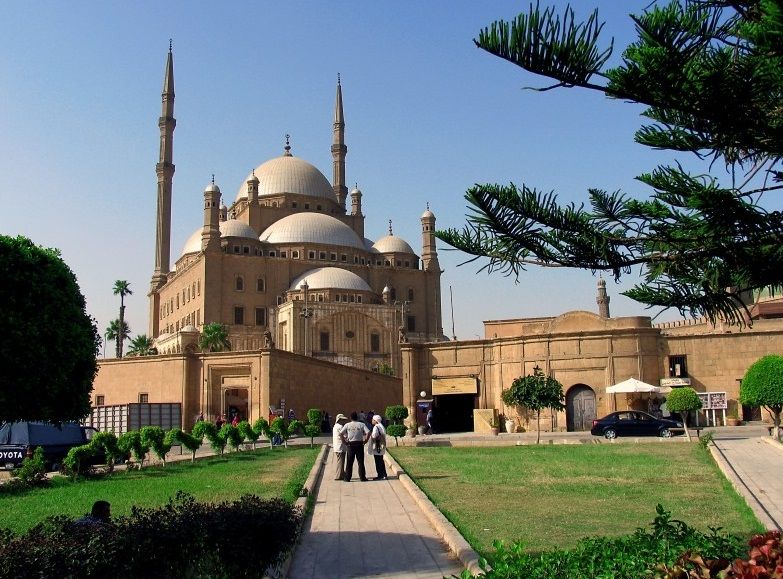
The Mosque of Muhammad Ali Pasha is the most recognizable monument inside Salah El Din Citadel and one of Cairo's most famous Islamic landmarks.
Construction began in 1830 during the rule of Muhammad Ali Pasha and continued until after his death in 1849.
The mosque was designed in an Ottoman architectural style, inspired by the great imperial mosques of Istanbul. Its impressive central dome, smaller surrounding domes, and two tall minarets dominate the citadel's skyline.
The mosque is also known as the Alabaster Mosque because of the alabaster stone used in parts of its exterior and interior decoration.
Inside, visitors can admire the spacious prayer hall, decorative lamps, intricate details, and impressive central dome.
The courtyard is another highlight, featuring a beautiful fountain and an elegant clock tower presented to Muhammad Ali Pasha by the French king Louis Philippe.
The mosque is also the burial place of Muhammad Ali Pasha, whose tomb is located inside the building.
Travel tip: Allow approximately 30–45 minutes to explore the mosque and its courtyard. Visitors should dress modestly and respect prayer times.
2. Mosque of Sultan Al-Nasir Muhammad Ibn Qalawun
The Mosque of Sultan Al-Nasir Muhammad is another important historical monument within the citadel.
Built during the Mamluk period, it reflects the architectural style and artistic traditions of medieval Islamic Cairo.
The mosque is particularly interesting because of its unusual minarets and decorative architectural details. Its construction represents the importance of religious architecture during the Mamluk era.
Unlike the Ottoman-inspired Mosque of Muhammad Ali, this monument provides visitors with a different architectural experience.
Exploring the mosque helps travelers understand how the citadel developed through different ruling dynasties.
3. Mosque of Sulayman Pasha Al-Khadim
The Mosque of Sulayman Pasha Al-Khadim is another remarkable religious building inside the citadel.
Constructed in 1528 during the Ottoman period, it is recognized as one of the earliest Ottoman-style mosques built in Egypt.
Its architectural design reflects the influence of Ottoman religious architecture, including its dome and elegant interior decoration.
The mosque is historically important because it demonstrates how the citadel continued to develop after the Ottoman conquest of Egypt.
4. Al-Gawhara Palace Museum
Al-Gawhara Palace, also known as the Jewel Palace, is a historic building located near the Mosque of Muhammad Ali.
It was constructed in 1814 during the rule of Muhammad Ali Pasha and served as a palace for official receptions and important ceremonies.
The palace includes decorative rooms, historical furniture, and architectural details associated with the Muhammad Ali dynasty.
Today, it provides visitors with an opportunity to discover the lifestyle and royal traditions of Egypt during the 19th century.
5. The National Military Museum
The Military Museum is one of the main museums inside Salah El Din Citadel.
It presents different stages of Egypt's military history, from ancient times to the modern period.
Visitors can discover historical weapons, military uniforms, documents, photographs, and displays explaining important military events.
The museum also occupies buildings associated with the history of the citadel and the Muhammad Ali dynasty.
It is an interesting stop for travelers who want to learn more about Egypt's military heritage.
6. The National Police Museum
The Police Museum explores the history and development of policing in Egypt.
Its collections include historical documents, photographs, equipment, and displays related to important events in Egyptian police history.
The museum provides another perspective on the different institutions that operated within the citadel throughout its history.
Availability of individual museum galleries may vary, so check the current visitor arrangements before planning your visit.
The Architecture and Defensive Design of the Citadel
One of the most fascinating aspects of Salah El Din Citadel is its military architecture.
The fortress was constructed in an elevated position to provide strategic control over Cairo and improve the city's defenses.
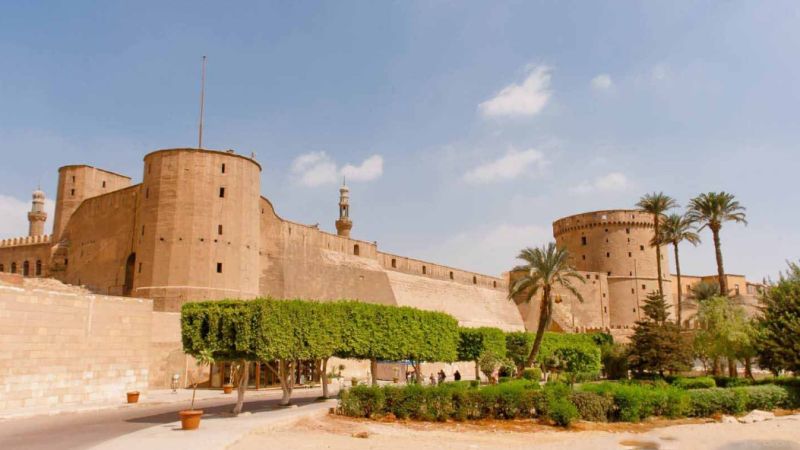
Its defensive system included strong walls, towers, gates, and carefully designed military sections.
The northern part of the citadel was associated with military functions, while the southwestern section included royal and administrative buildings.
Several historic towers remain important examples of medieval defensive architecture.
The elevated position also allowed guards to monitor the surrounding landscape and identify potential threats.
Although the citadel has changed considerably over the centuries, its walls and towers still reveal its original military purpose.
The Panoramic Views of Cairo
One of the highlights of visiting Salah El Din Citadel is enjoying the panoramic views from its elevated location.
From different viewpoints, visitors can admire the historic neighborhoods of Cairo, surrounding mosques, and the impressive city skyline.
On clear days, the views extend across large parts of the capital and provide excellent opportunities for photography.
The contrast between historic Islamic architecture and modern Cairo makes this viewpoint particularly special.
Many visitors enjoy spending extra time around the open courtyards to take photographs and appreciate the scenery.
Travel tip: Morning and late afternoon are excellent times for photography because the sunlight is often softer.
Location and How to Reach Salah El Din Citadel
Salah El Din Citadel is located in the Al-Qalaa district of Cairo, near several important historical neighborhoods.
It can be reached by private car, taxi, ride-hailing services, or organized sightseeing transportation.
The citadel is approximately:
-
4–5 km from the Egyptian Museum in Tahrir Square.
-
3–4 km from Sultan Hassan Mosque and Al-Rifa'i Mosque.
-
6–7 km from Khan El Khalili Bazaar, depending on the route.
-
Around 8–10 km from the Cairo Tower.
Travel times vary considerably depending on Cairo traffic.
Many travelers combine the citadel with nearby Islamic Cairo attractions to create a full-day cultural sightseeing program.
Best Time to Visit Salah El Din Citadel
Cairo has a hot desert climate, with warm summers and generally mild winters.
The most comfortable period for visiting Salah El Din Citadel is usually between October and April.
During these months, temperatures are more suitable for exploring the outdoor areas, walking around the historic buildings, and enjoying the panoramic views.
Summer visits are also possible, but temperatures can become high, especially around midday.
For a more comfortable experience, arrive early in the morning after the site opens.
How Much Time Should You Spend There?
Most visitors should allow approximately two to three hours to explore the main attractions.
A shorter visit may cover the Mosque of Muhammad Ali and the main viewpoints, while a longer visit allows time for additional mosques and museums.
If you are particularly interested in Islamic architecture and Egyptian history, consider allowing half a day.
Practical Travel Tips for Visiting Salah El Din Citadel
-
Arrive early: Morning visits are generally more comfortable and help you avoid some of the busiest periods.
-
Wear comfortable shoes: The complex includes stone courtyards, walking paths, and uneven surfaces.
-
Dress modestly: The citadel contains several active religious sites, so appropriate clothing is recommended.
-
Bring water: Cairo can become hot, particularly during summer.
-
Carry sun protection: Sunglasses, sunscreen, and a hat are useful when exploring outdoor areas.
-
Check museum availability: Some museum sections may have different operating arrangements.
-
Respect religious customs: Follow instructions when entering mosques and avoid disturbing worshippers.
-
Allow time for photography: The panoramic viewpoints and historic architecture are among the site's best features.
-
Consider a professional guide: An experienced Egyptologist or cultural guide can explain the history and architectural details.
-
Combine nearby attractions: Sultan Hassan Mosque, Al-Rifa'i Mosque, and Khan El Khalili can be included in a wider Cairo sightseeing itinerary.
Real Visitor Insights: What Makes the Citadel Special?
Visitors often say that the Mosque of Muhammad Ali is the highlight of their visit, particularly because of its impressive domes and beautiful interior.
Another memorable part of the experience is the panoramic view from the citadel's elevated location. Seeing Cairo's historic mosques and busy neighborhoods from above offers a different perspective of the city.
Travelers interested in history also appreciate the variety of architectural styles found within the complex. The buildings represent different periods, including the Ayyubid, Mamluk, Ottoman, and Muhammad Ali eras.
One of the best ways to appreciate the citadel is to explore it with a knowledgeable guide who can connect the buildings to the people and historical events that shaped Egypt.
Frequently Asked Questions About Salah El Din Citadel
1. Where is Salah El Din Citadel located?
Salah El Din Citadel is located in the Al-Qalaa district of Cairo, Egypt, on an elevated area near the Mokattam Hills.
2. Who built Salah El Din Citadel?
Construction was ordered by Sultan Salah El Din Al Ayyubi in 1176 AD. Important parts of the fortress were completed during the reign of Sultan Al-Kamil Ibn Al-Adel.
3. What is Salah El Din Citadel famous for?
The citadel is famous for its medieval defensive architecture, historical mosques, museums, and panoramic views of Cairo. The Mosque of Muhammad Ali is its most recognizable monument.
4. What are the opening hours of Salah El Din Citadel?
The official Ministry of Tourism and Antiquities currently lists visiting hours from 8:00 AM to 5:00 PM daily. Visitors should check for seasonal or special changes before arriving.
5. How much is the entrance ticket?
The Ministry's listed ticket price is EGP 550 for foreign adults and EGP 275 for foreign students. Egyptian adult tickets are EGP 60 and student tickets EGP 30. Prices should be reconfirmed before visiting.
6. How long does it take to visit Salah El Din Citadel?
A typical visit takes approximately two to three hours. Visitors interested in exploring the museums and additional historical buildings may need more time.
7. Is the Mosque of Muhammad Ali inside the citadel?
Yes. The Mosque of Muhammad Ali is located inside Salah El Din Citadel and is its most famous architectural attraction.
8. Can you visit Salah El Din Citadel and Khan El Khalili in one day?
Yes. Both attractions can be combined in a Cairo sightseeing tour. Many visitors explore the citadel in the morning and continue to Khan El Khalili Bazaar later in the day.
9. Is Salah El Din Citadel suitable for families?
Yes. Families interested in history, architecture, and cultural attractions can enjoy visiting the citadel. However, visitors should consider the walking distances and outdoor conditions when planning with young children or elderly travelers.
10. What is the best time to visit Salah El Din Citadel?
October to April is generally the most comfortable period. Morning visits are recommended throughout the year, particularly during the warmer months.
Plan Your Cairo Sightseeing Tour with Flying Carpet Tours
Salah El Din Citadel is more than a historic fortress. It is a remarkable destination where centuries of Egyptian history, Islamic architecture, and cultural heritage come together.
From the magnificent Mosque of Muhammad Ali and the historic Mamluk mosques to the museums and panoramic views of Cairo, every part of the citadel offers something interesting to discover.
Whether you are interested in medieval history, religious architecture, photography, or exploring the highlights of Islamic Cairo, this landmark deserves a place on your Egypt travel itinerary.
Make your visit easier with Flying Carpet Tours. Explore our Cairo sightseeing tours, discover the city's most important historical attractions, and enjoy a memorable experience with professional guides and comfortable transportation.
Visit our website today to plan your Salah El Din Citadel tour and discover the fascinating history of Cairo with Flying Carpet Tours.