

The Hanging Church, Cairo: A Complete Travel Guide to Egypt’s Most Famous Floating Sanctuary
A Traveler’s First Impression
“I climbed a staircase expecting a small chapel. At the top, I felt like I had stepped inside the hull of an old wooden ship.” That is how one traveler described their first visit to the Hanging Church. Below, the lanes of Old Cairo hum with taxis and street vendors. Above, a tall, quiet space opens up, with dark carved wood, glowing icons, and the soft smell of incense.
Visitors often say the surprise is the contrast. You walk in from a busy neighborhood, climb a flight of steps, and the volume of the city drops away. Light filters through small windows, the floor feels worn smooth by centuries of footsteps, and every wall seems to hold a painting or a carving. You do not need to be religious to feel it. You only need a little time and a willingness to slow down.
What Is the Hanging Church?
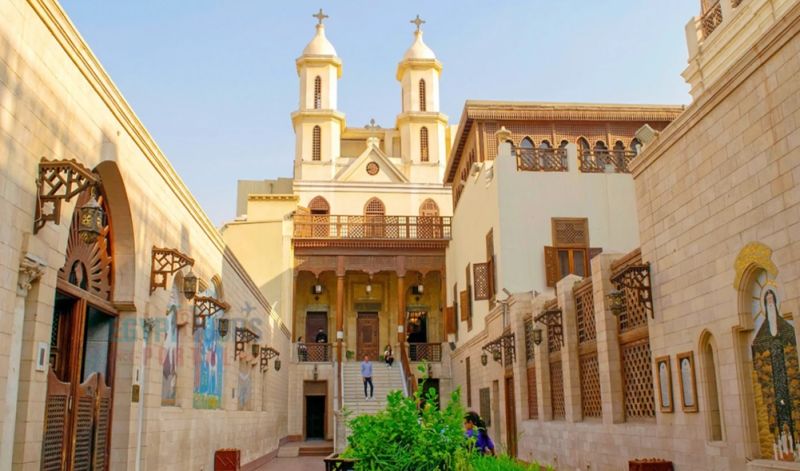
The Hanging Church, officially the Church of the Virgin Mary, is one of the oldest and most beloved churches in Egypt, located in the Coptic Cairo district of Old Cairo. It gets its popular name because it was built on top of the southern gatehouse of an ancient Roman fortress, so the nave is raised above ground level and appears to hang over the passage below.
It is still a working church, which is what makes it so special. Prayers, services, and weddings take place here, and visitors are welcomed as guests. Many travelers call it the most atmospheric stop in Coptic Cairo, and it pairs easily with the nearby museum, churches, and synagogue to make a full half-day of exploring.
Quick Facts
- Location: Coptic Cairo, in Old Cairo, near the Mar Girgis metro station and the remains of the Roman fortress
- Opening hours: Usually daily from about 9:00 AM to 4:00 PM, according to the official monuments listing. Some sources report slightly different hours (for example, 9:00 AM to 5:00 PM), and times can change around services and religious holidays, so confirm before you go.
- Prices: Entry is generally free, and a small donation is welcome to help maintain the church. The nearby Coptic Museum sells its own tickets, and prices change over time, so check our website for the latest information.
- Recommended duration: About 30 to 45 minutes inside the church, or two to three hours if you combine it with the rest of Coptic Cairo
- Best time to visit: October to April for mild weather. In any season, aim for the morning, ideally before late morning when tour groups arrive.
- Dress code: Modest clothing, with shoulders and knees covered
- Accessibility: The church is reached by a steep flight of steps and is generally not suitable for wheelchairs
- Best for: History lovers, photographers, architecture fans, families with older children, and anyone curious about early Christianity in Egypt
A Short History of the Hanging Church
Built on a Roman Gate
Long before the church existed, the site belonged to a Roman fortress known as Babylon, built to guard an important crossing on the Nile. The fortress had massive towers and gates, and its walls shaped the early layout of what later became Old Cairo. When Christians in Egypt began building places of worship in the area, they used the strong stone structures already standing there.
The Hanging Church was built over the southern gatehouse of the fortress. The exact date of the first church is still discussed by historians, and some place its origins as early as the 3rd or 4th century, while the building you see today mostly reflects later rebuilding. What is certain is that the church has been a center of worship for well over a thousand years.
A Seat of the Church
Over the centuries, the church was repaired, expanded, and decorated many times. In the medieval period it became one of the most important churches in Egypt, and for several hundred years the leader of the Coptic Orthodox Church held ceremonies and services here. Its status as a patriarchal church explains why so many fine details survive, from carved woodwork to rare icons.
Surviving the Centuries
Old Cairo changed enormously around the church. Dynasties rose and fell, mosques and markets grew nearby, and the Nile shifted course. The church continued to serve its congregation through all of it. Restoration projects in recent decades have strengthened the structure, cleaned the woodwork, and protected the icons, while keeping the building in daily use.
Today it stands as a symbol of the long history of Christianity in Egypt, one of the oldest Christian communities in the world.
What to Expect
The Courtyard and the Steps
Your visit begins at a walled courtyard with decorated gates. From there, a staircase of about 29 steps climbs to the main entrance. The steps are the reason many visitors fall in love with the place. As you climb, you rise above street level, and the sense of leaving the noise behind starts to build.
The Wooden Ceiling
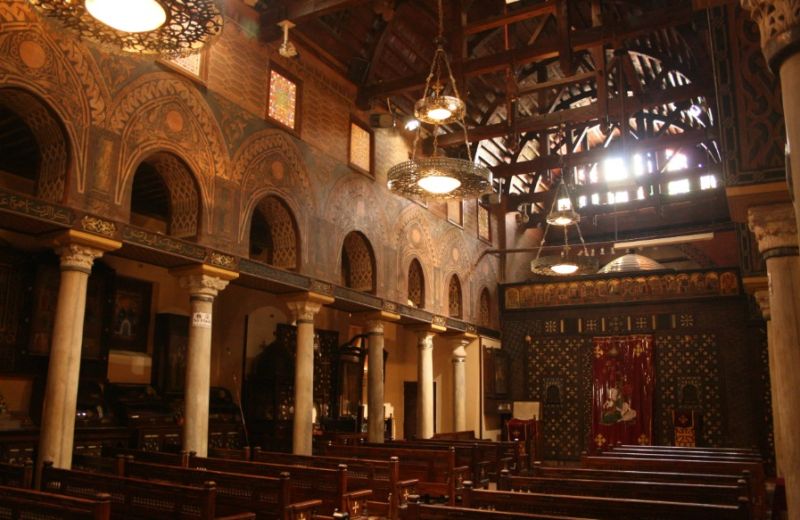
When you step into the nave, look up. The ceiling is shaped like the inside of an upturned ship, built from dark wooden beams. Many visitors compare it to the ark of Noah. The wood gives the room a warm, enclosed feel, and it also adds to the acoustic quality, with prayers and hymns carrying softly through the space.
The Pillars
Two rows of tall columns divide the nave. Local guides often explain that there are thirteen main pillars, representing Jesus and the twelve apostles. Look closely and you will notice that they are not identical. Some are darker, some lighter, and some have slightly different shapes. Guides share stories about the symbolism of these differences, which makes the walk down the nave more engaging.
The Pulpit and the Screens
One of the most admired features is the marble pulpit, raised on slender columns and carved with delicate patterns. Another highlight is the screen that separates the sanctuary from the nave. It is made from dark wood inlaid with ivory in geometric designs and crosses, and it is a beautiful example of traditional craftsmanship. Take your time here, because the details are tiny and rewarding.
The Icons
The church holds a large collection of icons, many painted over a long span of history. Some are very old, and the colors and faces show different artistic styles. Icons depict saints, scenes from the Bible, and the Virgin Mary, to whom the church is dedicated. Visitors are often struck by the large, expressive eyes and the golden backgrounds.
The Floor Windows
In some areas, you may notice that the floor allows a glimpse of the space below, a reminder that the church really does sit above an older gateway. It is a small detail, but it explains the name in the most direct way possible.
The Atmosphere
Expect calm, reverence, and a gentle pace. Visitors speak softly, and staff or volunteers are usually friendly and happy to answer questions. If a service is taking place, you may hear hymns or see worshippers praying. Visitors are generally welcome, but it is courteous to be quiet and stay in the visitor areas.
Exploring Coptic Cairo Around the Church
The Hanging Church is just one part of a compact historic quarter. Within a short walk you can reach several other important sites:
The Coptic Museum
This museum, founded in the early 20th century, holds one of the world’s most important collections of Coptic art, including textiles, manuscripts, woodwork, and stonework. It offers a clear picture of how Egyptian art changed in the early Christian period. It has its own ticket and opening hours, so check before you go.
The Church of Saint Sergius and Bacchus
This church is built over a spot linked to a tradition about the Holy Family’s stay in Egypt. Its crypt draws many pilgrims and curious visitors.
Saint Barbara Church
A graceful church with beautiful woodwork and icons, set in a narrow lane with a village-like feel.
Ben Ezra Synagogue
A historic synagogue that adds another layer to the story of Old Cairo as a place where several faiths lived side by side.
Together, these sites make Coptic Cairo one of the most rewarding short walks in the city.
Useful Facts: Crowds, Distances, and Weather
- Crowds: The Hanging Church is usually calm, but tour groups gather between late morning and early afternoon. Weekends and religious holidays can be busier, and the church may be crowded during major celebrations. Early mornings are the quietest.
- Distances: The main churches and the museum are all within a few minutes’ walk of each other. From downtown Cairo, the trip by metro or taxi usually takes about 20 to 40 minutes, depending on traffic.
- Steps: The entrance staircase is steep, so take your time. There is no easy alternative for visitors with limited mobility.
- Weather: Summers are hot, often above 35°C, but the thick walls and high ceiling keep the church interior cooler. Winters are mild, around 14°C to 20°C, which makes walking around Old Cairo very pleasant. Spring and autumn are bright and comfortable.
- Lighting: The interior is softly lit, so details can be hard to see in the late afternoon. Morning light is brighter.
- Services: Visitors can often attend part of a service, but exploring the interior is easier outside service times. Ask on arrival or check before you go.
- Surroundings: The lanes of Coptic Cairo are narrow and paved with stone, so closed, comfortable shoes are best.
Practical Travel Tips
- Check hours before you go. Opening times can shift around services and holidays, and sources do not always agree.
- Arrive early. Mornings are quieter and ideal for photos and quiet reflection.
- Dress modestly. Cover shoulders and knees. A light scarf or shawl is handy.
- Be respectful. Speak softly, avoid blocking worshippers, and do not touch icons or sacred objects.
- Ask before taking photos. Photography rules inside can be strict and may change, so ask staff or follow posted signs. Never photograph worshippers without permission.
- Bring small cash. Donations, small purchases, and tips are easier with small bills.
- Wear comfortable shoes. You will climb steps and walk on uneven stone.
- Plan for a half day. Combine the church with the Coptic Museum, other churches, and the synagogue for the full experience.
- Consider a guide. A knowledgeable guide can explain the symbolism of the pillars, the icons, and the screens, which are easy to miss on your own.
- Stay hydrated. Carry a bottle of water, especially in warm months.
- Keep an eye on your belongings. As in any popular historic area, keep your phone and wallet close.
- Mind the steps. Hold the railing if there is one, and take your time going down, especially if the stone is worn.
- Leave time for a snack break. Nearby cafes offer a good place to rest between visits.
What Travelers Say
Visitors often say the Hanging Church changes their mood. One of our travelers mentioned that their day had been rushed, filled with traffic and tickets and crowds, until they climbed the steps and sat quietly on a bench. “It was the first moment of the trip when I stopped checking my watch,” they said.
Another traveler said they were not sure what to expect from a church visit, but found the ceiling unforgettable. “I kept looking up,” they said. “It really does feel like being inside a boat.” They added that their guide’s explanation of the pillars made the walk down the nave feel like reading a story.
Families often tell us that older children enjoy the climb, the stories, and the golden icons, while younger children can find the quiet a challenge. Photographers say that the combination of dark wood, soft light, and fine detail is memorable, though they appreciate being reminded to ask about camera rules before shooting.
Many first-time visitors also say they were surprised by how welcoming the area felt. Local residents and church staff greet guests warmly, and some visitors mention being invited to sit for a moment of quiet. Solo travelers say the calm atmosphere was a welcome pause in a busy itinerary, and couples often describe the lane outside as one of the most photogenic corners of the old city.
Frequently Asked Questions
Why is it called the Hanging Church?
Because it was built over the gatehouse of a Roman fortress, so the main hall is raised above ground level and appears to hang above the passage below.
Where is the Hanging Church?
It is in Coptic Cairo, in the Old Cairo district, close to the Mar Girgis metro station.
How old is the Hanging Church?
Its origins are traditionally placed many centuries ago, with some historians suggesting a very early date. The building you see today mostly reflects rebuilding over the centuries, and it is more than a thousand years old.
Is the Hanging Church free to enter?
Entry is generally free, and donations are welcome. Nearby sites such as the Coptic Museum charge their own entrance fees.
What are the opening hours?
Usually daily from about 9:00 AM to 4:00 PM, though some sources list slightly different times. Confirm before you go, especially around holidays.
How long should I spend there?
Plan 30 to 45 minutes for the church itself. If you want to visit the museum, the other churches, and the synagogue, allow two to three hours.
Can I take photos?
Rules can vary and may be restricted inside. Ask staff or follow the signs, and always be respectful of worshippers.
What should I wear?
Modest, comfortable clothing that covers shoulders and knees, plus closed shoes suitable for steps and uneven ground.
Is it suitable for wheelchairs?
The church is reached by a steep staircase and is generally not wheelchair-accessible.
Can I attend a service?
Visitors are often welcome during services, but the experience is more about worship than sightseeing. If you want to explore the interior freely, visit at a different time.
Is it safe for tourists?
Coptic Cairo is a popular visitor area and is generally considered safe. Keep your belongings secure and follow normal city precautions.
What else can I see nearby?
The Coptic Museum, the Church of Saint Sergius and Bacchus, Saint Barbara Church, and the Ben Ezra Synagogue are all within walking distance.
What is the best time to visit?
October to April offers the most comfortable weather, and mornings are the quietest all year round.
Do I need a guide?
No, but a guide adds helpful context about the symbolism, history, and art.
Ready to Explore Coptic Cairo?
The Hanging Church is one of those places that rewards slow, curious visitors. You climb a few steps, step into a quiet wooden hall, and discover a thousand years of faith, craft, and community in a single room.
If you would like help planning your visit, we would be happy to assist. Visit our website to explore guided Coptic Cairo tours, check the latest details on opening hours and nearby sites, and choose a trip that fits your pace and interests. Your quiet moment above the old city is waiting.