
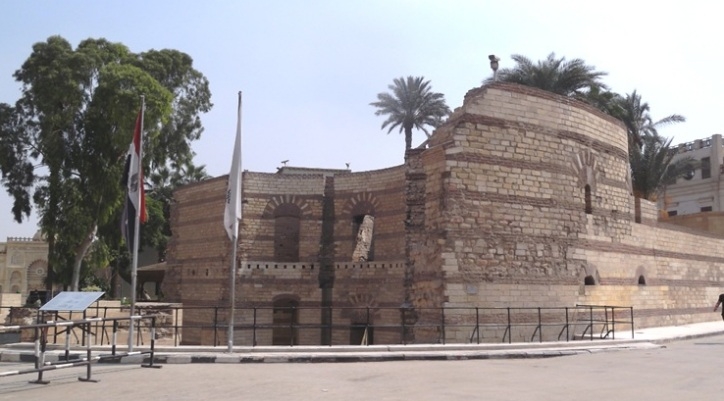
Babylon Fortress | Babylon Fortress Cairo
In the heart of Old Cairo, where cobbled streets echo with centuries of history and faith, stands one of Egypt’s most enduring landmarks — Babylon Fortress. This ancient Roman stronghold has witnessed empires rise and fall, religions flourish, and civilizations blend together on the banks of the Nile.
For travelers exploring Egypt beyond the pyramids, Babylon Fortress is a place where the layers of time come alive — a living museum of Roman engineering, early Christian devotion, and Islamic heritage. It is here, among towering stone walls and winding alleys, that the story of Cairo itself began.
A Fortress Older Than Cairo
Before Cairo even existed, Babylon Fortress stood as a guardian over Egypt’s gateway between Upper and Lower Egypt. The fortress dates back to the 1st century BC, constructed by the Romans after they took control of Egypt from the Ptolemies.
Historians believe that the site may have been used even earlier, during the Pharaonic and Persian periods, but it was the Romans who built the massive stone walls and towers that still partially stand today. Its location was strategic — near the point where the Nile once met a canal connecting to the Red Sea, giving the fortress both commercial and military importance.
The fortress marked the southern boundary of ancient Fustat, the first Arab capital of Egypt, which would later grow into modern Cairo. Over time, Babylon became the cradle of religious and cultural transformation — a meeting point of empires and faiths.
The Origins of the Name “Babylon”
The name “Babylon” might sound Mesopotamian, but its presence in Egypt has sparked curiosity for centuries. Ancient sources provide two theories:
-
Some believe the name derives from “Per-Habu-Enon”, meaning “House of the God Hapi” in ancient Egyptian — a reference to the Nile’s fertility god.
-
Others connect it to Babylonian soldiers who were stationed in the area during the Persian conquest of Egypt (6th century BC).
Regardless of its linguistic origin, the name “Babylon” became synonymous with power, defense, and spiritual endurance — qualities that defined the fortress for nearly two millennia.
.jpg)
Roman Engineering and Architecture
The remains of Babylon Fortress reveal the genius of Roman military architecture. The structure originally spanned more than 150 meters in length, with walls nearly 10 meters high and 3 meters thick. Built of limestone and red bricks, the fortress once had massive round towers flanking its gates, a defensive moat, and watchtowers overlooking the Nile.
Archaeological evidence suggests that it served as a Roman garrison, controlling both river traffic and land routes between Memphis (to the south) and Heliopolis (to the north).
Though much of the fortress has disappeared over the centuries, its surviving towers still inspire awe — especially the southern bastions, now integrated into the Coptic Museum and nearby churches. The craftsmanship demonstrates the meticulous planning of Roman engineers who adapted their European military designs to Egypt’s local materials and geography.
A Refuge of Faith: The Birthplace of Coptic Christianity
As the Roman Empire shifted toward Christianity, Babylon Fortress became one of the earliest centers of Christian life in Egypt. By the 3rd and 4th centuries AD, the fortress was no longer just a military base; it became a spiritual refuge for Egypt’s growing Coptic Christian community.
According to tradition, the Holy Family — Mary, Joseph, and the infant Jesus — once sought refuge in the area during their flight into Egypt. This sacred association made Babylon a pilgrimage site for early Christians.
Inside its walls, believers carved chapels, built churches, and practiced their faith even during times of Roman persecution. These humble beginnings laid the foundation for what would later be known as Coptic Cairo — the oldest Christian quarter in the city.
.jpg)
The Churches Within the Fortress Walls
Walking through the ancient gates of Babylon Fortress today feels like entering a world preserved from another time. Within its ancient perimeter stand some of Egypt’s most famous Coptic churches, each carrying centuries of faith and art.
1. The Hanging Church (Al-Muallaqa)
Perhaps the most celebrated site inside the fortress, the Hanging Church dates back to the 3rd century AD. It was built above one of the fortress’s gatehouses — hence the name “Hanging.”
The church is dedicated to the Virgin Mary and remains a masterpiece of early Christian architecture, featuring wooden ceilings shaped like Noah’s Ark, intricate icons, and marble columns symbolizing the apostles.
Today, it serves as the seat of the Coptic Orthodox Patriarch of Alexandria, making it the spiritual heart of Coptic Christianity.
2. Church of St. Sergius and Bacchus (Abu Serga)
Another gem within Babylon Fortress, this church marks the spot where the Holy Family is said to have rested during their journey through Egypt. Its underground crypt — accessible by narrow stairs — holds immense religious significance for pilgrims.
The church itself is a beautiful example of early basilica design, with carved wooden screens, Coptic crosses, and ancient icons depicting saints and martyrs.
Visiting Abu Serga connects travelers not only with faith but with the continuity of Egypt’s Christian heritage that has survived for nearly 2,000 years.
3. Church of St. Barbara
Dedicated to the young martyr St. Barbara, this church dates to the 5th century and is known for its unique layout and decorative woodwork. It once housed the relics of several saints and remains a symbol of endurance through centuries of change.
The atmosphere inside is quiet and reverent, offering visitors a glimpse into the profound spirituality that defines the Coptic community.
The Coptic Museum: Treasure of Art and Faith
Within the fortress walls also stands the Coptic Museum, established in 1908 by Marcus Simaika Pasha. It is one of Egypt’s most important cultural institutions, housing the world’s largest collection of Coptic Christian art.
The museum’s galleries display intricately carved woodwork, manuscripts, textiles, icons, and stone reliefs — all showcasing the evolution of Egyptian Christian art from the 3rd to the 19th centuries.
Visitors gain insight into how Egyptian identity and Christianity intertwined, merging ancient Pharaonic symbols with Biblical themes in a uniquely Egyptian artistic expression.
From Babylon to Fustat: The Islamic Transformation
In the 7th century AD, the fortress once again became a stage for transformation when the Arab general Amr ibn al-As conquered Egypt. He established his military headquarters near the fortress and soon founded Fustat, the first Islamic capital of Egypt.
From this new city, Islamic civilization in Egypt flourished. The Mosque of Amr ibn al-As, just a short walk from the fortress, became the first mosque in Africa. Babylon Fortress thus marks not only the dawn of Egyptian Christianity but also the birth of Islamic Egypt — a rare meeting of two civilizations within a single historic space.
.jpg)
Architectural Layers Through Time
Few sites in the world display such a continuous layering of history as Babylon Fortress. Each era left its mark:
-
Pharaonic remnants remind us of Egypt’s ancient roots.
-
Roman brickwork and towers reveal the might of empire.
-
Coptic churches and monasteries express spiritual devotion.
-
Islamic mosques and schools nearby symbolize cultural coexistence.
Together, these layers tell a story of resilience — a land where civilizations meet not in destruction, but in dialogue.
Exploring Babylon Fortress Today
A visit to Babylon Fortress today is an immersive journey through time. The site lies in Coptic Cairo, part of the Old Cairo district — a UNESCO-listed area filled with ancient churches, synagogues, and mosques.
Visitors can wander along narrow cobblestone alleys where the scent of incense fills the air and bells echo softly from nearby chapels. The old Roman towers rise above, reminding travelers of a world that once guarded Egypt’s lifeline — the Nile.
Within walking distance are other fascinating landmarks:
-
The Hanging Church
-
Coptic Museum
-
Church of St. Sergius and Bacchus
-
Ben Ezra Synagogue (one of the oldest synagogues in the world)
-
Mosque of Amr ibn al-As
This combination of Christian, Jewish, and Islamic heritage makes Babylon Fortress one of the most culturally rich destinations in Cairo.
Practical Visitor Information
-
Location: Mar Girgis Street, Old Cairo (easily accessible via Mar Girgis Metro Station).
-
Opening Hours: Typically 9:00 AM to 5:00 PM daily (closed on certain holidays).
-
Entrance Fees: The fortress area is generally free to walk around; however, the Coptic Museum requires a small ticket fee.
-
Dress Code: Modest clothing is recommended when visiting churches and religious sites.
-
Photography: Allowed in most areas, though flash may be restricted inside certain buildings.
Guided tours are available, and local guides provide deep insights into the fortress’s layered history, bringing its stories vividly to life.
.jpg)
A Symbol of Religious Harmony
One of the most remarkable aspects of Babylon Fortress is how it embodies Egypt’s spirit of coexistence. Within a few hundred meters, visitors can find Christian churches, a synagogue, and a mosque — each preserving its faith while sharing the same historical space.
This harmony reflects Cairo’s essence as a city of tolerance, where different religions and cultures have coexisted for millennia. Babylon Fortress stands as a timeless reminder that Egypt’s greatest strength lies in its unity through diversity.
Hidden Corners and Local Life
Beyond its monumental towers and sacred landmarks, the area around Babylon Fortress thrives with everyday Egyptian life. Local artisans sell hand-painted icons, Coptic crosses, and traditional crafts. Cafés tucked into courtyards offer mint tea under the shade of old sycamores.
The narrow alleys are alive with stories — children playing near centuries-old walls, priests and monks walking quietly to prayer, and tourists marveling at how seamlessly ancient and modern coexist.
Exploring Babylon Fortress isn’t just a historical experience; it’s an emotional journey that connects you to the living heartbeat of Cairo.
Why Babylon Fortress Matters
Babylon Fortress may not be as towering as the pyramids or as ornate as Islamic mosques, but it holds a unique power — the power of continuity. It represents Egypt’s ability to preserve its identity across millennia, adapting yet never losing its essence.
It is the birthplace of Cairo’s story, the cradle of Christianity in Egypt, and the bridge between the ancient and medieval worlds. For historians, pilgrims, and travelers, it offers a rare glimpse of how civilizations interact and shape one another.
Tips for Your Visit
-
Visit early in the morning to enjoy the site before it gets crowded.
-
Hire a local guide — they can explain hidden symbols and historical connections between the fortress and surrounding monuments.
-
Combine your visit with nearby attractions like the Coptic Museum and the Mosque of Amr ibn al-As.
-
Take time to reflect — sit quietly in one of the courtyards and feel the weight of history around you.
-
Respect the sacred atmosphere — this is still an active place of worship for many Egyptians.
Conclusion: The Eternal Guardian of Cairo
More than a fortress, Babylon Fortress is a timeless witness to Egypt’s unfolding story. It has guarded pharaohs’ canals, hosted Roman legions, sheltered early Christians, and watched over the first mosques of Islamic Egypt. Every stone whispers of resilience, faith, and rebirth.
For visitors seeking to uncover the deeper layers of Cairo, Babylon Fortress offers something rare — a tangible link between civilizations. Within its ancient walls, the past is not forgotten; it lives on, inspiring awe in all who walk its paths.
Explore Babylon Fortress in Cairo — where ancient walls guard the origins of a city, and history, faith, and culture unite in eternal harmony. Visit today and step back through two thousand years of Egyptian history!