
Here is a comprehensive article on Souss-Massa National Park (Parc National de Souss-Massa), detailing its ecosystems, wildlife, visitor experiences, and practical travel guidance.
1. Briefing About the Place
Established in 1991, Souss-Massa National Park covers approximately 33,800 hectares (83,500 acres) along Morocco’s southern Atlantic coastline. Located between Agadir to the north and Tiznit to the south, the park is bordered by the Atlantic Ocean on the west and the arid, undulating foothills of the Anti-Atlas Mountains on the east.
The reserve encompasses two major river estuaries—the Oued Souss at the northern boundary and the Oued Massa in the southern sector.
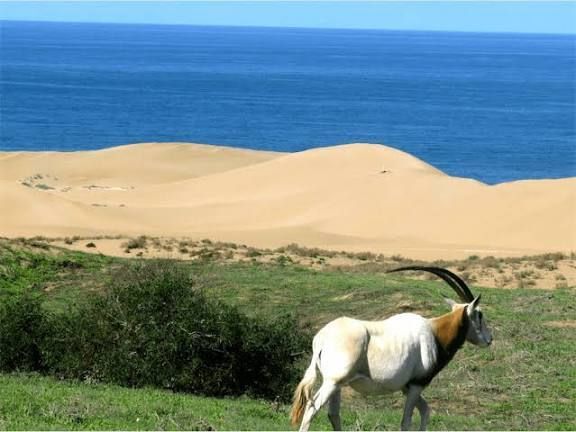
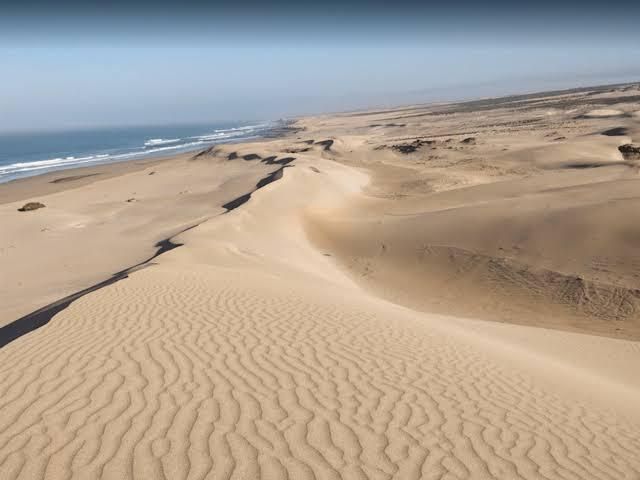
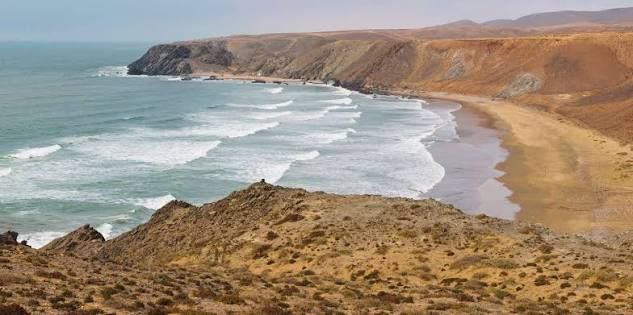
Souss-Massa was created to safeguard a ecologically vital transition zone between the Mediterranean climate and the harsh conditions of the Sahara Desert. Its terrain includes shifting coastal sand dunes, dramatic sandstone sea cliffs, saltwater lagoons, freshwater wetlands, argan tree forests, and semi-arid steppe.
As a designated Ramsar Wetland of International Importance, the park forms a vital link along the East Atlantic Flyway, serving as a critical refueling and breeding site for hundreds of thousands of migratory birds traveling between Sub-Saharan Africa and Europe.
2. Most Interesting Fact About the Place
The Last Wild Refuge of the Northern Bald Ibis
The most celebrated distinction of Souss-Massa National Park is that it serves as the primary global sanctuary for the last wild, self-sustaining, non-migratory population of the Northern Bald Ibis (Geronticus eremita), known locally as the Waldrapp.
Revered in ancient Egyptian hieroglyphs as a symbol of the soul (Akh), this distinctive bird with metallic blue-black plumage, a bare red face, and a curved beak vanished from Europe in the 17th century. Rapid population declines across the Middle East and North Africa due to habitat loss, hunting, and pesticide use brought the species to the brink of extinction by the late 20th century.
Through intensive local conservation efforts involving community-led watch programs and strict habitat protection, the breeding colonies within Souss-Massa National Park and nearby coastal cliffs (such as Tamri) have staged a remarkable recovery. The population has grown from fewer than 60 breeding pairs in the 1990s to over 140 breeding pairs and more than 700 individual birds.
Key Fact: Over 95% of the world's remaining wild, non-migratory Northern Bald Ibis population lives within this protected coastal corridor in Morocco.
3. The Guest Experience
A visit to Souss-Massa offers an eco-focused wilderness experience centered on birdwatching, tracking rare desert mammals, and exploring rural coastal landscapes.
Guided Wildlife Safaris (Rokedidia Reserve)
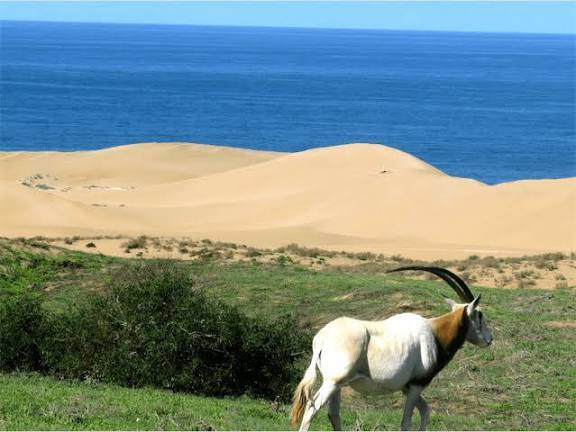
Within the park, enclosed breeding sanctuaries like the Rokedidia Reserve (Roco-Chico) protect endangered North African fauna. Accompanied by local eco-guides, visitors can take 4x4 or walking tours to view re-introduced Sahara-adapted species:
-
Scimitar-horned Oryx (Oryx dammah)
-
Addax (Addax nasomaculatus)
-
Dama Gazelle (Nanger dama)
-
Dorcas Gazelle (Gazella dorcas)
-
North African Ostrich (Struthio camelus camelus)
Estuary Birdwatching
Equipped with binoculars or spotting scopes, visitors can follow trails along the Oued Massa and Oued Souss estuaries. Beyond the Bald Ibis, signature sightings include:
-
Greater Flamingos (Phoenicopterus roseus)
-
Eurasian Spoonbills (Platalea leucorodia)
-
Audouin’s Gulls (Ichthyaetus audouinii)
-
Marbled Ducks (Marmaronetta angustirostris)
-
Barbary Falcons (Falco peregrinus pelegrinoides)
Coastal Cliffs & Troglodyte Villages
Along the park's coastal margins, local fishermen have hollowed out cave dwellings directly into the soft sandstone cliffs. Walking along the bluff tops provides views of the Atlantic, traditional line fishermen, and villages like Tifnit—a historic fishing hamlet known for its blue wooden boats and stone structures.
4. Most Interesting Places Within the Park
| Location | Terrain & Features | Key Highlights |
| Oued Massa Estuary | Reed beds, freshwater lagoon, riverside vegetation | Top site for Northern Bald Ibis, Egyptian Mongoose, and waterfowl |
| Oued Souss Estuary | Coastal mudflats, salt marshes near Agadir | High concentrations of flamingos, spoonbills, and shorebirds |
| Rokedidia Reserve | Fenced arid conservation sector | Addax, Scimitar-horned Oryx, and Dama Gazelle tracking |
| Tifnit Village | Ocean bluffs, cliff-side cave dwellings | Traditional fishing culture, wild coastal views, and photography |
The Crown Jewel: Oued Massa Estuary
If visiting only one section of the park, the Oued Massa Estuary near the village of Sidi R'bat is the prime destination. Here, fresh water collects behind a coastal sandbar to form a green oasis surrounded by arid steppe. A 3.5 km loop trail leads hikers through reed beds and open mudflats, providing the best vantage points for wildlife viewing.
5. The Best Time to Visit
Souss-Massa features a mild, oceanic-steppe climate, making it accessible throughout the year:
-
Spring (March to May) — Best Overall: Mild temperatures (18°C–25°C / 64°F–77°F) combine with blooming wildflowers. The Northern Bald Ibis population is active around its cliff-nesting sites, and resident birds display breeding plumage.
-
Autumn (September to November) — Peak Bird Migration: Ideal for observing the East Atlantic Flyway in full effect, as thousands of migratory waders, raptors, and waterfowl stop over in the estuaries.
-
Winter (December to February): Moderate daytime temperatures (16°C–20°C / 61°F–68°F) make for comfortable walking, with large numbers of European bird species wintering in the wetlands.
-
Summer (June to August): Coastal fog often moderates temperatures compared to inland Morocco, though daytime highs can reach 30°C+ (86°F+). Wildlife viewing is best conducted early in the morning.
6. Why You Should Visit
-
Unique North African Biodiversity: The park offers a rare combination of desert-adapted ungulates, coastal marine life, and wetland avian species within a single reserve.
-
Support Local Conservation: Visiting directly contributes to the local economy and supports the Association des Guides de Massa, whose members serve as stewards for the park's fragile habitats.
-
Convenient Accessibility: Located under an hour's drive from Agadir, the park offers an easy nature escape from the city's resort areas.
-
Uncrowded Atmosphere: Souss-Massa provides a quiet, unhurried alternative to Morocco's busier urban tourist destinations.
7. Frequently Asked Questions (FAQ)
Is a guide required to enter the park?
While public roads and beaches can be accessed independently, hiring an official park eco-guide is required for entry into restricted conservation zones like Rokedidia and is recommended for locating sensitive bird nesting areas.
How far is Souss-Massa from Agadir?
The northern sector at Oued Souss is roughly a 20-minute drive from central Agadir. The main administrative and visitor center at Oued Massa is located about 60 km (37 miles) south, taking approximately one hour by car.
What should I bring for a day trip?
Bring high-power binoculars or a spotting scope, sturdy walking shoes, a windproof outer layer for breezy coastal conditions, sun protection, and sufficient drinking water.
Can big game like lions or elephants be seen here?
No. The park is dedicated to protecting native North African arid fauna (gazelles, oryx, ostriches, jackals, and mongooses) rather than African savanna species.