
Al Alam Palace Muscat
Al Alam Palace is one of the most recognizable landmarks in Muscat Activities, the capital of Oman. Serving as the ceremonial palace of the Sultan of Oman, Al Alam Palace stands as a symbol of the nation’s modern identity, royal heritage, and architectural elegance.
Located in the historic district of Old Muscat, the palace is surrounded by dramatic mountains, Portuguese-era forts, and the waters of the Gulf of Oman. Although not open to the public for interior tours, Al Alam Palace remains one of the most visited and photographed attractions in Muscat due to its distinctive design and cultural importance.
This comprehensive guide explores the history, architecture, location, cultural role, and visitor experience associated with Al Alam Palace Muscat.
Overview
-
Official Name: Al Alam Palace
-
Location: Old Muscat, Oman
-
Function: Ceremonial royal palace
-
Construction (modern structure): 1970s
-
Architectural Style: Contemporary Islamic with bold color accents
Al Alam Palace is used primarily for official ceremonies and receptions involving visiting dignitaries and state guests.
Historical Background
Early Royal Residence
The site of Al Alam Palace has been associated with Omani rulers for over 200 years. Earlier structures on this location were used as royal residences during the Al Said dynasty, which has ruled Oman since the 18th century.
The current palace structure was built during the reign of Sultan Qaboos bin Said in 1972, shortly after he assumed leadership of Oman in 1970. His modernization efforts reshaped the country, and Al Alam Palace became a visual representation of a new era.
Modern Reconstruction
While earlier palaces existed on the site, the current design reflects modern architectural tastes blended with traditional elements. The palace was constructed to serve as a ceremonial residence rather than a full-time living palace.
Architectural Design
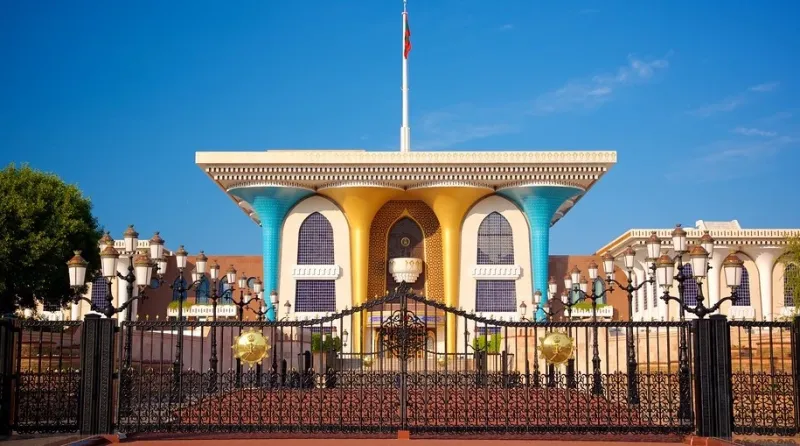
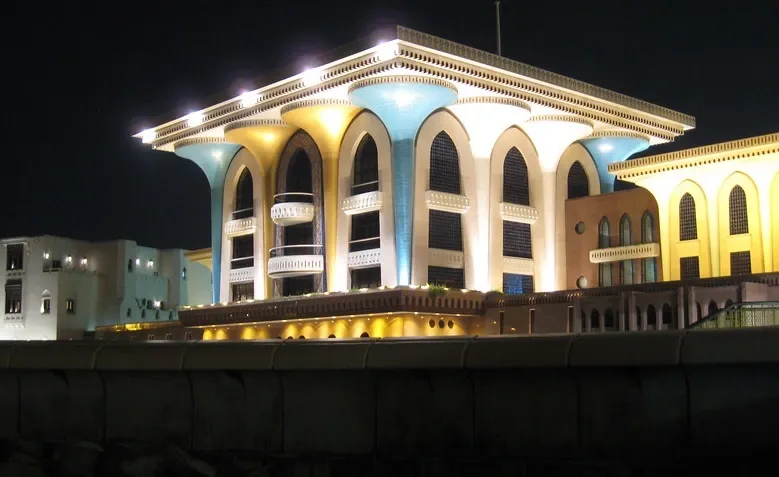
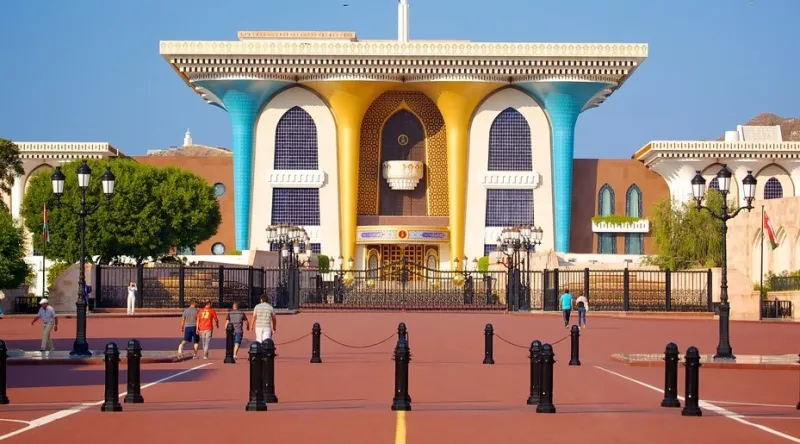
One of the most striking features of Al Alam Palace is its vibrant facade.
Exterior Features
-
Blue and gold columns
-
Wide ceremonial courtyard
-
Large symmetrical front façade
-
Clean geometric lines
-
Minimalist yet regal appearance
Unlike traditional palaces covered in intricate carvings, Al Alam Palace uses bold colors and simple shapes to create a unique identity.
Architectural Influence
The design incorporates:
-
Islamic architectural principles
-
Contemporary design elements
-
Omani cultural aesthetics
Its colorful pillars are particularly iconic and often featured in travel photography.
Location and Surroundings
Al Alam Palace is located in Old Muscat, one of the most historically significant areas of the capital.
Nearby Landmarks
The palace is flanked by two historic Portuguese forts:
-
Al Jalali Fort
-
Al Mirani Fort
These 16th-century forts were constructed during Portuguese occupation and later integrated into Omani defense systems.
The palace is also near:
-
National Museum of Oman
-
Bayt Al Zubair Museum
-
Muscat Gate Museum
-
Mutrah Corniche
This cluster of attractions makes Old Muscat a major tourist area.
Role in Omani Governance
Al Alam Palace serves primarily as a ceremonial venue.
Official Functions
-
Welcoming foreign dignitaries
-
State banquets
-
National celebrations
-
Formal receptions
While Oman has multiple royal residences, Al Alam Palace is specifically associated with official and diplomatic events.
Symbol of Modern Oman
Following the modernization policies introduced in the 1970s, Oman experienced rapid infrastructure development, education reforms, and international engagement.
Al Alam Palace became a symbol of:
-
Stability
-
Progress
-
Sovereignty
-
Cultural preservation
The palace visually represents the blend of tradition and modernity that characterizes Oman today.
Visiting Al Alam Palace
Although entry inside the palace is not permitted to the general public, visitors can explore the exterior grounds and courtyard area.
What Visitors Can Experience
-
Walk around the open square in front of the palace
-
Take photographs of the facade
-
Enjoy views of the surrounding mountains
-
Explore nearby museums and forts
The area is clean, well-maintained, and accessible.
Best Time to Visit
The ideal time to visit Al Alam Palace is during the Oman winter season (October to April) when temperatures are mild and comfortable.
Morning and late afternoon visits offer the best lighting for photography and cooler weather conditions.
Photography and Tourism
Al Alam Palace is one of the most photographed landmarks in Muscat.
Its vibrant columns contrast beautifully against the mountainous background, making it a favorite for:
-
Travel bloggers
-
Cultural tourists
-
Architecture enthusiasts
-
Professional photographers
Cultural Etiquette
When visiting:
-
Dress modestly
-
Avoid entering restricted areas
-
Respect security regulations
-
Follow posted signs
Although the palace is a tourist attraction, it remains an active royal facility.
Architectural Comparison
Compared to traditional Middle Eastern palaces with ornate detailing, Al Alam Palace stands out for its modern design approach.
Its color scheme distinguishes it from other government buildings and reflects a more contemporary national identity.
Accessibility
Al Alam Palace is easily accessible by car from central Muscat.
Visitors typically combine the palace visit with:
-
Mutrah Souq
-
National Museum
-
Sultan Qaboos Grand Mosque
Security and Regulations
Because the palace is an official state building, security is present. Visitors may not:
-
Enter interior areas
-
Cross restricted boundaries
-
Conduct commercial filming without permission
However, general tourism access to the exterior area is welcomed.
Architectural Symbolism
The bold blue and gold pillars may symbolize:
-
Royal authority
-
National pride
-
Maritime heritage (blue reflecting the sea)
The symmetrical design conveys order and stability.
Urban Setting
Old Muscat differs from modern districts of the city. Unlike the commercial areas of Muscat, Old Muscat retains:
-
Historic streets
-
Government buildings
-
Traditional architecture
-
Scenic coastal views
Al Alam Palace anchors this historic zone.
Importance to National Identity
For many Omanis, Al Alam Palace represents:
-
National unity
-
Pride in heritage
-
Continuity of leadership
-
International diplomacy
Its image appears frequently in travel promotions and official materials.
Combining a Visit with Nearby Attractions
A typical half-day itinerary may include:
-
Al Alam Palace
-
National Museum of Oman
-
Al Jalali and Al Mirani Fort viewpoints
-
Mutrah Corniche walk
This route provides cultural and scenic variety.
Tourism Impact
As one of Muscat’s most iconic sites, Al Alam Palace contributes to:
-
Cultural tourism growth
-
International recognition of Oman
-
Heritage awareness
It is often featured in travel campaigns promoting Oman.
Travel Tips
-
Visit during daylight hours
-
Carry water during warmer months
-
Wear comfortable walking shoes
-
Respect local customs
Conclusion
Al Alam Palace Muscat is more than a ceremonial royal building — it is a national symbol reflecting Oman’s history, modernization, and architectural identity. Surrounded by historic forts and scenic mountains, the palace stands proudly in Old Muscat as one of the country’s most photographed and culturally significant landmarks.
Whether you are exploring Muscat for history, architecture, or photography, a visit to Al Alam Palace offers a glimpse into the heart of Oman’s royal and national heritage.
Ready to explore Muscat’s iconic landmarks?
Visit our Oman Tour Packages to book guided Muscat city tours, customized Oman travel packages, and complete cultural experiences. Let us help you discover Al Alam Palace and the best attractions across Oman with expert planning and unforgettable journeys