

Bait Al Zubair Museum Muscat: A Journey Through Omani Heritage and Tradition
In the historic heart of Muscat stands one of the Sultanate’s most respected cultural landmarks, bait al zubair museum muscat. More than a museum, it is a living archive of Omani identity, preserving centuries of heritage through artifacts, architecture, and storytelling. Established by the prominent Al Zubair family, the museum reflects a deep commitment to safeguarding the traditions and history of Oman for future generations.
Located in Old Muscat near government buildings and historic sites, the museum blends traditional Omani architectural design with modern exhibition techniques. Visitors who step inside are immediately transported through time—into a world of maritime trade, desert caravans, mountain villages, and royal ceremonies. The museum’s carefully curated collections present an authentic narrative of Omani civilization, revealing how geography, religion, commerce, and craftsmanship shaped the nation’s character.
This article explores the origins, collections, architecture, cultural importance, and educational role of bait al zubair museum muscat, offering a comprehensive understanding of why it remains a cornerstone of cultural tourism in Muscat.
Historical Background
The origins of the museum trace back to the Al Zubair family’s private collection of historical items and heirlooms. For generations, the family preserved weapons, jewelry, manuscripts, textiles, and household objects that reflected Oman’s rich past. In 1998, these collections were formally opened to the public, transforming a private residence into a national cultural institution.
The decision to establish a museum came at a time when Oman was undergoing rapid modernization. While infrastructure, education, and economic development advanced quickly, there was a clear awareness of the importance of protecting cultural identity. The museum became a bridge between past and present—ensuring that modernization did not overshadow tradition.
Since its opening, the museum complex has expanded to include multiple buildings, each dedicated to specific aspects of Omani life and heritage.
Architectural Design and Layout
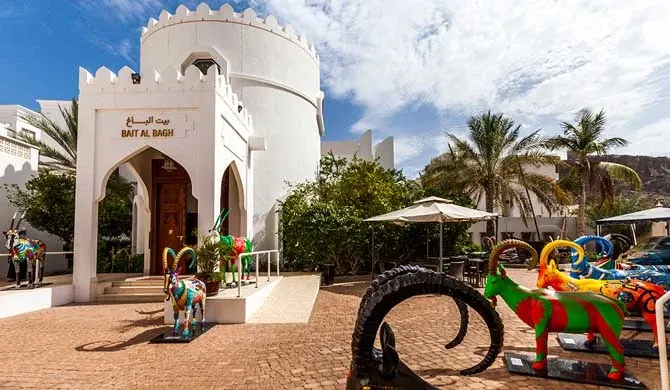
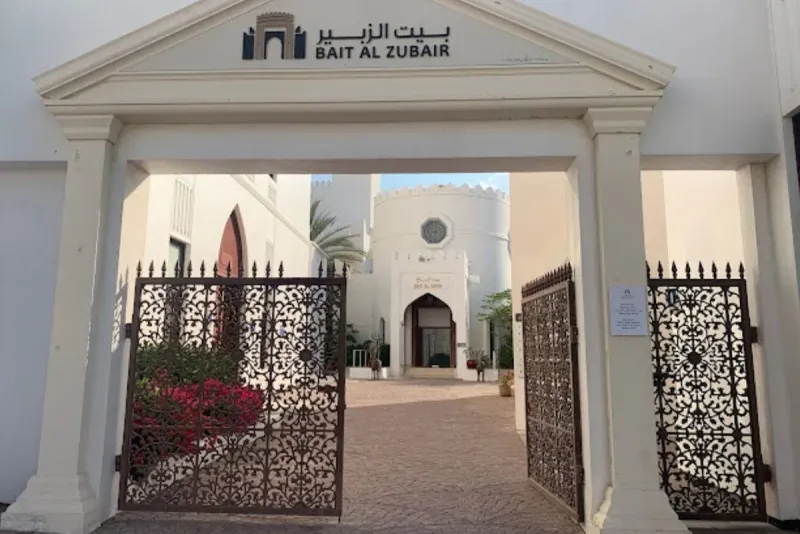
The museum complex is designed in traditional Omani style, characterized by whitewashed walls, wooden doors, carved windows, and inner courtyards. The architecture reflects the aesthetic simplicity and functional elegance typical of Omani homes.
The complex includes several distinct sections:
-
Bait Al Zubair (The Main House) – Showcasing traditional artifacts and ethnographic collections.
-
Bait Al Dalaleel – A restored historic house illustrating domestic life in the 20th century.
-
Bait Al Oud – An exhibition space for art and special collections.
-
The Gallery and Garden Area – Featuring outdoor displays such as traditional Omani houses and falaj irrigation models.
The layout encourages visitors to move chronologically and thematically through Oman’s story, beginning with ancient traditions and progressing toward modern identity.
Traditional Omani Weapons Collection
One of the most striking sections of the museum is its display of traditional Omani weapons. These items are not merely instruments of warfare but symbols of honor, craftsmanship, and tribal identity.
The khanjar, Oman’s iconic curved dagger, occupies a central place in the collection. Often worn during formal occasions and national celebrations, the khanjar represents dignity and heritage. The museum exhibits various designs distinguished by silver filigree work and regional styles.
Swords, rifles, and powder flasks are also displayed, each reflecting different historical periods. The craftsmanship reveals intricate engraving and decorative patterns, highlighting the artistry of Omani metalworkers.
Jewelry and Adornment
Omani jewelry is another highlight of the museum’s collections. Silver ornaments dominate traditional attire, particularly among women. Necklaces, bracelets, anklets, and headpieces demonstrate regional diversity in design.
Jewelry in Oman was not only decorative but also symbolic. Certain pieces indicated marital status, tribal affiliation, or social standing. The museum’s display cases provide explanations of these meanings, offering insight into social customs.
The detailed craftsmanship of these items speaks to the historical importance of trade routes that brought silver and gemstones into Oman from neighboring regions.
Textiles and Traditional Clothing
The museum showcases traditional clothing from various parts of Oman, including coastal regions, mountains, and desert communities. Men’s garments such as the dishdasha are presented alongside women’s embroidered dresses and veils.
Textiles often feature intricate patterns and vibrant colors, particularly in rural and Bedouin communities. Embroidery styles differ from region to region, illustrating Oman’s cultural diversity.
The clothing displays help visitors understand how climate and geography influenced fashion choices. Lightweight fabrics suited coastal humidity, while heavier garments protected mountain dwellers from cooler temperatures.
Maritime Heritage
Oman’s strategic location along the Arabian Sea shaped its maritime history. The museum highlights the importance of seafaring, trade, and shipbuilding in Omani society.
Models of traditional dhows illustrate the craftsmanship that enabled Omani sailors to navigate long distances across the Indian Ocean. Historical documents and maps demonstrate trade connections with East Africa, India, and Southeast Asia.
This maritime legacy underscores Oman’s historical role as a crossroads of cultures and commerce.
Domestic Life and Social Customs
Through reconstructed rooms and household artifacts, the museum offers glimpses into everyday life in old Muscat. Cooking utensils, coffee pots, storage chests, and furniture reveal domestic practices of earlier generations.
The traditional majlis, or sitting room, highlights the importance of hospitality in Omani culture. Guests were welcomed with dates and coffee, a practice that continues today.
These exhibits humanize history by focusing on daily routines rather than only grand events.
Art and Contemporary Expression
In addition to historical artifacts, the museum promotes contemporary Omani art. Rotating exhibitions feature paintings, photography, and sculptures by local artists.
This integration of past and present reinforces the idea that heritage is not static. Instead, it evolves and inspires new forms of creativity.
The gallery spaces provide a platform for dialogue between tradition and modern artistic interpretation.
Educational and Community Role
The museum plays a vital role in education. Schools frequently organize visits to introduce students to national history. Workshops and lectures engage young people in discussions about identity and preservation.
Special programs during national celebrations and cultural festivals attract families and tourists alike. The museum thus functions as both an educational institution and a community hub.
Cultural Preservation and National Identity
In a rapidly globalizing world, institutions like bait al zubair museum muscat serve as guardians of cultural continuity. By documenting artifacts and oral histories, the museum protects intangible traditions that might otherwise fade.
The museum’s mission aligns with broader efforts in Oman to promote heritage tourism and cultural awareness. Visitors gain a deeper appreciation of how history shapes contemporary values.
Visitor Experience
Visitors often describe their experience at bait al zubair museum muscat as immersive and enlightening. Informational plaques provide context in both Arabic and English, making the exhibitions accessible to international audiences.
The serene courtyard offers a place to rest and reflect, surrounded by traditional architectural elements. The museum shop features handicrafts and books that further promote Omani culture.
The welcoming atmosphere reflects the country’s reputation for hospitality.
Location and Accessibility
Situated in Old Muscat, the museum is easily accessible from major landmarks, including Al Alam Palace and Mutrah Souq. Its central location makes it an essential stop on most city tours.
Guided tours provide deeper explanations of exhibits, enhancing the educational experience.
Significance in Cultural Tourism
Cultural tourism has become an important component of Oman’s economy. Museums play a crucial role in presenting authentic narratives that distinguish Oman from other destinations.
Bait al zubair museum muscat exemplifies how private initiatives can contribute to national heritage preservation. Its reputation has grown internationally, attracting scholars, diplomats, and travelers.
Conclusion
Through its carefully curated collections, traditional architecture, and dedication to education, bait al zubair museum muscat stands as a beacon of Omani heritage. It tells stories of seafarers and desert tribes, artisans and families, rulers and merchants—each contributing to the nation’s identity.
A visit here is more than a tour of artifacts; it is a journey into the soul of Oman. From silver jewelry and embroidered garments to maritime models and historic weapons, every display reveals layers of history shaped by geography, faith, and trade.
As Muscat continues to evolve as a modern capital, institutions like this ensure that heritage remains at the forefront of national pride.
Lets discover bait al zubair museum muscat through our muscat city tour.