
Nizwa Fort: Oman’s Icon of History, Architecture, and Cultural Heritage
Nizwa Fort stands as one of Oman’s most celebrated and historically rich landmarks — a towering fortress that has witnessed centuries of tribal politics, trade, invasion, and daily life in the interior of the Sultanate. Situated in the ancient city of Nizwa, roughly 160 kilometers southwest of Muscat, this remarkable stronghold represents not just a defensive structure, but a symbol of Omani identity, power, and ingenuity.
Constructed in the 17th century during the rule of Imam Sultan Bin Saif Al Ya’rubi, the fort was designed to protect the region’s strategic trade routes, agricultural wealth, and settled population from both internal unrest and external threats. Today, Nizwa Fort is one of the most visited cultural sites in Oman — a place where the past comes alive through stone chambers, soaring battlements, and panoramic views of the surrounding date‑palm oases and rugged mountains.
In this article, we explore the history, architecture, cultural significance, restoration efforts, visitor experience, and tourism value of Nizwa Fort — revealing why it remains central to any Oman travel itinerary.
Historical Background
Origins and Construction
The origins of Nizwa Fort trace back to a period of political consolidation in Oman. The Ya’rubi dynasty, emerging in the mid‑17th century, sought to unify the country after decades of tribal division and conflict. To strengthen control over interior territories — especially the agriculturally rich region around Nizwa — Imam Sultan Bin Saif Al Ya’rubi ordered the construction of an imposing fortress around 1650.
Unlike military forts built solely for war, Nizwa Fort was conceived as both a military stronghold and an administrative center. Its location near fertile lands, abundant water sources, and important caravan routes meant it would serve as a hub of governance, justice, defense, and community life.
Strategic Importance in Omani History
During the 17th and 18th centuries, Nizwa served as one of Oman’s capitals and as a major center of Islamic scholarship. The fort’s strategic position between the Hajar Mountains and desert routes made it essential for controlling trade between interior settlements and coastal ports.
At times, Oman faced threats from rival tribes, Portuguese colonial forces, and later Wahhabi incursions. The fortress’s massive defensive structures — especially its central tower — played a crucial role in allowing defenders to hold out against sieges and attacks while exerting authority over the region.
Architecture and Design
The Tower: Heart of the Fortress
The most significant architectural feature of nizwa fort is its enormous cylindrical central tower, which rises more than 30 meters high with thick, curved walls designed to deflect cannon fire and provide defenders with overlapping fields of fire. The tower’s design reflects Omani ingenuity: at its base, walls are nearly 4 meters thick, gradually tapering toward the top where arrow slits and gun holes allow surveillance and defense.
Inside, a spiral ramp and staircases lead to multiple levels of chambers used for storage, defense, and command operations. These interior rooms were designed for utility and survival — spaces for ammunition stores, water reservoirs, kitchens, and guard posts.
Outer Defenses and Galleries
Surrounding the central tower is an elaborate system of vaulted corridors, hidden passageways, and defensive galleries. Many of these chambers were equipped with small openings through which defenders could observe or fire upon approaching enemies while remaining protected. Some galleries are narrow and low, making them difficult for invaders to traverse.
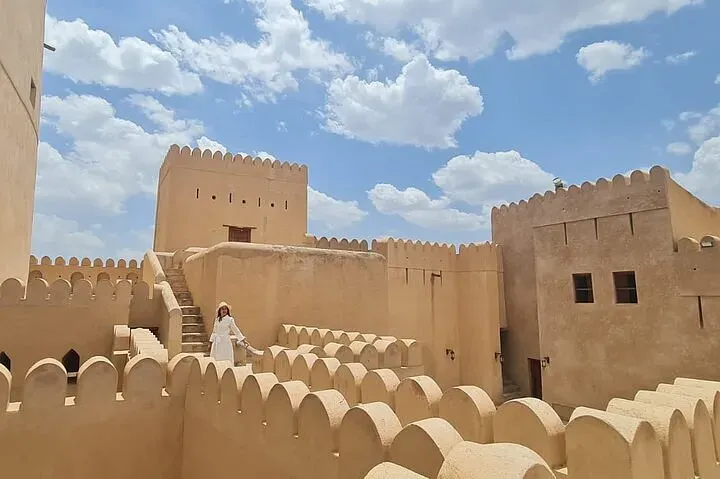
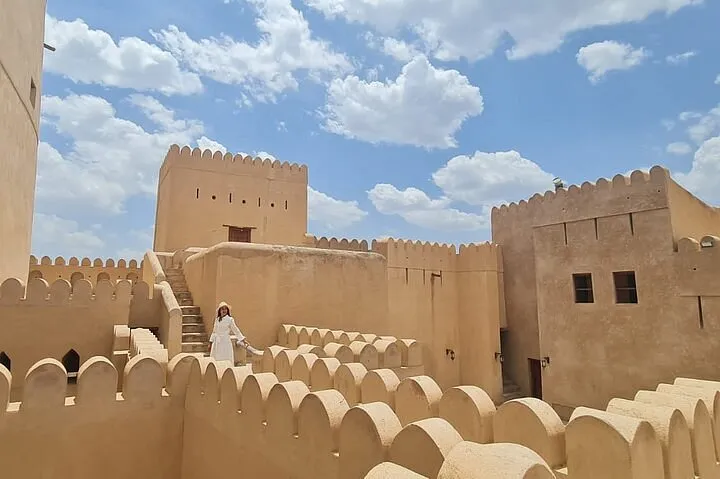
The fort’s roof terraces and battlements provided wide vantage points over the city of Nizwa and the surrounding plains. From these heights, guards could monitor approaching caravans, watch for signs of conflict, and signal to other outposts. The careful integration of vertical and horizontal lines in the design created a layered defense system capable of withstanding prolonged assaults.
Water Systems and Storage
In a desert environment, water security was vital. Nizwa Fort features a series of ingenious water channels and cisterns that stored and transported water from nearby springs. These systems ensured a reliable supply during sieges and supported daily life within the fortress. Large chambers near ground level served as storehouses for food, dates, grain, and other essentials, ensuring that defenders could remain self‑sufficient during times of conflict.
Blend of Form and Function
Architectural scholars admire Nizwa Fort not just for its defensive strength, but for its harmonious blend of form and function. The use of local stone, lime plaster, and gypsum provided durability, while decorative elements — such as geometric patterns and wooden doors — reflected Omani craftsmanship and aesthetic values.
Cultural and Social Significance
Symbol of Omani Identity
For Omanis, Nizwa Fort symbolizes resilience, self‑governance, and cultural pride. Nizwa itself is considered the “Pearl of Islam” because of its long history as a center of Islamic learning, jurisprudence, and sharia scholarship. The fort served as a physical manifestation of these values — a place where tribal leaders, judges, and administrators met to resolve disputes and uphold social order.
Center of Community Life
Beyond its defensive role, the fort functioned as a focal point for community events. It hosted judicial proceedings, tribal negotiations, and celebrations during times of peace. People gathered within its courtyards and galleries, creating a sense of civic identity that extended beyond military concerns.
Preserving Oral History and Traditions
The walls of Nizwa Fort have witnessed countless stories — tales of bravery, negotiation, cultural exchange, and daily life. Oral histories and local legends associated with the fort continue to be passed down through generations, making it not only a monument of stone but a living repository of Omani collective memory.
Modern Restoration and Preservation
Government‑Led Initiatives
In the late 20th century, the Government of Oman — recognizing the Fort’s historical value — undertook extensive restoration projects. These initiatives aimed to preserve the original structure while improving safety and accessibility for visitors.
Restoration efforts focused on stabilizing walls, repairing historic timber beams, reconstructing collapsed sections, and reclaiming original architectural features based on historical research. Efforts were guided by heritage experts, architects, and archaeologists to ensure authenticity and integrity.
Museum and Educational Role
Today, Nizwa Fort operates as both a living museum and cultural education center. Exhibits within the fort display artifacts representing traditional Omani life, including weaponry, agricultural tools, ceramic pottery, and exhibits about local history and trade. Interactive displays help visitors understand daily life within the fortress and the broader historical context of Oman’s interior regions.
Educational programs, workshops, and guided tours bring history to life for school groups, students, and international travelers alike.
Visitor Experience
Exploring the Fortress
A visit to Nizwa Fort offers a layered experience — from the massive stone base of the central tower to the hidden defensive galleries above. Visitors can:
-
Climb the central tower to enjoy panoramic views across Nizwa’s date palm groves and the surrounding Hajar Mountains.
-
Walk the vaulted corridors and hidden passageways that once protected defenders and concealed strategic movements.
-
Explore museum exhibits that contextualize Omani history and local culture.
-
Engage with knowledgeable guides, whose interpretation brings nuance to the fort’s architectural features and strategic purpose.
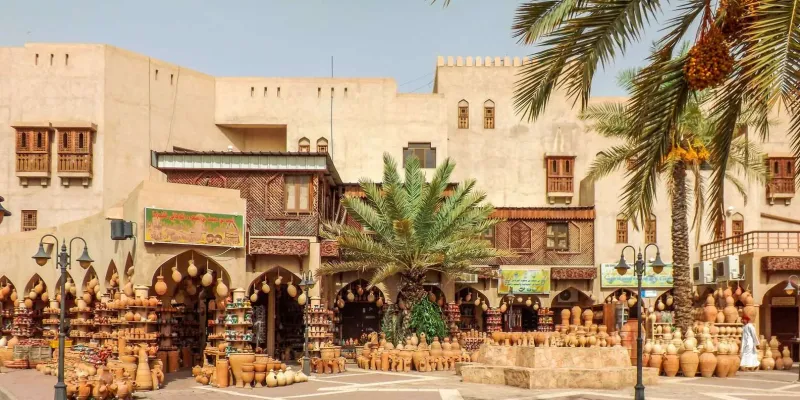
At various lookout points, visitors can observe the cityscape of Nizwa, including its iconic souq (market), which lies just outside the fort’s walls and has been an economic hub for centuries.
Surrounding Attractions
Nizwa Fort’s location makes it ideal for combined cultural exploration. Just steps away, visitors can explore:
-
Nizwa Souq: Famous for its traditional handicrafts, silver jewelry, pottery, and fresh produce — especially dates.
-
Nizwa Falaj System: Traditional irrigation channels that demonstrate ancient water management techniques still in use today.
-
Jebel Akhdar and Jebel Shams: Mountain landscapes offering hiking, terraced agriculture, and dramatic views.
-
Local Museums: Which present deeper insights into Omani heritage, pastoral life, and tribal history.
Tourism and Accessibility
How to Visit
Nizwa is located approximately two hours from Muscat International Airport and is accessible by road. Tourists can rent vehicles, take guided bus tours, or join organized itineraries that include Nizwa among other major Omani attractions.
The fort is open year‑round, though many travelers prefer visiting during the cooler months (October through April) when daytime temperatures are more comfortable.
Lets Explore Nizaw Afort Through Our Oman Tour Packages
For travelers seeking a curated experience, Oman tour packages often include Nizwa Fort as a key destination. From guided cultural tours to combined desert and heritage journeys, these packages reveal the depth of Omani history in immersive ways. This is especially rewarding for first‑time visitors or those who want a structured itinerary covering multiple regions of the country.
Whether travelers choose a day trip from Muscat or a longer exploration of Oman’s interior, the fort is a highlight that seamlessly blends architecture, history, and cultural identity.
Cultural Festivals and Events
Nizwa Fort remains central to local events and festivals celebrating Omani heritage. Seasonal celebrations often feature:
-
Traditional Music and Dance: Performances in the fort’s courtyards.
-
Artisan Demonstrations: Live crafts such as weaving, pottery, and silver‑smithing.
-
Cultural Lectures: Presentations on Islamic scholarship and local history.
-
Food Festivals: Opportunities to sample Omani cuisine and date products.
These events draw both residents and international visitors, reinforcing the fort’s role as a living cultural space rather than a static monument.
Conservation Challenges and Future Vision
Preserving Nizwa Fort in a rapidly changing world requires ongoing attention. Conservation challenges include:
-
Weathering and Erosion: Wind, occasional rain, and temperature changes threaten ancient masonry.
-
Tourist Impact: High foot traffic requires careful management to protect fragile areas.
-
Urban Growth: Surrounding development must balance modern needs with heritage preservation.
Omani heritage authorities continue to implement strategies — including digital documentation, controlled visitor flows, and community engagement — to ensure that the fort remains intact for future generations.
Conclusion
Nizwa Fort is not merely an architectural marvel; it is a living testament to Omani resilience, governance, and tradition. Its thick walls, towering bastions, and hidden galleries tell stories of strategic defense, daily life, and cultural continuity. As both a historical treasure and a modern museum, the fort educates, inspires, and connects visitors to the heart of Oman’s interior.
For anyone exploring Oman — whether as a cultural enthusiast, history scholar, or curious traveler — Nizwa Fort is an unmissable centerpiece of the country’s rich heritage landscape.
lets explore nizaw afort through our oman tour packages and experience firsthand the remarkable legacy of this incredible fortress.
FAQ – Nizwa Fort, Oman
1. What is Nizwa Fort?
Nizwa Fort is a historic 17th-century fortress in Nizwa, Oman, famous for its massive tower, thick walls, and cultural significance.
2. Where is Nizwa Fort located?
It is located in the heart of Nizwa city, about 160 km southwest of Muscat, easily accessible by car or tour packages.
3. When is the best time to visit Nizwa Fort?
The ideal time is October to April, during cooler months when exploring the fort and nearby attractions is comfortable.
4. What can I do at Nizwa Fort?
Climb the central tower, explore defensive corridors, visit the museum with Omani artifacts, and enjoy views of Nizwa and surrounding mountains.
5. Are guided tours available?
Yes. Guided tours provide historical insights and cultural context. Lets explore Nizaw Afort through our Oman tour packages for a full experience.
6. What nearby attractions can I visit?
Nizwa Souq, Jebel Akhdar, Birkat Al-Mouz, and Jebel Shams are popular sites close to the fort.