


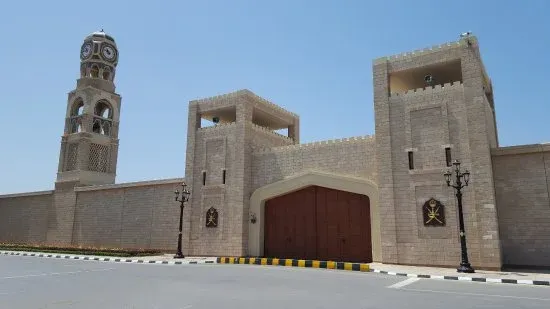
In the southern coastal city of Salalah, Oman’s past unfolds through architecture, oral traditions, and the enduring memory of leadership. Among the city’s most historically significant landmarks stands a palace that reflects the political, cultural, and social evolution of the Dhofar region. Built during a transformative era, this palace became a powerful symbol of governance, authority, and modernization in southern Oman.
The palace was originally constructed in the early 19th century as a fortified residence for local rulers. At the time, Salalah was a modest but strategically important settlement, benefiting from its proximity to the Arabian Sea and its role in the frankincense trade. The palace’s location was deliberately chosen to overlook key routes and to provide protection against both tribal conflicts and foreign incursions.
Over time, the structure evolved from a defensive stronghold into a formal royal residence. Its expansion mirrored the political consolidation of the region and the growing importance of Salalah as an administrative center. The palace later gained national prominence when it became associated with Sultan Qaboos bin Said, whose early life and leadership would profoundly shape modern Oman.
Architectural Significance
The palace’s architecture is a striking example of traditional Omani design adapted to local environmental conditions. Built primarily from stone and mud brick, the structure was designed to withstand Salalah’s monsoon climate, known locally as the Khareef season. Thick walls provided insulation from heat, while narrow openings enhanced ventilation and security.
Architecturally, the palace blends defensive elements with residential elegance. Watchtowers, crenellated walls, and elevated vantage points speak to its original military purpose, while interior courtyards and reception halls reflect its role as a center of governance and hospitality. The layout followed traditional Omani spatial principles, separating public administrative areas from private family quarters.
Decorative elements were minimal but meaningful. Wooden doors featured carved geometric patterns, and interior spaces emphasized symmetry and balance rather than ornamentation. This restraint reflected cultural values of modesty and functionality, while still conveying authority and permanence.
Political and Administrative Role
Throughout the 19th and 20th centuries, the palace functioned as a critical administrative hub for Dhofar. Local leaders conducted official meetings, resolved disputes, and coordinated trade and security from within its walls. The palace symbolized centralized authority at a time when regional autonomy and tribal governance were common.
Its political importance reached a defining moment in the mid-20th century when it became the birthplace and early residence of Sultan Qaboos bin Said. His upbringing within the palace walls connected the site directly to the future transformation of Oman. Although Sultan Qaboos later relocated the seat of power to Muscat, the palace remained a deeply symbolic place associated with the origins of his leadership.
During periods of regional unrest, the palace also served as a secure refuge and command center. Its fortified design allowed it to function effectively during times of political instability, reinforcing its reputation as both a home and a stronghold.
Cultural Importance to Salalah
Beyond politics, the palace holds immense cultural significance for the people of Salalah. For generations, it has been woven into local identity and collective memory. Residents associate the palace with stability, leadership, and the gradual transition from isolation to national unity.
The palace grounds often featured prominently in ceremonial occasions, religious celebrations, and official receptions. Oral histories passed down among Dhofari families describe moments when community leaders gathered there to discuss shared concerns or celebrate important milestones.
Even after it ceased functioning as a royal residence, the palace continued to represent continuity between past and present. Its preservation reflects Oman’s broader commitment to honoring heritage while embracing modernization.
Preservation and Restoration
As Oman entered a new era of development in the late 20th century, preserving historical landmarks became a national priority. The palace underwent careful restoration to ensure its structural integrity while maintaining authenticity. Restoration experts focused on using traditional materials and techniques, avoiding excessive modernization that could compromise historical value.
The surrounding area was also redesigned to enhance accessibility and visibility. Landscaping emphasized native plants, and lighting was installed to highlight architectural features without altering the original structure. These efforts transformed the palace into a landmark that could be appreciated by both locals and visitors.
Today, the palace stands as a protected heritage site, offering insight into Oman’s political and architectural history. It serves as a visual reminder of how leadership, culture, and place intersect in shaping national identity.
Tourism and Educational Value
The palace has become an essential stop for visitors interested in Salalah’s heritage. Tourists are drawn not only to its architecture but also to its historical narrative. Guides often explain how the palace fits into the broader story of Oman’s unification and modernization.
Educational institutions frequently include the palace in cultural programs, using it as a case study for traditional architecture, governance systems, and regional history. Its presence enriches Salalah’s tourism offering, complementing natural attractions such as beaches, wadis, and the lush landscapes of the Khareef season.
By integrating the palace into responsible tourism initiatives, Oman ensures that heritage appreciation goes hand in hand with conservation.
Symbolism in Modern Oman
In contemporary Oman, the palace symbolizes resilience and transformation. It represents a period when leadership was deeply rooted in local communities, yet capable of guiding the nation toward progress. The palace’s enduring presence reflects the balance Oman has achieved between honoring tradition and embracing development.
For many Omanis, the palace is more than a historical structure; it is a symbol of national pride and cultural continuity. Its story resonates with themes of unity, identity, and vision—values that continue to define the Sultanate today.
Conclusion
As one of Salalah’s most meaningful landmarks, Al Husn Palace offers a powerful window into Oman’s political heritage, architectural traditions, and cultural identity. From its origins as a fortified residence to its role in shaping modern leadership, the palace remains a testament to history preserved with respect and purpose. Let us discover the Al Husn Palace through our Salalah activities and experience the legacy that continues to inspire generations.