
The presence of Baobab trees in Salalah is one of the most fascinating natural wonders of southern Oman. These ancient and unusual trees, known scientifically as Baobab Tree, are famous for their massive trunks, distinctive shapes, and remarkable longevity. Often called the “Tree of Life,” the baobab is typically associated with Africa, yet a small population grows naturally in the Dhofar region near Salalah.
The appearance of these trees in Oman has long intrigued scientists, historians, and travelers. Their presence is believed to be connected to ancient trade routes between southern Arabia and East Africa. Today, the baobab trees around Salalah are a unique botanical attraction and a reminder of the region’s historical connections with the wider Indian Ocean world.
Visitors exploring the mountains and valleys around Salalah can find these extraordinary trees standing alone in rocky landscapes, creating a striking contrast with the surrounding terrain. For nature lovers and photographers, the baobab trees are among the most distinctive natural landmarks in the Dhofar region.
What Are Baobab Trees?
The Baobab Tree is one of the most recognizable trees in the world. Native primarily to Africa and parts of Madagascar, the baobab is known for its enormous trunk, unusual silhouette, and ability to survive in harsh environments.
Baobab trees can grow to impressive sizes, sometimes reaching:
-
Up to 25 meters in height
-
Trunk diameters exceeding 10 meters
-
Lifespans of more than 1,000 years
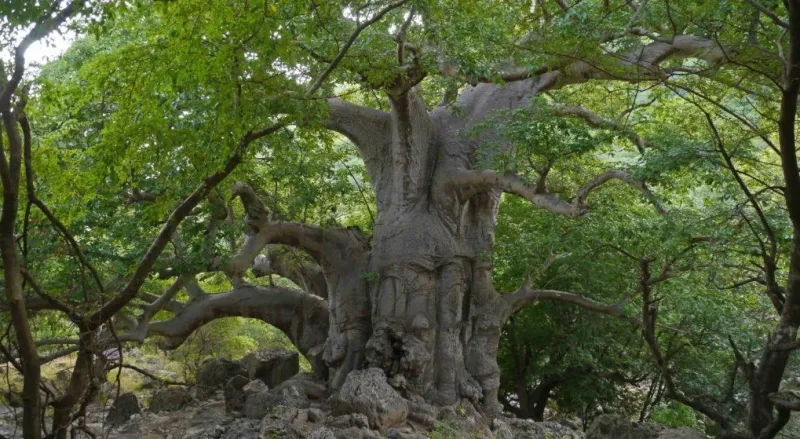
One of the tree’s most remarkable features is its ability to store water within its trunk. This adaptation allows the baobab to survive long periods of drought in arid climates.
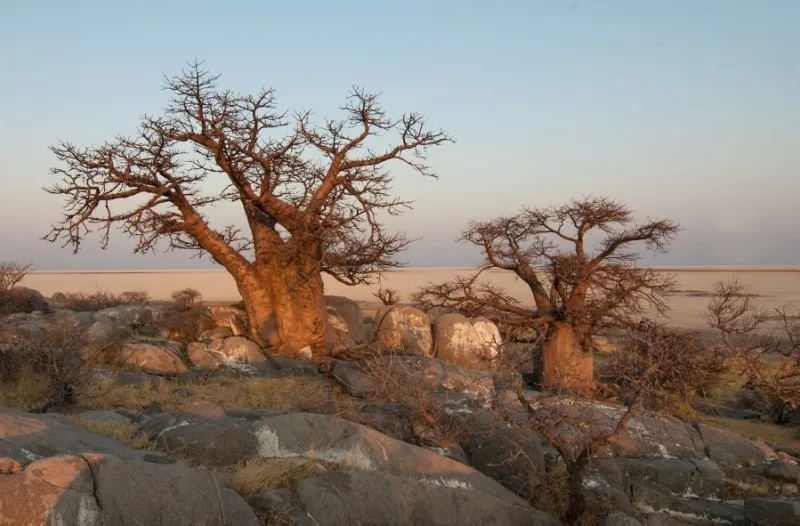
During the dry season, the tree often appears leafless, giving it the appearance of an upside-down tree with branches resembling roots. This unusual form has inspired numerous legends and myths across cultures.
Baobab Trees in Salalah
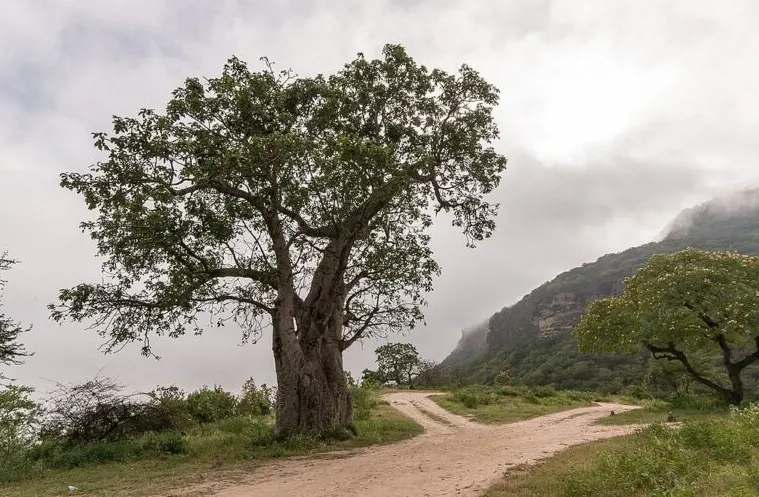
While baobab trees are most commonly found in Africa, a small group grows in the mountains surrounding Salalah in the Dhofar region.
These trees are mainly located in valleys and rocky hillsides within the Dhofar mountains, particularly in areas near Wadi Hinna and other remote locations.
The presence of baobabs in Oman is considered unusual because the Arabian Peninsula is not part of the tree’s typical natural range. Scientists believe that the trees may have arrived through ancient trade connections between Oman and East Africa.
Despite their limited numbers, the baobabs of Salalah have become an important natural landmark and a symbol of the region’s biodiversity.
Historical Origins
The origins of baobab trees in Dhofar remain a subject of scientific debate. One widely accepted theory suggests that the seeds were transported from Africa through ancient maritime trade.
For centuries, the region around Salalah was an important center for the frankincense trade, which connected southern Arabia with Africa, India, and the Mediterranean world.
Merchants traveling across the Indian Ocean may have carried baobab seeds unintentionally with their cargo or intentionally planted them near settlements.
Another possibility is that birds or ocean currents transported the seeds across the sea. Regardless of how they arrived, the trees adapted successfully to the Dhofar environment and have survived for centuries.
Unique Characteristics
Baobab trees possess several unique features that distinguish them from most other trees.
Massive Trunks
The thick trunk of the baobab acts as a natural water reservoir. During rainy periods, the tree absorbs and stores water that it can use during dry seasons.
Longevity
Baobab trees are among the longest-living plants on Earth. Some specimens in Africa are estimated to be more than a thousand years old.
Distinctive Shape
The tree’s unusual structure, with thick branches extending from a wide trunk, creates a dramatic silhouette against the landscape.
Seasonal Leaves
Baobabs lose their leaves during dry periods to conserve water. New leaves appear when the rainy season begins.
Ecological Importance
Although there are relatively few baobab trees in Oman, they play an important ecological role within their environment.
The trees provide shelter and nesting sites for birds and insects. Their flowers attract pollinators, while their fruit can serve as a food source for animals.
The large trunks also create microhabitats where small plants and organisms can survive.
By supporting various forms of life, the baobab trees contribute to the biodiversity of the Dhofar mountains.
Cultural Significance
Across Africa and other regions where they grow, baobab trees hold deep cultural and symbolic meanings. They are often associated with longevity, resilience, and wisdom.
Although the trees in Oman are fewer in number, they still hold cultural interest because they represent the historical links between Oman and East Africa.
Oman maintained strong maritime connections with East African regions for centuries, particularly during periods when Omani traders and explorers established settlements along the African coast.
The presence of baobab trees in Dhofar reflects this shared cultural and historical heritage.
Tourism and Visitor Experience
Baobab trees have become a popular attraction for travelers visiting Salalah. Many tourists enjoy searching for these unusual trees while exploring the mountains and valleys of Dhofar.
The trees often grow in isolated locations, which adds a sense of discovery and adventure for visitors.
Photographers especially appreciate the dramatic appearance of baobabs, particularly when they are silhouetted against the sky or surrounded by green hills during the Khareef season.
Guided tours sometimes include visits to known baobab locations as part of nature excursions around Salalah.
Khareef Season and the Baobab Landscape
The Dhofar region experiences a unique monsoon season called Khareef, which occurs between June and September.
During this period, moist winds from the Indian Ocean bring fog, drizzle, and cooler temperatures to the mountains around Salalah. The normally dry landscape transforms into lush green hills and valleys.
Baobab trees appear especially striking during this season. Their thick trunks stand out against the vibrant greenery, creating picturesque scenes that attract photographers and nature enthusiasts.
The cooler weather also makes it easier for visitors to explore the mountainous areas where the trees grow.
Nearby Natural Attractions
Travelers visiting the baobab trees near Salalah often combine their trip with visits to other remarkable natural destinations.
One of the most popular nearby attractions is Wadi Darbat, known for its waterfalls and lakes during the Khareef season.
Another spectacular location is Jabal Samhan, a mountain range offering dramatic cliffs and panoramic views of the Arabian Sea.
Visitors may also explore the massive Tawi Atair Sinkhole, one of the largest sinkholes in the world.
These attractions together create a diverse and unforgettable travel experience in the Dhofar region.
Conservation and Protection
Because baobab trees are rare in Oman, conservation efforts are important to ensure their survival.
Environmental authorities encourage visitors to respect the trees and avoid damaging their trunks or surrounding environment.
Preserving these ancient trees helps protect a unique part of Oman’s natural heritage and ensures that future generations can continue to admire them.
Accessibility
The baobab trees of Dhofar are located in mountainous areas east of Salalah. Some can be reached by car followed by short walks through rocky terrain.
Because many of the trees grow in remote locations, guided tours are often recommended for travelers who want to visit them.
These tours typically combine visits to the baobabs with other natural attractions in the region.
Best Time to Visit
The best time to see the baobab trees near Salalah is between October and April, when the weather is cooler and comfortable for outdoor exploration.
However, the Khareef season between June and September offers a completely different experience. During this period, the surrounding hills turn green and mist covers the mountains, creating a magical atmosphere.
Sunrise and sunset are excellent times to photograph the trees because the warm lighting enhances their dramatic shapes.
The Baobab Tree found near Salalah represents one of the most unique natural features in the Arabian Peninsula. These remarkable trees, famous for their enormous trunks and long lifespans, offer a fascinating glimpse into the ecological and historical connections between Oman and Africa.
Standing quietly in the mountains of Dhofar, the baobab trees remind visitors of the region’s rich natural diversity and centuries-old maritime trade routes.
For travelers exploring southern Oman, discovering these rare trees is an unforgettable experience that highlights the extraordinary landscapes surrounding Salalah.
Planning a trip to Salalah? Visit our Salalah Activities today to discover detailed travel guides, exciting Oman tour packages, and expert tips to help you explore the incredible natural wonders of the Dhofar region.