
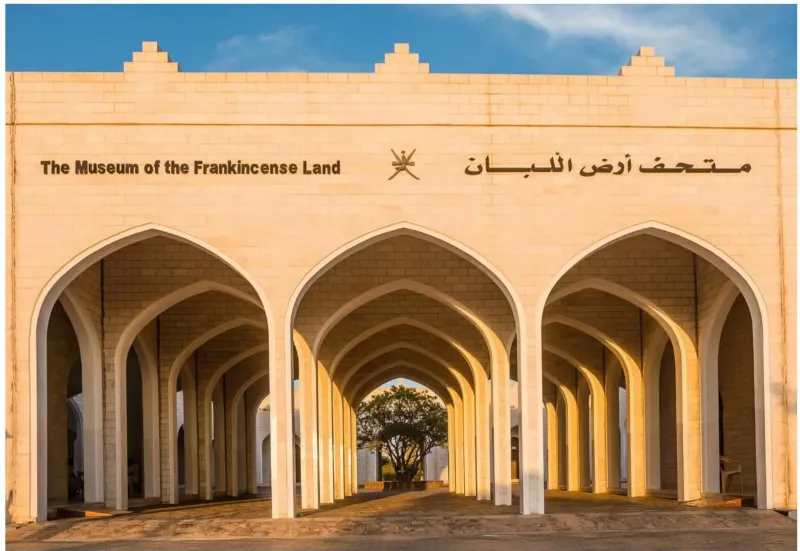
The Frankincense Land Museum is one of the most important cultural landmarks in Oman, dedicated to preserving and presenting the long and remarkable history of frankincense — a priceless resin that shaped civilizations, commerce, and culture across continents. Located in Salalah, in the Dhofar Governorate of southern Oman, this museum is both a celebration of the ancient frankincense trade and a living archive of the traditions, rituals, and stories connected to this extraordinary natural treasure.
For centuries, frankincense was not just a commodity — it was a symbol of spirituality, wealth, and connection between distant lands. The Frankincense Land Museum tells the story of this resin from its origins in the Boswellia trees of Dhofar to its impact on civilizations in Arabia, India, Africa, and the Mediterranean. With engaging exhibits, interactive displays, and thoughtfully crafted galleries, the museum provides an immersive journey into one of the oldest forms of global trade.
Historical Roots of Frankincense and Dhofar
The story of frankincense begins in the rugged hills and valleys of Dhofar. Here, the Boswellia sacra trees — sometimes called “tears of Dhofar” — produce aromatic resin that has been harvested for more than 5,000 years. Ancient mariners, traders, and pilgrims once embarked from the ports near Salalah, carrying this resin across the Arabian Sea to far‑off empires.
Frankincense was prized in ancient Egypt for use in religious rites and embalming. In the Roman Empire, it was burned in temples and households. In ancient Persia, China, and India, it was valued both for its fragrance and its therapeutic properties. Trade routes crisscrossed the oceans and deserts, linking Dhofar to the world. The Frankincense Land Museum preserves this history and explains how a simple natural resin became one of the most coveted products of the ancient world.
The Founding of the Museum
The idea behind the Frankincense Land Museum was born from a desire to protect and share the cultural legacy of the frankincense trade. Local historians, cultural advocates, and the Omani government collaborated to create a space where both locals and international visitors could learn about the deep historical roots of this heritage.
Situated in Salalah, the museum occupies a central location that allows visitors to connect the exhibits with the real landscapes where frankincense trees grow, where harvesting still takes place, and where ancient merchant routes once led caravans and ships.
Museum Architecture and Visitor Flow
The architecture of the Frankincense Land Museum blends contemporary design with traditional Arabian influences, creating a space that feels both modern and rooted in history. The museum is organized into thematic zones that follow a chronological journey:
-
Origins of Frankincense: Explores the biology of Boswellia trees, ecological conditions of Dhofar, and traditional harvesting methods.
-
Trade Routes and Commerce: Maps, models, and artifacts show how frankincense traveled from Dhofar to distant markets.
-
Cultural Significance: Displays focus on how frankincense was used in religion, ceremony, medicine, and daily life.
-
Interactive Learning: Digital displays, multimedia storytelling, and hands‑on modules bring history to life for all age groups.
High‑quality signage, multilingual guides, and thoughtfully curated spaces make the museum easy to navigate and educational for both casual visitors and serious scholars.
Key Exhibits and Collections
Natural Heritage Galleries
These exhibits introduce visitors to the Boswellia tree species and the ecological uniqueness of Dhofar. Real resin samples, botanical models, and scent stations allow visitors to see, touch, and smell frankincense for themselves. Labels explain how environmental factors influence resin quality and how different grades of frankincense were historically classified.
Ancient Trade and Commerce
One of the most captivating sections of the museum traces the global routes through which frankincense traveled. Large map installations show maritime and overland paths, replica merchant ships illustrate ancient maritime technology, and artifacts from distant archaeological sites demonstrate frankincense’s far‑reaching influence.
Cultural Practices and Rituals
Frankincense was much more than a trade good — it was a central element in spiritual traditions. Exhibits in this section feature incense burners from different cultures, ceremonial vessels, and reconstructions of ancient temples where frankincense was burned as part of rituals. Audio stations play historical narratives and ancient chants that reveal how various civilizations used the resin in sacred contexts.
Interactive Experiences
A dedicated interactive gallery invites visitors to watch video narratives about ancient traders, participate in virtual harvesting demonstrations, and engage with timelines that show how the frankincense trade evolved over millennia.
Education and Research at the Museum
Education is a core mission of the Frankincense Land Museum. The museum hosts lectures, workshops, and field trips designed for students, academics, and cultural enthusiasts. Collaborations with universities and research institutions support projects on ancient trade networks, environmental studies, and preservation techniques.
Programs often include visits to local Boswellia groves where visitors can observe seasonal tapping practices, learn from local harvesters, and discover the sustainable traditions that have been passed down through generations.
Cultural Importance of Frankincense
Frankincense holds deep cultural meaning for the people of Dhofar. It represents ancestral wisdom, trade connections across continents, and a shared identity rooted in tangible heritage. In Dhofari culture, the harvesting of frankincense is not only an economic activity but a tradition intertwined with community life and seasonal rhythms.
Personal narratives featured in the Frankincense Land Museum highlight family histories connected to the trade. Stories from local harvesters, tribal elders, and merchants remind visitors that this history is not distant — it continues to shape lives today.
Salalah, Surrounding Attractions, and Visitor Experience
Visitors to the museum often combine their experience with outdoor cultural trails, natural landmarks, and seasonal events. The Dhofar region’s khareef season — a monsoon‑like phenomenon — transforms the landscape from dry to lush, drawing tourists who want to experience both nature and culture.
lets discover Frankincense Land Museum through our salalah activities by booking guided excursions that connect the museum with nearby frankincense groves, historic sites, and coastal viewpoints. Together, these experiences offer a holistic view of the history, culture, and landscapes that define Salalah.
Local tour operators often include the museum as a highlight in broader cultural routes, featuring visits to nearby markets, archaeological sites, and natural springs that emerge during the khareef season.
Conservation and Future Initiatives
Preserving the artifacts and stories curated by the museum is an ongoing effort. Conservation specialists monitor environmental conditions, stabilize fragile historical materials, and digitize archives to ensure long‑term access for researchers and the public.
Future initiatives aim to expand programming, enhance interactive displays, and develop mobile applications that allow visitors to explore exhibits virtually. Plans also include supporting educational outreach programs that bring frankincense heritage into schools and community centers.
Public Engagement and Cultural Festivals
The Frankincense Land Museum plays an active role in Salalah’s cultural calendar. Seasonal festivals celebrate frankincense through music, dance, storytelling, and craft demonstrations. These events bring the museum’s themes to life and foster greater local and global appreciation for Dhofar’s heritage.
Market fairs that feature frankincense products, traditional art forms, and culinary presentations enrich the visitor experience. Partnerships with cultural institutions across Oman and abroad help promote heritage exchanges and traveling exhibits.
Visitor Information and Practical Tips
The museum is open year‑round, with peak visitation during the khareef season. Upon arrival, visitors should begin with the introductory galleries before moving to the deeper historical and interactive exhibits. Audio guides and multilingual signage support English, Arabic, and other major languages.
Nearby amenities, restaurants, and artisan markets make the museum area a convenient hub for a full day of cultural tourism. Transport options include guided tours, taxis, and private drivers from Salalah city.
Legacy and Global Recognition
The Frankincense Land Museum attracts scholars, historians, and travelers from around the world. Its contribution to understanding ancient global trade routes has made it a valuable resource in academic circles. Exhibits from the museum have traveled internationally, raising awareness of Dhofar’s role in the history of commerce and cultural exchange.
International research partnerships continue to highlight the importance of frankincense not only as a historical product, but as a symbol of the shared human endeavor that connected ancient civilizations.
Conclusion
The Frankincense Land Museum stands as a living tribute to one of the world’s oldest and most influential forms of trade. Through engaging exhibits, educational programming, and cultural storytelling, the museum bridges the past and present, connecting visitors with the landscapes and traditions that gave rise to the frankincense legacy.
This institution demonstrates that heritage is not merely preserved in glass cases — it lives in the stories we tell, the landscapes we walk, and the connections we make across cultures. Whether you are a history enthusiast, cultural explorer, or curious traveler, the museum invites you to experience a profound chapter of human history.
Let’s discover the Frankincense Land Museum through our Salalah Activities — an immersive journey that brings history to life. From the fragrant Boswellia groves on the hillsides to the interactive exhibits inside the museum, every step of your visit is educational and unforgettable