
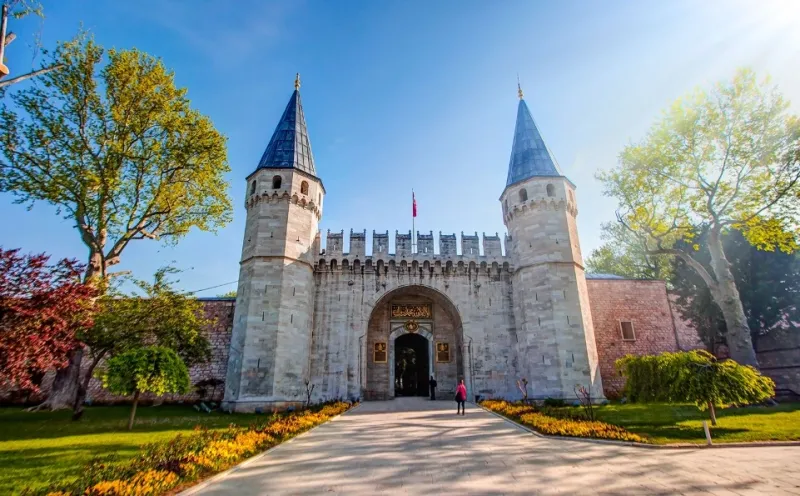
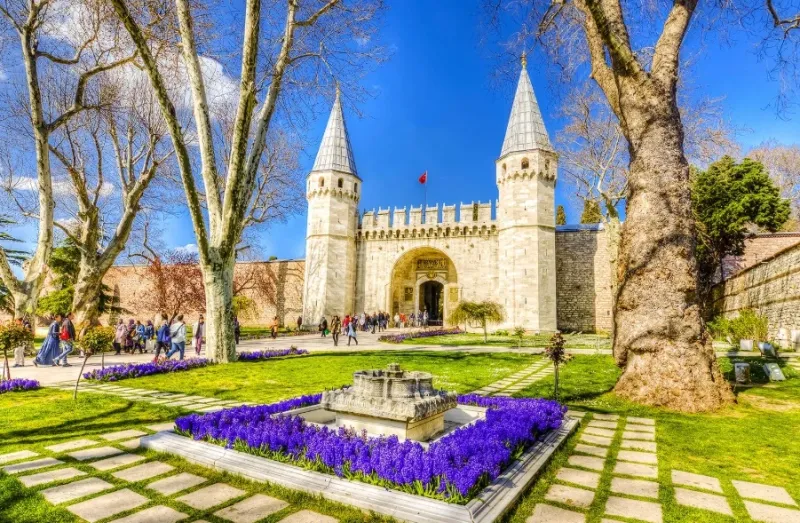
The Topkapi Palace, also known as the Topkapi Palace Museum, is one of the most important historical landmarks in Istanbul and a symbol of the grandeur of the Ottoman Empire. Overlooking the Bosphorus Strait and the Golden Horn, this magnificent palace served as the primary residence of Ottoman sultans for nearly four centuries.
Today, Topkapi Palace is a world-renowned museum that attracts millions of visitors each year. With its rich collections of imperial treasures, sacred relics, courtyards, and breathtaking architecture, it offers a fascinating journey into the political, cultural, and daily life of the Ottoman rulers.
Historical Background
Foundation of the Palace
Topkapi Palace was commissioned by Sultan Mehmed II shortly after the Ottoman conquest of Constantinople in 1453. Construction began in 1459 and continued for several years, resulting in a vast complex that would serve as the administrative and royal center of the empire.
Unlike European palaces built as single structures, Topkapi Palace was designed as a series of courtyards and buildings, reflecting traditional Islamic architectural concepts.
Role in the Ottoman Empire
For nearly 400 years, Topkapi Palace was the heart of the Ottoman Empire. It served as:
-
The residence of the sultans
-
The administrative headquarters of the empire
-
A center for political decision-making
-
A place for ceremonies and state affairs
From this palace, Ottoman rulers governed a vast empire that spanned three continents.
Transition to a Museum
In the 19th century, the Ottoman sultans moved to the more modern Dolmabahce Palace. Later, in 1924, following the establishment of the Republic of Turkey, Topkapi Palace was converted into a museum.
Today, it remains one of the most visited museums in Turkey and a UNESCO-recognized cultural treasure.
Architectural Design
Topkapi Palace is an extensive complex covering a large area and consisting of multiple courtyards, pavilions, and gardens.
The Four Courtyards
The palace is divided into four main courtyards:
First Courtyard (Outer Court)
This area served as a public space and includes gardens and service buildings.
Second Courtyard
Used for administrative purposes, it contains the Imperial Council Chamber and palace kitchens.
Third Courtyard
This was the private area of the sultan and includes the Audience Chamber and the Imperial Treasury.
Fourth Courtyard
The most secluded part of the palace, featuring gardens, terraces, and pavilions with stunning views of the Bosphorus.
The Harem
One of the most intriguing sections of Topkapi Palace is the Harem, a private residential area where the sultan’s family lived.
The Harem includes:
-
Living quarters of the sultan
-
Rooms of the queen mother (Valide Sultan)
-
Residences of wives and concubines
-
Decorative halls and courtyards
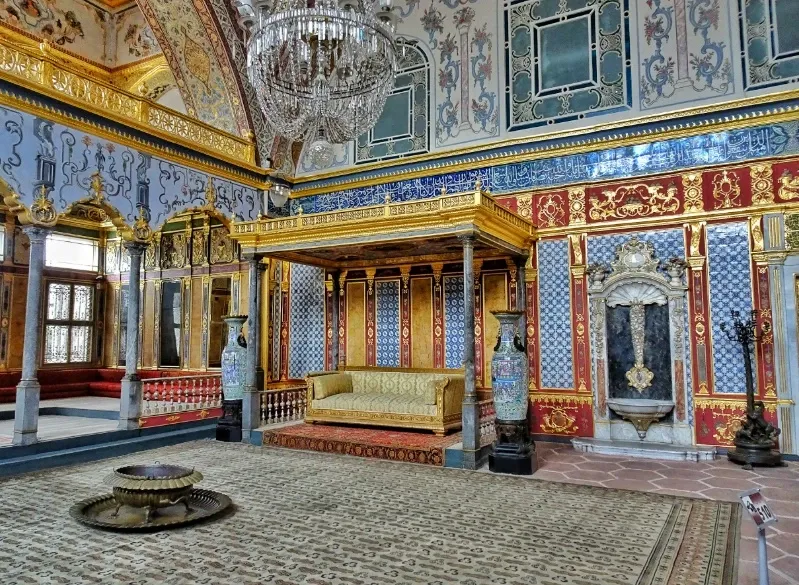
The Harem provides insight into the private life of the Ottoman royal family and is known for its intricate tilework and luxurious design.
Imperial Treasury
The Imperial Treasury is one of the highlights of the Topkapi Palace Museum.
It houses a remarkable collection of treasures, including:
-
Jewels and precious stones
-
Golden thrones
-
Ceremonial weapons
-
Royal gifts from foreign rulers
Among the most famous items is the Topkapi Dagger, known for its exquisite craftsmanship and historical significance.
Sacred Relics
Topkapi Palace also holds an important collection of Islamic sacred relics.
These include items believed to be associated with the Prophet Muhammad, such as:
-
Cloaks
-
Swords
-
Personal belongings
These relics are displayed in a dedicated section of the palace and are of great religious importance.
Palace Kitchens
The palace kitchens are among the largest in the world and once prepared meals for thousands of people daily.
Today, they display a collection of:
-
Chinese porcelain
-
Ottoman ceramics
-
Kitchen utensils
These exhibits highlight the culinary traditions and international influences of the Ottoman Empire.
Gardens and Views
Topkapi Palace is surrounded by beautiful gardens and terraces that offer stunning views of the Bosphorus Strait.
Visitors can enjoy:
-
Scenic viewpoints
-
Peaceful gardens
-
Panoramic city views
The natural setting adds to the charm and appeal of the palace.
Cultural and Historical Significance
Topkapi Palace is a symbol of Ottoman power and culture.
It reflects:
-
The administrative system of the empire
-
The artistic achievements of the Ottomans
-
The lifestyle of the royal court
Its architecture and collections provide valuable insights into one of the most influential empires in history.
Visiting Topkapi Palace
Entry and Tickets
Visitors can purchase tickets to access the palace and its different sections, including the Harem.
Best Time to Visit
-
Early morning to avoid crowds
-
Spring and autumn for pleasant weather
Visitor Experience
Exploring Topkapi Palace can take several hours, as there is much to see and learn.
Nearby Attractions
Topkapi Palace is located in the historic center of Istanbul, close to several major landmarks:
-
Hagia Sophia
-
Blue Mosque
-
Basilica Cistern
-
Grand Bazaar
This makes it easy to explore multiple attractions in one trip.
Preservation and Restoration
Ongoing restoration efforts ensure that Topkapi Palace remains preserved for future generations.
These efforts focus on:
-
Protecting historical structures
-
Restoring artworks and artifacts
-
Maintaining the gardens and surroundings
Why Visit Topkapi Palace
Topkapi Palace offers a unique opportunity to experience the history and grandeur of the Ottoman Empire.
Highlights
-
Rich historical significance
-
Stunning architecture
-
Valuable collections and artifacts
-
Beautiful gardens and views
Conclusion
The Topkapi Palace is one of the most remarkable historical sites in Istanbul. As both a former royal residence and a modern museum, it provides a deep insight into the life and power of the Ottoman Empire.
From its grand courtyards and luxurious Harem to its priceless treasures and sacred relics, Topkapi Palace offers an unforgettable journey through history.
Ready to explore the wonders of Istanbul Excursions? Visit our website today to discover exclusive Turkey travel packages, guided tours, and unforgettable cultural experiences.