
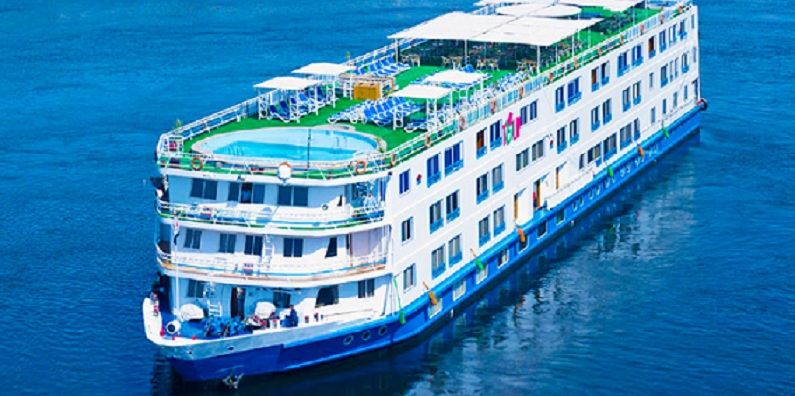
Lake Nasser Cruises: A Complete Guide to Sailing Through Ancient Nubia
“I had already experienced a traditional Nile cruise, but sailing on Lake Nasser felt completely different. The desert seemed endless, the water was incredibly calm, and seeing Abu Simbel from the lake was the moment I will remember most from my Egypt trip.”
That is how many travelers describe their first Lake Nasser cruise. While the classic Nile cruise between Luxor and Aswan is famous for its temples and lively riverbanks, Lake Nasser offers something quieter and more remote. Here, vast desert landscapes surround deep blue water, and ancient Nubian monuments appear in places where you may see very few other travelers.
A Lake Nasser cruise is a multi-day journey across the enormous reservoir created by the Aswan High Dam. Most cruises connect Aswan with Abu Simbel and stop at remarkable archaeological sites including Kalabsha, Wadi El Seboua, Amada, and Qasr Ibrim before reaching the spectacular temples of Abu Simbel.
Unlike a conventional Nile cruise, this journey is about peaceful sailing, desert scenery, rescued monuments, Nubian history, and a slower style of exploration. If you want to discover a less crowded side of Egypt while visiting some of the country's most extraordinary temples, Lake Nasser is an experience worth considering.
What Is a Lake Nasser Cruise?
A Lake Nasser cruise is a sightseeing cruise across Lake Nasser, the vast artificial lake formed after the construction of the Aswan High Dam. The lake covers approximately 5,250 square kilometers and extends southward from Aswan toward the Sudanese border.
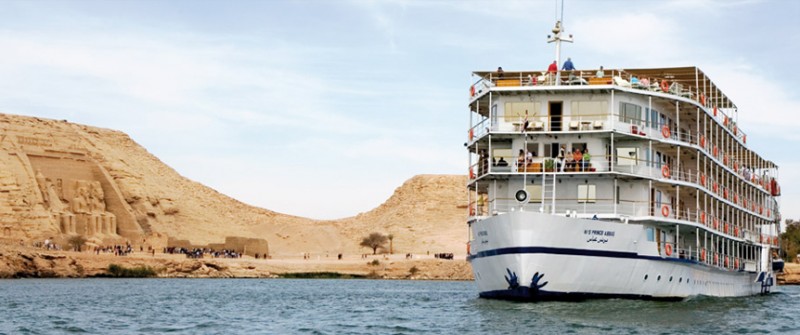
The cruise route generally runs between Aswan and Abu Simbel, although the direction and exact number of nights depend on the vessel and sailing schedule. Current cruise programs commonly range from three to five nights. For example, the Mövenpick MS Prince Abbas currently offers three-night and four-night itineraries, while other vessels operate longer five-day programs.
What makes the experience especially interesting is that many of the monuments along the route were relocated during the international campaign to save Nubian archaeological sites from the rising waters created by the dam.
Quick Facts About Lake Nasser Cruises
Here are the most important details to know before booking.
Location
Lake Nasser is in southern Egypt, beginning around Aswan and extending south toward Abu Simbel and the Sudanese border. Most tourist cruises operate between Aswan and Abu Simbel.
Cruise Duration
Most current itineraries last approximately 3 to 5 nights, depending on the ship and direction of travel. A four-night sailing is one of the commonly offered formats.
Opening Hours
There is no single opening schedule for a Lake Nasser cruise because the cruise operates according to the ship's sailing program. The individual temples and archaeological sites visited during the journey have their own visiting hours, which can vary.
Best Time to Visit
The cooler months from October through February are generally among the most comfortable for a Lake Nasser cruise. The weather is more pleasant for walking around archaeological sites and spending time on the ship's outdoor decks. Summer can be extremely hot in southern Egypt, with temperatures regularly becoming uncomfortable during the middle of the day.
Typical Cruise Route
A common route includes:
Aswan → Kalabsha → Wadi El Seboua → Amada → Qasr Ibrim → Abu Simbel
The exact sequence and included visits depend on the ship and sailing schedule.
A Brief History of Lake Nasser
The story of Lake Nasser is closely connected to the construction of the Aswan High Dam in the 1960s. When the Nile was impounded, enormous quantities of water began filling the valley south of Aswan, creating one of the world's largest artificial lakes.
The rising water threatened numerous ancient temples, settlements, and archaeological treasures throughout Nubia. An international UNESCO-supported campaign was organized to rescue many of these monuments. Temples were dismantled, moved, and reconstructed in safer locations above the future waterline.
The rescue operation became one of the most remarkable archaeological conservation projects of the modern era. The temples that travelers see today along Lake Nasser are therefore not simply ancient buildings; they are also monuments to one of the largest international preservation efforts in history.
Abu Simbel is the most famous example. The enormous temples of Ramesses II and Queen Nefertari were carefully dismantled and relocated to protect them from the rising waters.
This history gives a Lake Nasser cruise an additional layer of meaning. You are not simply sailing between ancient monuments. You are traveling through a landscape that was dramatically transformed in the modern era.
What to Expect on a Lake Nasser Cruise
Peaceful Desert Landscapes
One of the first things you will notice is how different the scenery is from the traditional Nile cruise.
Instead of constantly passing villages, agricultural fields, restaurants, and urban areas, Lake Nasser offers long stretches of open desert. The contrast between the deep blue water and golden desert creates spectacular scenery, particularly around sunrise and sunset.
For photographers, this is one of the major attractions.
You can spend time on the upper deck watching the shoreline slowly change while the ship moves across the lake. The experience feels much more isolated than the traditional Luxor–Aswan cruise.
Ancient Nubian Temples
The archaeological sites are the heart of the journey.
Depending on your itinerary, you may visit several important monuments, including Kalabsha, Wadi El Seboua, Dakka, Amada, Derr, the Tomb of Pennut, Qasr Ibrim, and Abu Simbel.
Many travelers are surprised by how quiet some of these locations can be.
Instead of visiting a major attraction surrounded by large groups, you may find yourself standing in a remote desert setting with an ancient temple almost entirely surrounded by open landscape.
Ready to discover the peaceful beauty and ancient treasures of southern Egypt? Book your Lake Nasser cruise with Flying Carpet Tours and sail through breathtaking desert landscapes while exploring fascinating Nubian temples, historic sites, and the magnificent temples of Abu Simbel. Let our experienced team arrange your cruise, accommodation, sightseeing, and transportation for a smooth and unforgettable journey. Visit our website today and start planning your Lake Nasser adventure!
Major Attractions Along Lake Nasser
Kalabsha Temple
Kalabsha is one of the important early stops on many Lake Nasser cruise itineraries.
The temple was dedicated to Mandulis, a Nubian sun god, and its present form dates largely to the Roman period. The monument was relocated to protect it from the rising waters of Lake Nasser.
The temple's impressive reliefs and massive stone walls make it an excellent introduction to the archaeological treasures found along the lake.
Wadi El Seboua
The name Wadi El Seboua translates approximately as the Valley of the Lions, referring to the sphinx-lined approach associated with the site.
The area contains monuments connected with Ramesses II and other ancient Egyptian rulers. The surrounding desert makes the visit especially atmospheric.
The site is also much quieter than Egypt's most famous attractions, allowing visitors more time to appreciate the architecture and reliefs without the same level of crowds.
Amada Temple
Amada is particularly interesting for travelers who appreciate ancient Egyptian art.
The temple contains remarkably preserved painted decoration dating to the New Kingdom. The colors and reliefs provide a fascinating look at ancient Egyptian religious art and royal imagery.
Because Amada is located far from Egypt's main tourist centers, visiting it by cruise offers a rare opportunity to explore a lesser-known archaeological site.
Derr Temple
The Temple of Derr is another Nubian monument associated with Ramesses II.
Together with Amada and other nearby monuments, it demonstrates the richness of the ancient Nubian region and explains why the international preservation campaign was so important.
Tomb of Pennut
The Tomb of Pennut belonged to a high-ranking official in ancient Nubia during the reign of Ramesses VI. The tomb is notable for its decorated scenes and inscriptions and is among the archaeological highlights of the Lake Nasser route.
Qasr Ibrim
Qasr Ibrim is one of the most unusual sights on Lake Nasser.
Unlike many other rescued monuments, Qasr Ibrim remained in its original location. The rising waters transformed the site into a rocky island, leaving the remains visible above the lake.
Passengers generally view the site from the water rather than entering it, but the sight of ancient ruins rising from the middle of the lake is unforgettable.
Abu Simbel
For most travelers, Abu Simbel is the highlight of the cruise.
The two monumental temples were built during the reign of Ramesses II and are famous for their enormous statues carved directly into the rock. The Great Temple is dedicated to Ramesses II, while the smaller temple honors Queen Nefertari.
Arriving at Abu Simbel by Lake Nasser gives you a perspective that visitors arriving by road or air do not experience.
Seeing the temples emerge dramatically from the desert and lake landscape is one of the most memorable moments of the entire journey.
Lake Nasser Cruises vs. Traditional Nile Cruises
If you are deciding between a traditional Nile cruise and a Lake Nasser cruise, the difference is important.
A standard Nile cruise between Luxor and Aswan focuses on famous attractions such as Karnak Temple, Luxor Temple, Edfu, Kom Ombo, and Philae.
A Lake Nasser cruise takes you farther south toward Abu Simbel and the archaeological sites of Nubia.
The Lake Nasser experience is also generally quieter. There are fewer vessels and fewer travelers compared with the busy Nile cruise corridor.
For a first visit to Egypt, many travelers choose the classic Nile cruise. However, if you have already explored Luxor and Aswan, adding Lake Nasser can provide a completely different perspective on ancient Egypt.
Crowds and Atmosphere
One of the biggest advantages of Lake Nasser is the peaceful atmosphere.
The route is less crowded than the major tourist corridors in Egypt. Many of the temples are located far from major cities, and access is primarily organized around cruise itineraries.
Visitors often say that the quietness is part of the attraction.
You may walk through an ancient temple while hearing little more than your guide, the wind, and the surrounding desert. That sense of space makes the monuments feel even more impressive.
Of course, crowd levels can change depending on the season and the number of cruise ships operating on a particular sailing date.
Weather on Lake Nasser
Southern Egypt is hot and dry for much of the year.
During the cooler season, mornings and evenings can be comfortable, while the sun can still feel strong during the afternoon. In summer, temperatures can become extremely high, making long outdoor visits challenging.
For this reason, the cooler months are generally preferable for travelers who want to spend plenty of time exploring temples and enjoying the ship's outdoor areas.
Always carry sunscreen, sunglasses, a hat, and sufficient drinking water when visiting archaeological sites.
Practical Travel Tips for Lake Nasser Cruises
Book Early
Lake Nasser has a much smaller cruise fleet than the traditional Nile route. This means availability can be more limited, especially during popular travel periods.
Booking early is particularly useful if you want a specific cabin category or a particular ship.
Check the Exact Itinerary
Not every cruise follows exactly the same route.
Before booking, check whether your cruise includes Kalabsha, Wadi El Seboua, Amada, Qasr Ibrim, Abu Simbel, and other sites that are important to you.
Bring Sun Protection
The desert sun can be intense even during the cooler season.
Pack:
- Sunscreen
- Sunglasses
- A hat
- Lightweight clothing
- Comfortable walking shoes
- A reusable water bottle
- A light jacket for cooler evenings
Bring a Good Camera
The combination of water, desert, temples, and dramatic light creates excellent photography opportunities.
Sunrise and sunset can be especially beautiful from the ship's deck.
Expect Some Walking
Although the cruise itself is relaxing, visiting temples involves walking across archaeological sites and sometimes uneven ground.
Comfortable footwear is strongly recommended.
Follow Your Guide
A knowledgeable Egyptologist can make a major difference.
The reliefs and inscriptions can look overwhelming at first, but a good guide can explain the stories behind the gods, pharaohs, rituals, and historical events represented on the walls.
A Light Traveler Experience
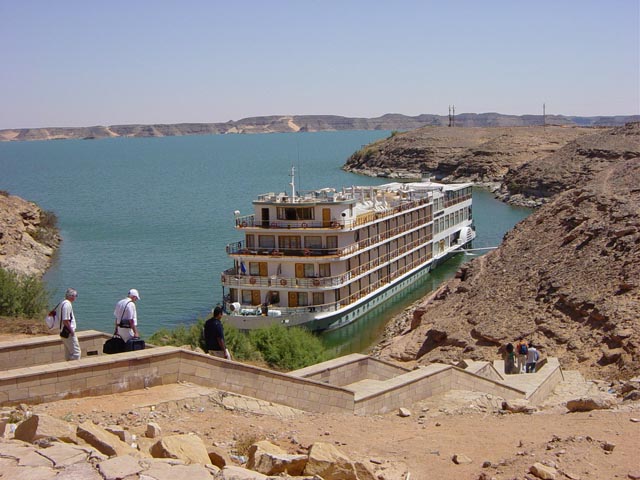
One of our travelers mentioned that the biggest surprise was not Abu Simbel itself, but the journey leading to it. After seeing famous Egyptian attractions surrounded by visitors, they enjoyed the feeling of having the desert almost entirely to themselves.
Visitors often say that Lake Nasser feels slower and more peaceful than the traditional Nile cruise.
Another memorable aspect is watching the landscape from the upper deck. Instead of rushing from one attraction to another, travelers have time to simply watch the desert pass by, enjoy a meal, take photographs, or relax by the water.
That slower pace is exactly what makes the cruise special.
Why Choose a Lake Nasser Cruise?
There are many reasons to add this journey to an Egypt itinerary.
First, it provides access to archaeological sites that most visitors never see.
Second, it offers a different perspective on Nubian and ancient Egyptian history.
Third, the cruise provides a peaceful contrast to busy cities such as Cairo and Luxor.
Finally, the journey ends at one of Egypt's greatest monuments: Abu Simbel.
For travelers interested in history, archaeology, photography, and peaceful luxury travel, Lake Nasser offers a combination that is difficult to reproduce anywhere else.
Frequently Asked Questions
How many days is a Lake Nasser cruise?
Most cruises operate for approximately three to five nights, depending on the ship and itinerary. Four-night programs are commonly available.
Where does the Lake Nasser cruise start?
Many cruises start from Aswan and sail south toward Abu Simbel. Some operate in the opposite direction, beginning at Abu Simbel and ending in Aswan.
Is Lake Nasser the same as the Nile?
No. Lake Nasser is a huge reservoir created by the Aswan High Dam. Although it was formed by impounding the Nile, a Lake Nasser cruise follows a completely different route from the traditional Nile cruise between Luxor and Aswan.
What temples can I see on a Lake Nasser cruise?
Depending on your itinerary, you may visit Kalabsha, Wadi El Seboua, Dakka, Amada, Derr, the Tomb of Pennut, and Abu Simbel. Qasr Ibrim is generally viewed from the water.
Is Abu Simbel included in the cruise?
Most Aswan–Abu Simbel itineraries are specifically designed to end at or include Abu Simbel, but you should always confirm the exact itinerary before booking. Current cruise programs from major operators include Abu Simbel as a principal destination.
What is the best time for a Lake Nasser cruise?
October through February is generally considered one of the most comfortable periods because temperatures are more suitable for sightseeing and outdoor activities.
Are Lake Nasser cruises crowded?
They are generally quieter than the traditional Nile cruise route because there are fewer ships and fewer tourists traveling through the area. However, crowd levels vary by season and sailing date.
Is a Lake Nasser cruise suitable for families?
Yes. Families interested in history, archaeology, and scenic travel can enjoy the experience. Parents should consider the heat, walking distances, and the needs of younger children when choosing the itinerary.
Can I take a Lake Nasser cruise without taking a Nile cruise?
Yes. A Lake Nasser cruise can be booked independently of a traditional Nile cruise. However, many travelers combine the two experiences to explore both the major Luxor–Aswan monuments and the lesser-known Nubian sites south of Aswan.
Experience the Quiet Side of Ancient Egypt
A Lake Nasser cruise is more than a relaxing journey across a vast lake. It is an opportunity to discover rescued temples, explore the history of Nubia, sail through dramatic desert landscapes, and approach Abu Simbel from the water.
For travelers who want something beyond the standard Egypt itinerary, this journey offers a quieter and more intimate way to experience the country's ancient heritage.
Ready to explore Egypt beyond the usual tourist route? Plan your Lake Nasser cruise with Flying Carpet Tours and let our experienced team help you choose the right ship, itinerary, accommodations, and sightseeing arrangements for your Egyptian adventure. Visit our website today and start planning your unforgettable Lake Nasser journey to Abu Simbel and the ancient treasures of Nubia.