
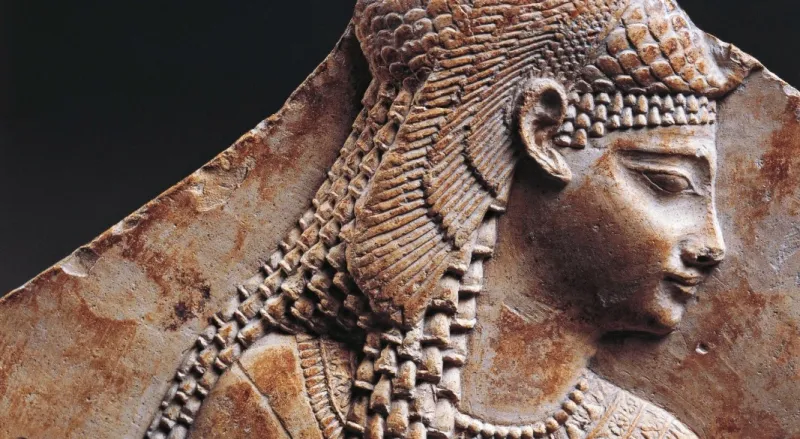
Queen Cleopatra: Love, Power & Legacy
A Traveler’s First Encounter with Cleopatra’s Egypt
Walking through Alexandria, I found myself thinking about a queen who lived more than 2,000 years ago but still feels remarkably present. Standing near the Mediterranean and imagining ancient Alexandria at the height of its power, it was easy to picture Cleopatra VII moving through the city, surrounded by scholars, diplomats, soldiers, and royal officials.
Before visiting Egypt, I mostly knew Cleopatra through movies, paintings, and stories about her relationships with Julius Caesar and Mark Antony. But exploring her history changed my perspective. Cleopatra was not simply a romantic figure from antiquity. She was a ruler navigating one of the most complicated political periods in the ancient Mediterranean.
Her story combines royal ambition, international diplomacy, family conflict, military power, cultural identity, and personal relationships. She ruled Egypt during a period when Rome was becoming increasingly powerful, and her decisions were closely connected to the survival of her kingdom.
Today, travelers cannot follow a single preserved palace or tomb that definitively belonged to Cleopatra. Much of ancient Alexandria disappeared beneath later layers of the city and the sea. Yet places across Egypt still help tell her story, from Alexandria and the Mediterranean coast to temples in Upper Egypt that were completed or decorated during her dynasty.
For me, the most interesting part of Cleopatra's story was discovering the woman behind the legend.
Who Was Queen Cleopatra?
Cleopatra VII Philopator was the last active ruler of the Ptolemaic Kingdom of Egypt. She was born around 69 BCE and ruled from 51 BCE until her death in 30 BCE. The Ptolemaic dynasty was of Macedonian Greek origin and had ruled Egypt since the period following the death of Alexander the Great.
Although Cleopatra belonged to the Ptolemaic royal family, she deliberately presented herself as an Egyptian ruler and connected herself with traditional Egyptian religious traditions. Historical sources also emphasize her education, political abilities, and multilingual skills.
Her reign unfolded during a period of increasing Roman influence. Cleopatra therefore had to balance Egypt's interests with the ambitions of powerful Roman leaders.
Her relationships with Julius Caesar and later Mark Antony became major parts of her political history, but reducing her life to romance misses much of what made her reign significant.
Cleopatra was a monarch trying to preserve Egypt's independence at a time when Rome was becoming the dominant power in the Mediterranean.
Quick Facts About Queen Cleopatra
Cleopatra at a Glance
- Full name: Cleopatra VII Philopator
- Born: Around 69 BCE
- Died: 30 BCE
- Reign: 51–30 BCE
- Dynasty: Ptolemaic Dynasty
- Capital: Alexandria
- Father: Ptolemy XII Auletes
- Famous Roman allies: Julius Caesar and Mark Antony
- Famous battle: Battle of Actium, 31 BCE
- End of her reign: Egypt became a Roman province after her death
- Main places associated with her story: Alexandria, Dendera, Philae, and other Ptolemaic sites
Visiting Cleopatra's Egypt Today
There is no single attraction called the "Cleopatra Museum" that tells her complete story. Instead, travelers can explore several archaeological and historical locations connected to the Ptolemaic period.
Location: Alexandria and several archaeological sites across Egypt
Opening hours: Opening times vary by site and season. Travelers should check current schedules before visiting.
Prices: Entrance fees vary depending on the attraction, and prices can change.
Recommended duration: A dedicated Cleopatra-themed experience can take one full day in Alexandria, while a broader Ptolemaic itinerary can take several days.
Best time to visit: Egypt's cooler months, generally from October through April, are comfortable for sightseeing. Alexandria can also be pleasant during the spring and early autumn.
Because opening hours and ticket prices can change, it is best to confirm the latest information when planning your itinerary.
The Story of Cleopatra VII
The Ptolemaic Kingdom Before Cleopatra
To understand Cleopatra, it helps to understand the world she inherited.
The Ptolemaic dynasty began after the death of Alexander the Great in 323 BCE. One of Alexander's generals, Ptolemy I Soter, established control over Egypt and founded a dynasty that would rule the country for nearly three centuries. Alexandria became the political and cultural center of the kingdom and developed into one of the great cities of the ancient Mediterranean.
By the time Cleopatra was born, however, the kingdom faced political instability and increasing Roman pressure.
The Ptolemaic royal family also experienced repeated internal conflicts. Cleopatra inherited not only a wealthy and strategically important kingdom but also a complicated royal court.
Cleopatra Becomes Queen
Cleopatra became ruler in 51 BCE after the death of her father, Ptolemy XII Auletes. She initially ruled alongside her younger brother Ptolemy XIII, following the traditions of the Ptolemaic monarchy.
The arrangement did not remain peaceful.
Political tensions within the royal court eventually forced Cleopatra away from Alexandria. She returned with military support while Rome was deeply involved in its own political struggles.
This was the beginning of one of the most famous chapters of her life.
Cleopatra and Julius Caesar
When Julius Caesar arrived in Egypt in 48 BCE, Cleopatra saw an opportunity to regain her position.
The story of Cleopatra meeting Caesar has become famous through literature and popular culture. Ancient accounts describe her dramatic return to Alexandria and her meeting with the Roman leader.
Their relationship became both personal and political.
Caesar supported Cleopatra in the conflict with Ptolemy XIII, and Cleopatra eventually regained the throne. She later traveled to Rome and lived there for a period while Caesar was alive.
Cleopatra had a son, Caesarion, whose full name was Ptolemy XV Caesar. Cleopatra presented him as Caesar's son, although Caesar's paternity was a political issue with major implications.
Caesar was assassinated in Rome in 44 BCE.
His death changed the political situation once again, leaving Cleopatra to protect her kingdom while Rome entered another period of conflict.
Cleopatra and Mark Antony
After Caesar's death, the Roman world was divided among competing political leaders.
Mark Antony emerged as one of the most powerful figures in Rome. Cleopatra met him at Tarsus in 41 BCE, beginning another famous political and personal alliance.
Their relationship was more than a love story.
Antony needed resources and political cooperation, while Cleopatra wanted to strengthen Egypt and protect her dynasty. Their alliance helped Cleopatra recover influence over territories associated with the former Ptolemaic sphere.
In Alexandria, their political partnership became increasingly visible.
In 34 BCE, the famous Donations of Alexandria ceremony took place. Cleopatra and her children were given important royal titles in a public political display that demonstrated the ambitions of the Ptolemaic court.
This alarmed Octavian, the future Augustus, who was becoming Antony's principal rival.
Cleopatra, Rome, and the Battle of Actium
The growing conflict between Antony and Octavian eventually became a struggle for control of the Roman world.
Cleopatra supported Antony, and their forces moved toward Greece.
In 31 BCE, Antony and Cleopatra faced Octavian's forces at the Battle of Actium.
The defeat was decisive.
After Actium, Cleopatra and Antony returned to Egypt. Octavian continued his campaign and eventually reached Alexandria.
The final chapter of Cleopatra's reign unfolded there.
The Death of Cleopatra
Cleopatra died in 30 BCE, shortly after the defeat of Antony.
The traditional account says that she took her own life rather than be taken to Rome as a captive. Ancient sources differ in their details, and the exact circumstances of her death remain a subject of historical discussion.
Mark Antony died shortly before Cleopatra.
With Cleopatra's death, the Ptolemaic dynasty came to an end, and Egypt became a Roman province.
Her death therefore represented much more than the end of one queen's life. It marked the end of the final independent Ptolemaic ruler and a major transition in Egyptian history.
What Made Cleopatra Powerful?
Political Intelligence
Cleopatra inherited a difficult political environment and managed to remain on the throne for nearly two decades.
Her alliances with Caesar and Antony should be understood within the political circumstances of her time. Both relationships affected Egypt's position in the Mediterranean world.
Cultural Identity
Although Cleopatra came from the Macedonian Greek Ptolemaic dynasty, she presented herself as an Egyptian queen and connected herself with Egyptian religious traditions.
This was important because the Ptolemaic rulers had to maintain legitimacy among a population with a long-established pharaonic tradition.
Cleopatra's public image combined Greek royal traditions with Egyptian symbolism.
Language and Communication
Cleopatra is often remembered for her intelligence and ability to communicate across cultural boundaries. Ancient sources and later scholarship associate her with knowledge of several languages, making her unusual among members of the Ptolemaic dynasty.
Her ability to engage directly with different communities was an important part of her political image.
Cleopatra and Egyptian Religion
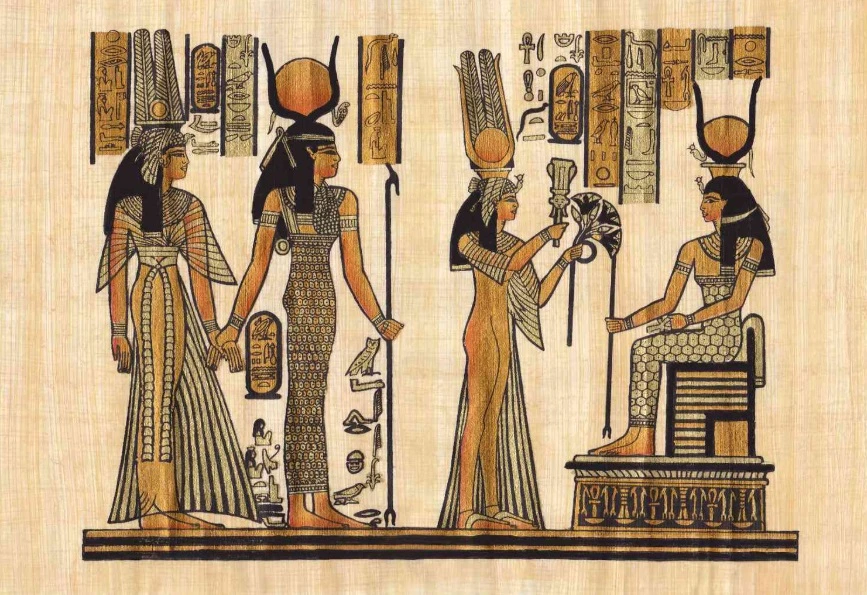
Cleopatra connected herself with the goddess Isis, an important Egyptian deity associated with motherhood, protection, magic, and kingship.
Presenting herself through divine imagery was not unusual for ancient Egyptian rulers. It was part of a broader tradition in which the pharaoh was connected with the gods.
Cleopatra's religious identity helped bridge the gap between her Greek royal ancestry and her role as queen of Egypt.
This combination of political authority and religious symbolism can still be seen in the art and monuments of the Ptolemaic period.
Places to Explore Cleopatra's Legacy
Alexandria
Alexandria is the most important city for understanding Cleopatra's world.
Founded by Alexander the Great in 331 BCE, the city became the capital of Ptolemaic Egypt and one of the major intellectual and commercial centers of the ancient Mediterranean.
Much of ancient Alexandria has disappeared or lies beneath modern development and the sea, but the city's history remains visible through archaeological discoveries, museums, monuments, and the Mediterranean landscape.
For a Cleopatra-focused visit, Alexandria provides the essential historical setting.
What to Expect in Alexandria
Visitors can expect a combination of ancient history and modern Mediterranean city life.
The city is busy, lively, and very different from the desert landscapes surrounding many of Egypt's famous archaeological sites.
Allow enough time to enjoy the waterfront, museums, archaeological areas, and local atmosphere rather than trying to rush through everything in a few hours.
Dendera Temple
Dendera Temple is not in Alexandria, but it is an important Ptolemaic monument for travelers interested in Cleopatra's period.
The temple complex contains famous reliefs connected with Cleopatra VII and her son Caesarion.
Seeing their representations carved into an ancient temple provides a valuable reminder that Cleopatra was not simply a figure in Roman history. She was also a ruler who participated in the religious and artistic traditions of Egypt.
Dendera is usually visited from Luxor and can be combined with other major sites in Upper Egypt.
Philae Temple
Philae is another important site for understanding the religious world that continued through the Ptolemaic period.
The temple complex was dedicated primarily to Isis and became an important center of her worship.
Although the surviving structures span different periods, the site provides excellent context for understanding the religious traditions associated with Cleopatra's royal image.
The temple is located on an island near Aswan and is usually reached by boat.
What to Expect on a Cleopatra-Themed Egypt Trip
A Cleopatra-focused trip is different from a conventional pyramid tour.
Instead of concentrating only on Old Kingdom monuments, you will explore the later history of Egypt and the transition between the Hellenistic, Ptolemaic, and Roman worlds.
You can combine:
- Alexandria and the Mediterranean coast
- Ptolemaic temples
- Dendera
- Luxor
- Aswan
- Philae Temple
- Museums with Ptolemaic and Greco-Roman collections
- Historical areas connected with Alexandria
The experience becomes even more interesting when you compare Cleopatra's Egypt with the much older monuments of the pharaohs.
Crowds, Distances, and Weather
Crowds
Major Egyptian attractions can become busy during peak travel periods.
Alexandria is also an active modern city, so visitors should expect traffic and crowds in popular areas.
Ptolemaic temples such as Dendera can feel quieter than Egypt's most famous attractions, although visitor numbers vary throughout the year.
Distances
Alexandria is located on Egypt's Mediterranean coast, north of Cairo.
Dendera is near Qena in Upper Egypt and is commonly visited from Luxor.
Philae is located near Aswan in southern Egypt.
Because these locations are spread across the country, travelers interested in Cleopatra should plan their route carefully rather than trying to see every location independently.
Weather
The cooler months from October to April are generally comfortable for sightseeing.
Summer can be very hot, particularly in Upper Egypt.
Alexandria has a Mediterranean climate and can feel cooler than southern destinations, especially during winter evenings.
For archaeological sightseeing, early morning visits are often more comfortable during warmer periods.
Practical Travel Tips for Exploring Cleopatra's Legacy
1. Learn the Historical Timeline
Knowing the basic sequence of Cleopatra's life makes the sites much easier to understand.
Start with her accession in 51 BCE, then follow the events involving Ptolemy XIII, Julius Caesar, Mark Antony, Octavian, Actium, and her death in 30 BCE.
2. Do Not Focus Only on the Romance
The relationships with Caesar and Antony are fascinating, but Cleopatra's political career deserves equal attention.
Look at her diplomacy, religious presentation, royal family conflicts, and efforts to protect Egypt.
3. Combine Alexandria With Other Destinations
If you have enough time, combine Alexandria with Cairo and an Upper Egypt itinerary.
This allows you to understand both the capital of Ptolemaic Egypt and the temples associated with the later pharaonic tradition.
4. Visit With a Knowledgeable Guide
A professional Egyptologist can explain details that are easy to miss, particularly inscriptions, royal titles, religious symbols, and historical relationships.
5. Wear Comfortable Shoes
Archaeological sites involve walking over uneven surfaces, stone pathways, and open areas.
Comfortable shoes are particularly useful during full-day sightseeing.
6. Carry Water
Egyptian sightseeing can be physically demanding, especially during warmer months.
Carry water and take breaks when necessary.
7. Protect Yourself From the Sun
A hat, sunglasses, sunscreen, and lightweight clothing can make archaeological visits much more comfortable.
8. Check Site Information Before Traveling
Opening hours, entrance fees, photography rules, and access arrangements can change.
Always confirm current information before your visit.
Real Insights From Travelers
One of our travelers mentioned that learning about Cleopatra before visiting Alexandria made the city feel completely different. Instead of seeing it only as a modern Mediterranean destination, they began imagining its role as the capital of the Ptolemaic kingdom.
Visitors often say that Dendera is particularly memorable because seeing Cleopatra and Caesarion represented on an ancient temple makes the history feel much more tangible.
Another common reaction is surprise at how different the real Cleopatra is from her modern image. Films often focus on romance and drama, while historical evidence reveals a ruler deeply involved in diplomacy, royal politics, religion, and the struggle between Egypt and Rome.
For many travelers, that contrast is what makes Cleopatra's story so fascinating.
Cleopatra's Appearance: Beauty or Political Image?
One of the most persistent myths about Cleopatra concerns her physical beauty.
Modern popular culture often portrays her as an almost impossibly beautiful woman whose appearance captivated powerful Roman men.
Historical evidence presents a more complicated picture.
Cleopatra's surviving coins show her with a distinctive royal portrait, including a prominent nose and strong facial features. Some surviving portraits have been identified with her, although the identification of certain sculptures remains debated. The Metropolitan Museum of Art notes that one portrait type has been securely associated with Cleopatra through comparison with portraits on coins minted in Alexandria.
Ancient accounts also emphasized her personality, intelligence, voice, and ability to engage people rather than simply describing physical beauty.
This is an important part of understanding her legacy.
Cleopatra's historical importance cannot be explained by beauty alone. Her political choices and ability to operate in a complicated international environment were central to her story.
The Search for Cleopatra's Tomb
One of the enduring mysteries surrounding Cleopatra is the location of her burial place.
Ancient sources associate her burial with Mark Antony, but the exact location of their tomb has not been conclusively identified.
Some archaeological investigations have explored possible locations connected with the final years of Cleopatra's life, but there is still no universally confirmed tomb that visitors can enter and identify as Cleopatra's final resting place.
This uncertainty is one reason her story remains so captivating.
For travelers, it is important to distinguish between archaeological evidence and theories presented as fact.
Cleopatra's Legacy
Cleopatra's influence continued long after her death.
Her story was recorded by Roman writers, transformed through literature, represented in paintings and sculpture, and later adapted for theater and cinema.
She became one of the most recognizable women of the ancient world.
But her historical legacy goes beyond romance.
She represents the final chapter of the Ptolemaic dynasty and one of the last moments when Egypt operated as an independent Hellenistic kingdom before becoming part of Rome.
Her story also demonstrates how historical memory can change over time.
The historical Cleopatra was a queen dealing with power, diplomacy, dynastic conflict, religion, and military threats. The later legendary Cleopatra became a symbol of beauty, seduction, tragedy, and forbidden romance.
Both images have shaped how modern audiences understand her, but the historical record reveals a far more complex ruler.
Suggested Cleopatra-Themed Egypt Itinerary
Day 1: Alexandria
Explore Alexandria's major historical attractions and enjoy the Mediterranean atmosphere.
Day 2: Alexandria and Cairo
Continue exploring Alexandria before traveling to Cairo.
Day 3: Cairo
Visit major museums and historical sites to understand the broader story of Egypt before and after the Ptolemaic period.
Day 4: Fly to Luxor
Begin your Upper Egypt experience and explore the ancient temples of Luxor.
Day 5: Dendera
Visit Dendera Temple and discover the famous Ptolemaic reliefs associated with Cleopatra and Caesarion.
Day 6: Aswan
Travel toward Aswan and explore the city's temples and cultural attractions.
Day 7: Philae Temple
Visit Philae Temple by boat and explore the religious traditions connected with Isis and the Ptolemaic period.
This itinerary can be expanded with a Nile cruise and additional ancient Egyptian sites.
Frequently Asked Questions About Queen Cleopatra
Was Cleopatra Egyptian?
Cleopatra belonged to the Macedonian Greek Ptolemaic dynasty. However, she presented herself as an Egyptian queen and embraced important aspects of Egyptian culture and religion.
When did Cleopatra rule Egypt?
Cleopatra VII ruled from 51 BCE until 30 BCE.
Was Cleopatra the last pharaoh of Egypt?
Cleopatra VII was the last active ruler of the Ptolemaic dynasty. After her death in 30 BCE, Egypt became a Roman province.
Did Cleopatra really love Julius Caesar?
Cleopatra and Julius Caesar had a personal and political relationship, but describing the relationship simply as a love story leaves out its major political context.
Did Cleopatra marry Mark Antony?
Ancient sources report that Cleopatra and Mark Antony married according to Egyptian rites. Their alliance was both personal and political.
Where did Cleopatra live?
Her main royal center was Alexandria, the capital of Ptolemaic Egypt.
Can tourists visit Cleopatra's palace?
No confirmed surviving palace can be visited today and definitively identified as Cleopatra's personal palace. Much of ancient Alexandria was destroyed, rebuilt, submerged, or incorporated into later development.
Where is Cleopatra's tomb?
The exact location of Cleopatra's tomb has not been conclusively established.
Can I see Cleopatra in Egypt today?
You can see representations associated with Cleopatra at archaeological sites and museums. Dendera is particularly notable because Cleopatra and Caesarion appear in temple reliefs.
What is the best place to learn about Cleopatra?
There is no single location that tells the entire story. Alexandria provides the strongest connection to her political world, while Dendera and other Ptolemaic sites help visitors understand her religious and royal identity.
Final Thoughts: Discover the Real Cleopatra
Queen Cleopatra remains one of the most fascinating figures in ancient history because her story is much bigger than the famous romance surrounding her.
She was a ruler who inherited a complicated kingdom, negotiated with powerful Roman leaders, used religious and cultural symbolism to strengthen her position, and attempted to preserve Egypt's independence during an era of enormous political change.
Traveling through Alexandria, Dendera, Luxor, and Aswan allows visitors to see different pieces of that story.
The real Cleopatra was not simply the legendary queen portrayed in movies. She was a political leader, a royal strategist, a patron of Egyptian traditions, and the final ruler of the Ptolemaic dynasty.
If you want to explore Cleopatra's world and discover the historical sites connected with her fascinating legacy, let Flying Carpet Tours help you create a carefully planned Egypt journey. From Alexandria and Cairo to the temples of Upper Egypt, our Egypt tours can combine ancient history, professional guides, comfortable transportation, and unforgettable cultural experiences.
Discover the history behind the legend with Egypt Classic Tours and experience Egypt beyond the famous stories.