
Queen Hatshepsut: Egypt's Female Pharaoh — Facts & Visit Guide
A Traveler’s First Impression
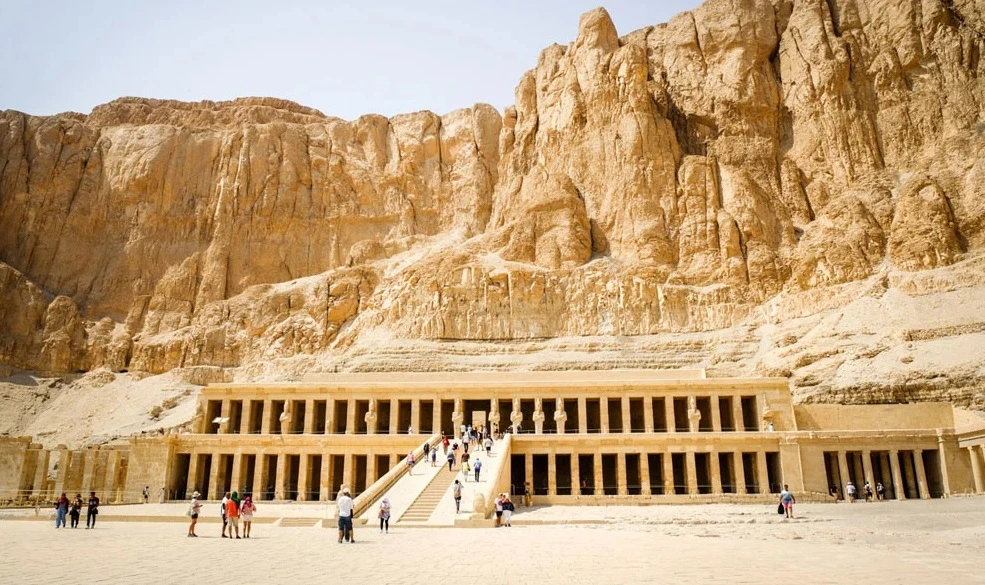
“When I first arrived at the Temple of Hatshepsut in Luxor, I was surprised by how different it looked from the other ancient Egyptian temples I had seen. Instead of a traditional temple rising from a flat landscape, this monument seemed to grow directly out of the cliffs behind it. The enormous terraces, long ramps, columns, and mountain backdrop created a scene that felt both dramatic and peaceful. Standing there, I started wondering about the woman who had ordered such an extraordinary monument to be built.”
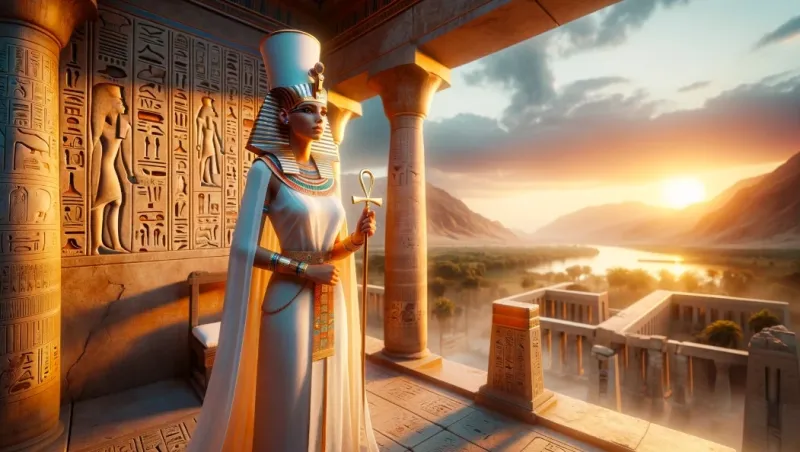
Queen Hatshepsut is one of the most fascinating figures in ancient Egyptian history. She was a royal woman who became pharaoh during the 18th Dynasty and ruled during the New Kingdom, a period associated with some of Egypt's greatest monuments and military expansion.
Her story is unusual because she did not simply serve as a queen or royal regent. She adopted the full role and symbolism of an Egyptian king and commissioned an extraordinary mortuary temple at Deir el-Bahari on the West Bank of Luxor.
Today, visiting the Temple of Hatshepsut gives travelers an opportunity to discover her story, admire one of Luxor's most distinctive monuments, and learn how ancient Egyptian kingship could be represented through architecture, art, religion, and royal imagery.
Explore Hatshepsut’s magnificent temple in Luxor and uncover the story of Egypt’s famous female pharaoh. Plan your adventure with Egypt Classic Tours!
Who Was Queen Hatshepsut?
Queen Hatshepsut was a ruler of Egypt's 18th Dynasty who eventually took the title and role of king. Her throne name was Maatkare, and she is generally dated to the early 15th century BCE.
She was the daughter of Thutmose I and Queen Ahmose. After the death of her husband, Thutmose II, Hatshepsut became regent for her stepson and nephew, Thutmose III, who was still young.
The Metropolitan Museum of Art records that Hatshepsut's titles evolved throughout her life, from king's daughter during her father's reign, to queen, and later to regent and co-ruler with Thutmose III.
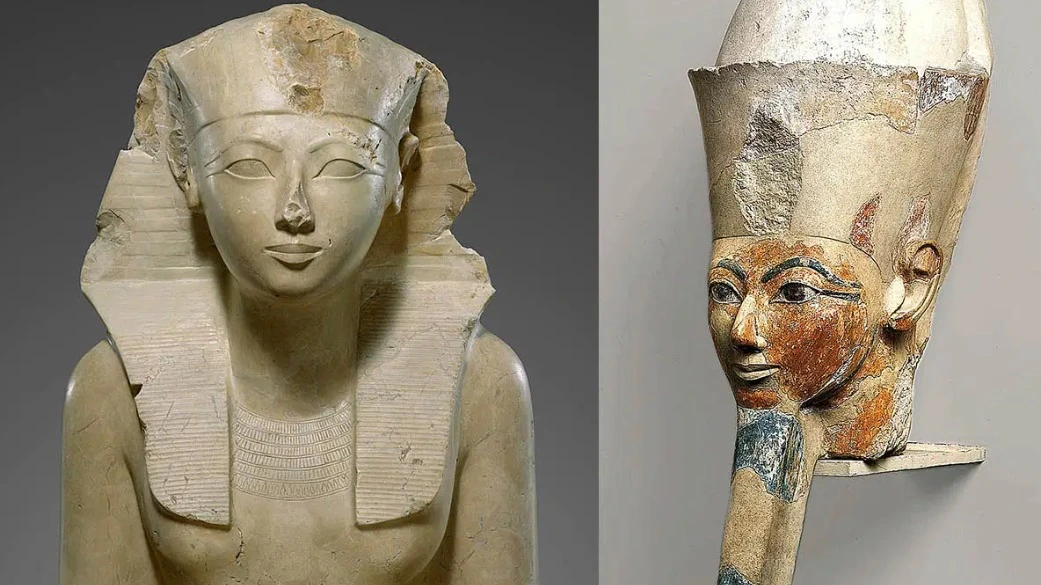
Eventually, Hatshepsut adopted the formal titulary and visual imagery of a king. Her statues sometimes show her wearing the nemes headcloth, royal kilt, and false beard traditionally associated with male pharaohs. At the same time, inscriptions could still identify her using feminine grammatical forms.
This combination makes her one of the most historically interesting rulers of ancient Egypt.
Quick Facts About Queen Hatshepsut
| Fact | Information |
|---|---|
| Name | Hatshepsut |
| Throne Name | Maatkare |
| Dynasty | 18th Dynasty |
| Period | New Kingdom |
| Father | Thutmose I |
| Husband | Thutmose II |
| Stepson and Nephew | Thutmose III |
| Main Monument | Temple of Hatshepsut at Deir el-Bahari |
| Location | West Bank of Luxor |
| Temple Opening Hours | Currently 6:00 AM–5:00 PM daily |
| Foreign Adult Ticket | Currently EGP 360 |
| Suggested Visit | Around 1–2 hours |
| Best Season | October to April |
| Best Time of Day | Early morning or late afternoon |
The Ministry of Tourism and Antiquities currently lists the Temple of Hatshepsut at Deir el-Bahari as open daily from 6:00 AM to 5:00 PM, with a foreign adult entrance ticket of EGP 360. Prices and schedules can change, so travelers should confirm the latest information before visiting.
Where Is the Temple of Hatshepsut?
The Temple of Hatshepsut is located at Deir el-Bahari on the West Bank of Luxor.
Luxor was once the ancient city of Thebes, one of the most important religious and political centers of ancient Egypt. The Nile divides modern Luxor into two main sightseeing areas: the East Bank and the West Bank.
The East Bank contains major monuments such as Karnak Temple and Luxor Temple, while the West Bank is famous for royal tombs, mortuary temples, and archaeological sites.
Hatshepsut's temple was deliberately built on the West Bank because it was a mortuary temple. The Ministry of Tourism and Antiquities explains that the temple was dedicated to Hatshepsut and her father, Thutmose I, and was positioned across the Nile from the main temple of Amun at Karnak.
The setting is one of the reasons the monument is so memorable. Behind the terraces rises a dramatic limestone cliff, creating a natural architectural backdrop.
The History of Queen Hatshepsut
Hatshepsut was born into the royal family during the 18th Dynasty.
Her father, Thutmose I, was a powerful ruler who expanded Egyptian influence. Hatshepsut later married her half-brother, Thutmose II, as part of the royal succession tradition.
When Thutmose II died, his son Thutmose III was still a child. Hatshepsut initially acted as regent.
The transition from regent to king is one of the most intriguing parts of her story. Rather than remaining only in the background while Thutmose III grew older, Hatshepsut gradually assumed the full royal role.
The Metropolitan Museum notes that the exact length of her regency is uncertain, with estimates ranging from two to seven years before her later co-rule with Thutmose III.
Her monuments then presented her as a legitimate Egyptian king.
Hatshepsut as a Female Pharaoh
Calling Hatshepsut a female pharaoh is useful for modern visitors, but ancient Egyptian royal imagery operated according to its own traditions.
The ancient Egyptian concept of kingship was strongly connected with an idealized male king. As a result, Hatshepsut's official statues could show her using traditional royal masculine imagery.
The Metropolitan Museum explains that the ideal Egyptian king was represented as a young man in the prime of life, and Hatshepsut was sometimes depicted according to this convention even though inscriptions could acknowledge her female identity.
This does not mean that Hatshepsut was simply pretending to be someone else. Rather, she was using the established visual language of Egyptian kingship to communicate her authority.
Her monuments demonstrate how important symbolism was in ancient Egyptian royal culture.
The Temple of Hatshepsut at Deir el-Bahari
The Temple of Hatshepsut is the centerpiece of any visit connected with her story.
Known in ancient times as a sacred or holy place, the temple was designed as a large terraced complex built against the limestone cliffs of Deir el-Bahari.
The Ministry of Tourism and Antiquities identifies the temple as Hatshepsut's mortuary temple and explains its relationship to the religious landscape of Thebes.
The architecture is striking because of its horizontal terraces and long ramps.
Instead of entering a traditional enclosed temple immediately, visitors move through a sequence of increasingly elevated levels.
The Lower Terrace
The lower section originally included gardens and architectural elements that connected the temple with the surrounding landscape.
The temple's original environment was more elaborate than what modern visitors see today. Trees and plants were part of the design, reinforcing the connection between the temple and the fertile Nile Valley.
The Middle Terrace
The middle terrace contains important reliefs and architectural features.
One of the most famous groups of scenes relates to Hatshepsut's expedition to Punt.
The reliefs show ships, landscapes, people, animals, and products associated with the expedition. They provide valuable information about how Egyptians represented foreign lands and trade.
The Upper Terrace
The upper terrace leads toward the sanctuary and contains some of the most impressive surviving architectural elements.
The sanctuary was dedicated to Amun-Re. The Metropolitan Museum notes that the annual Beautiful Feast of the Valley involved the image of Amun crossing the Nile from Karnak toward the western mortuary temples, including Hatshepsut's complex.
Standing on the upper terrace gives visitors an impressive view across the Nile Valley and toward the surrounding mountains.
Hatshepsut and the Land of Punt
One of the most interesting stories represented at the temple is Hatshepsut's expedition to Punt.
Punt was a foreign land known to ancient Egyptians through trade and diplomatic contacts. The expedition brought back valuable products, including incense-producing trees and other goods.
The temple reliefs are especially interesting because they depict aspects of the journey rather than simply showing the pharaoh in a religious scene.
For modern travelers, these images provide a glimpse into ancient Egyptian ideas about trade, exploration, foreign cultures, ships, and valuable commodities.
The reliefs also show Hatshepsut presenting her achievements as part of a successful and divinely supported reign.
What to Expect When Visiting the Temple
A visit to the Temple of Hatshepsut is different from visiting a museum.
This is an open archaeological site surrounded by cliffs and desert landscape. You should expect sunlight, walking, stone surfaces, and some distance between different areas.
The monumental terraces are the first thing most visitors notice.
As you move through the complex, look beyond the overall architecture and pay attention to the surviving reliefs and inscriptions.
A guide can make a major difference because many of the stories represented on the walls are easier to understand when their historical and religious context is explained.
Hatshepsut's Statues and Royal Image
Hatshepsut's statues are particularly interesting because they reveal how she presented herself as king.
Some statues show her in a traditionally feminine form, while others represent her using the physical characteristics and clothing of an ideal Egyptian king.
The Metropolitan Museum's collection includes statues of Hatshepsut wearing the nemes headcloth, false beard, and royal kilt.
This visual transformation was connected with the political and religious requirements of Egyptian kingship.
Rather than viewing these statues simply as portraits, travelers should think of them as carefully constructed statements about royal authority.
What Happened to Hatshepsut After Her Death?
Hatshepsut's legacy became more complicated after her death.
Some of her names and images were later removed or altered, particularly during the reign of Thutmose III and subsequent periods. The reasons and chronology behind these changes remain subjects of scholarly discussion.
It is important not to reduce this complicated history to a simple story of personal revenge.
Ancient Egyptian monuments were continuously modified, reused, and reinterpreted. Political succession, religious changes, and royal memory could all influence what was preserved or altered.
Today, however, Hatshepsut is one of the best-known rulers of ancient Egypt.
Archaeological research and museum collections have helped reconstruct much of her story.
Facts About Visiting the Site
Location
The Temple of Hatshepsut is located at Deir el-Bahari on the West Bank of Luxor.
Opening Hours
The Ministry of Tourism and Antiquities currently lists opening hours from 6:00 AM to 5:00 PM daily.
Entrance Fee
The current official listing gives the foreign adult entrance fee as EGP 360, with a student price of EGP 180.
Because archaeological-site prices can change, check the official monument listing before your visit.
Recommended Duration
Allow approximately 1–2 hours for the temple itself.
History enthusiasts and photographers may want additional time.
Best Time to Visit
The cooler period from October through April is generally more comfortable for sightseeing.
During warmer months, early morning is preferable because the site has significant outdoor exposure.
Crowds and Visitor Experience
The Temple of Hatshepsut is one of Luxor's major attractions, so it can become busy during peak hours.
Morning visits can provide a more comfortable experience, particularly during the hotter months.
If you want better conditions for photography, early morning light can also create attractive contrasts between the temple terraces and the limestone cliffs.
The site is large enough that visitors are usually moving through different areas rather than standing in one confined space.
Distances and Combining Your Visit
One of the advantages of visiting Luxor is the concentration of ancient monuments.
The Temple of Hatshepsut can easily be included in a West Bank itinerary with attractions such as the Valley of the Kings, the Colossi of Memnon, the Ramesseum, and Medinet Habu.
A full West Bank sightseeing day can therefore provide a much broader understanding of ancient Thebes.
After exploring the West Bank, travelers can cross to the East Bank to visit Karnak Temple and Luxor Temple.
This combination makes it possible to see how temples, tombs, and mortuary complexes worked together within the ancient religious landscape.
Weather at Hatshepsut's Temple
Luxor has a dry desert climate and can be extremely hot during summer.
The temple offers limited shade, so weather preparation is important.
During a summer visit, consider starting your sightseeing early. Wear lightweight, breathable clothing, use sunscreen, bring sunglasses, and carry enough drinking water.
In winter, mornings can be cool, especially before the sun becomes stronger, so a light layer can be useful.
Practical Travel Tips
Wear Comfortable Shoes
The temple involves walking across archaeological surfaces and climbing or using ramps between terraces. Comfortable footwear is essential.
Bring Water
There are outdoor sections with direct sun exposure. Carrying drinking water is strongly recommended.
Use Sun Protection
A hat, sunglasses, and sunscreen are useful throughout the year.
Hire a Professional Guide
The architecture is impressive, but the stories behind the reliefs make the experience much richer.
A professional Egyptologist can explain Hatshepsut's political position, the expedition to Punt, the religious role of the temple, and the symbolism of her royal imagery.
Visit Early
Early morning generally provides more comfortable temperatures and can help avoid the busiest periods.
Combine Nearby Sites
Instead of visiting Hatshepsut's Temple alone, consider combining it with several nearby West Bank attractions.
This makes better use of your time in Luxor.
Keep Your Camera Ready
The temple offers several excellent viewpoints, especially where the terraces meet the cliffs behind them.
Real Insights From Travelers
One of our travelers mentioned that the first view of Hatshepsut's temple was more impressive than expected because the architecture blends so naturally with the cliffs.
Visitors often say that the temple feels different from other Luxor monuments because of its open terraces and unusual design.
Another traveler noted that learning about Hatshepsut before arriving made the reliefs much easier to appreciate.
Many visitors also enjoy combining the temple with the Valley of the Kings because the two sites reveal very different aspects of ancient Egyptian beliefs about death, kingship, and the afterlife.
Why Hatshepsut's Temple Is Worth Visiting
There are countless ancient monuments in Egypt, but Hatshepsut's Temple has a distinctive character.
Its architecture is unusual.
Its setting is dramatic.
Its reliefs tell stories about trade and religion.
And its history is connected with one of the most remarkable women to rule ancient Egypt.
The temple also demonstrates how ancient Egyptian rulers used architecture to establish legitimacy and preserve their names for future generations.
For travelers interested in history, archaeology, architecture, or ancient civilizations, it offers several different stories to discover at the same time.
Suggested Hatshepsut Day Tour
A well-planned Luxor West Bank tour can begin early in the morning.
Start at the Valley of the Kings, where visitors can explore selected royal tombs carved into the desert cliffs.
Continue to the Temple of Hatshepsut at Deir el-Bahari.
After exploring the temple, stop at the Colossi of Memnon before continuing to another major West Bank attraction such as the Ramesseum or Medinet Habu.
Depending on the schedule, lunch can be arranged before returning to the East Bank.
This type of itinerary allows travelers to experience several important monuments without spending the entire day at a single location.
Frequently Asked Questions
Who was Queen Hatshepsut?
Hatshepsut was an 18th-Dynasty Egyptian ruler who became pharaoh after initially serving as regent for her young stepson and nephew, Thutmose III. She adopted the formal role and symbolism of an Egyptian king.
Why is Hatshepsut famous?
She is famous for being one of ancient Egypt's most prominent female rulers, for her long and influential reign, and especially for her extraordinary mortuary temple at Deir el-Bahari.
Where is Hatshepsut's Temple?
The temple is located at Deir el-Bahari on Luxor's West Bank.
How much is the entrance ticket?
The Ministry of Tourism and Antiquities currently lists the foreign adult ticket at EGP 360 and the foreign student ticket at EGP 180.
What are the opening hours?
The official monument listing currently gives opening hours of 6:00 AM to 5:00 PM daily.
How long should I spend at Hatshepsut's Temple?
Around 1–2 hours is a reasonable visit for most travelers, although history enthusiasts and photographers may prefer longer.
Can I visit Hatshepsut's Temple and the Valley of the Kings on the same day?
Yes. Both are located on the West Bank of Luxor and are commonly included in the same sightseeing itinerary.
Why does Hatshepsut look like a man in some statues?
Some official representations show Hatshepsut using the traditional visual language of an Egyptian king, including the nemes headcloth, royal kilt, and false beard.
What is Hatshepsut's connection to Punt?
Reliefs at her temple depict an expedition to Punt, showing ships, people, animals, and valuable products brought back to Egypt.
What is the best time to visit Hatshepsut's Temple?
October through April generally offers more comfortable weather. Within the day, early morning is a good choice for cooler temperatures and potentially lighter crowds.
Final Thoughts
Queen Hatshepsut's story is one of the most fascinating chapters in ancient Egyptian history. She navigated royal succession, became a powerful ruler, adopted the visual language of kingship, and left behind one of Egypt's most recognizable monuments.
Her temple at Deir el-Bahari is more than an impressive archaeological site. Its terraces, reliefs, statues, and dramatic mountain setting provide a window into the political and religious world of the New Kingdom.
Whether you are visiting Luxor for the first time or returning to explore Egypt more deeply, Hatshepsut's Temple deserves a place in your itinerary.
Plan your journey with Flying Carpet Tours and discover the remarkable world of Queen Hatshepsut with carefully arranged tours, professional Egyptologist guides, comfortable transportation, and well-planned sightseeing experiences. Explore Luxor's ancient treasures and uncover the stories behind Egypt's legendary rulers with us.