
Ramses II: Egypt's Greatest Pharaoh — Facts & How to Visit
A Traveler’s First Impression
“When I first stood in front of the massive statues of Ramses II at Abu Simbel, I understood why his name has survived for more than 3,000 years. The scale was almost impossible to take in. Four enormous figures sat above me, carved into the rock, while the temple behind them seemed to tell the story of a king who wanted his achievements to last forever. Later, when I visited Luxor and saw the Ramesseum and his additions to Luxor Temple, I realized that Abu Simbel was only one part of his enormous legacy.”
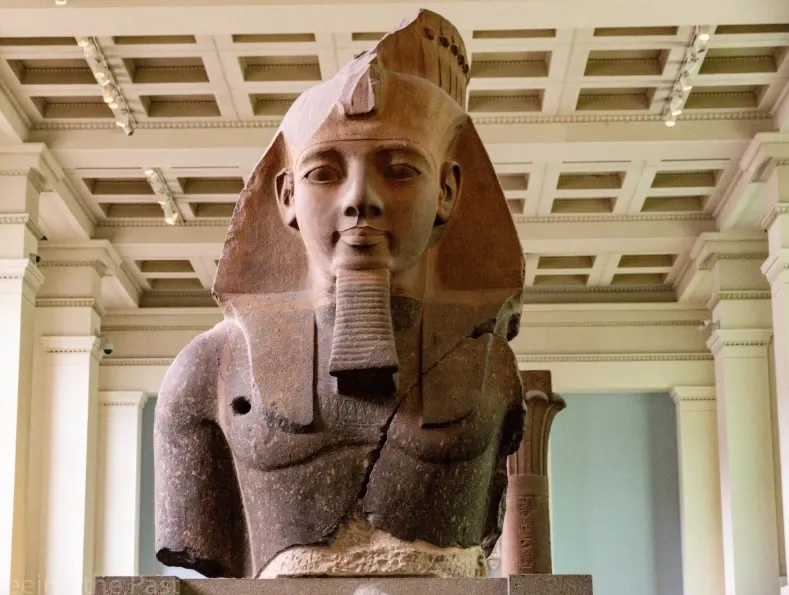
Ramses II is one of the most recognizable pharaohs of ancient Egypt. His long reign, military campaigns, diplomatic achievements, colossal statues, temples, and inscriptions made him one of the most prominent rulers of the New Kingdom.
Today, travelers can follow his story across Egypt, from Cairo and Luxor to Aswan and Abu Simbel. Visiting these monuments offers more than impressive photographs; it provides a chance to understand how ancient Egyptian kings presented their power, religion, family, and achievements.
Step into the world of Ramses II and discover the temples, statues, and historic sites that reveal the story of one of ancient Egypt’s most famous pharaohs. With Egypt Classic Tours, explore Abu Simbel, the Ramesseum, Luxor Temple, and the National Museum of Egyptian Civilization with professional guides, comfortable transportation, and carefully planned itineraries. Whether you are fascinated by ancient history, monumental architecture, or the stories of Egypt’s legendary rulers, we can help you experience these remarkable places at your own pace. Choose Egypt Classic Tours for your next Egypt adventure and discover the timeless legacy of Ramses II.
Who Was Ramses II?
Ramses II, also known as Ramesses II or Ramses the Great, was a king of Egypt's 19th Dynasty during the New Kingdom. He succeeded his father, Seti I, and ruled for more than six decades. The National Museum of Egyptian Civilization describes his reign as lasting about 67 years.
He became king as a young adult and eventually became one of the most powerful and prolific builders in ancient Egyptian history.
His monuments appear across Egypt and Nubia, including the Ramesseum in Luxor, additions to Luxor Temple, and the famous rock-cut temples of Abu Simbel. His mummy is now displayed at the National Museum of Egyptian Civilization in Cairo.
Ramses II was also connected with one of the most famous conflicts of the ancient Near East: the Battle of Kadesh against the Hittites. His monuments prominently recorded the battle, presenting the king as a heroic warrior. The historical outcome is understood more cautiously today, with the NMEC describing the battle as effectively a draw before the later peace agreement between Egypt and the Hittites.
Quick Facts About Ramses II
| Fact | Information |
|---|---|
| Name | Ramses II / Ramesses II |
| Dynasty | 19th Dynasty |
| Period | New Kingdom |
| Father | Seti I |
| Mother | Tuya |
| Reign | About 67 years |
| Famous Wife | Queen Nefertari |
| Famous Battle | Battle of Kadesh |
| Famous Monuments | Abu Simbel, Ramesseum, Luxor Temple additions |
| Mummy | National Museum of Egyptian Civilization, Cairo |
| Best Places to Visit | Cairo, Luxor, Aswan and Abu Simbel |
| Recommended Visit Duration | 2–5 days depending on your itinerary |
| Best Season | October to April for more comfortable sightseeing |
Where Can You See Ramses II in Egypt?
One of the fascinating things about Ramses II is that his legacy is not concentrated in a single location. Several important sites across Egypt are connected with his reign.
1. Abu Simbel, Aswan
Abu Simbel is probably the most famous monument associated with Ramses II.
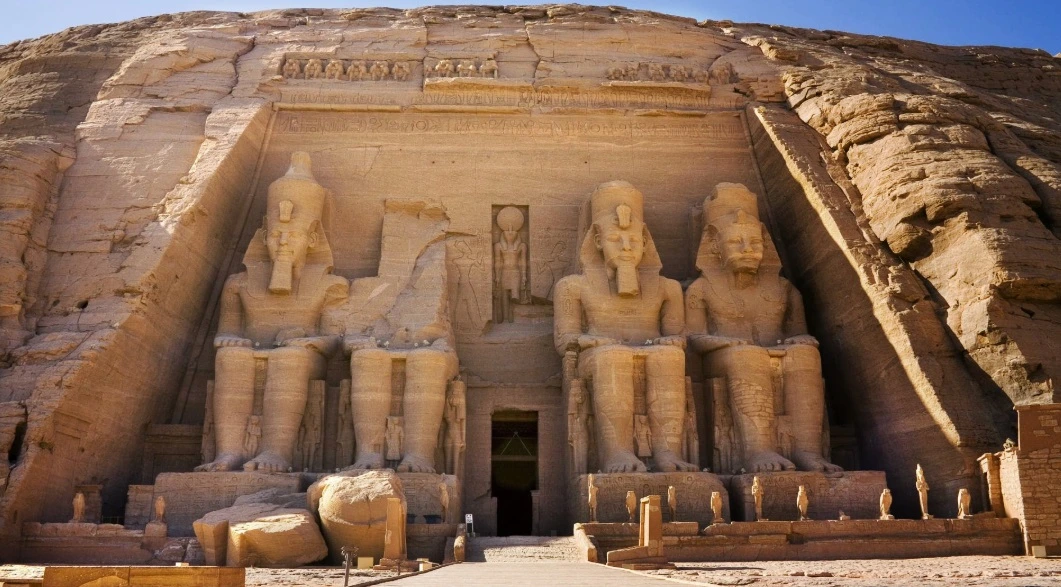
The Great Temple was carved into the living rock in Nubia around 1264 BC. Its façade is dominated by four colossal seated statues of Ramses II. The Ministry of Tourism and Antiquities states that one of the statues collapsed following an ancient earthquake, with fragments still visible at the site.
Inside the temple, colossal statues line the main hall before visitors reach the sanctuary. The sanctuary contains representations of Amun-Ra, Ra-Horakhty, Ptah, and the deified Ramses II.
The temple is also famous for its solar alignment. Twice a year, traditionally on February 22 and October 22, sunlight enters the sanctuary and illuminates several of the inner statues.
Next to the Great Temple is the Small Temple, dedicated to Hathor and Queen Nefertari. The monumental statues of Nefertari on its façade are unusually prominent and appear at the same scale as those of Ramses II.
Abu Simbel Quick Facts
Location: Near Egypt’s southern border, south of Aswan
Opening hours: Currently listed by Egypt's Ministry of Tourism and Antiquities as 6:00 AM–5:00 PM daily
Foreign adult ticket: Currently listed at EGP 750
Special dates: The Ministry currently lists a higher adult ticket price of EGP 1,200 for February 22 and October 22
Recommended visit: Around 2–3 hours
Best time: Early morning, especially during warmer months
Ticket prices and opening arrangements can change, so travelers should confirm the latest information before visiting.
2. The Ramesseum in Luxor
The Ramesseum was Ramses II's great mortuary temple on the West Bank of Luxor.
Unlike Abu Simbel, which is carved into rock, the Ramesseum was constructed as a large temple complex. The Ministry of Tourism and Antiquities describes it as a funerary temple built from sandstone and notes that it became an important model for later temple architecture.
The walls contain scenes connected with the Battle of Kadesh, religious ceremonies, and funerary rituals. The complex also included chapels and practical buildings such as bakeries, kitchens, and storage areas.
One of its most impressive features was a colossal seated statue of Ramses II. The Ministry states that the statue was more than 17 meters high and weighed approximately 1,000 tons.
The Ramesseum therefore gives visitors an excellent opportunity to understand the scale of Ramses II's building projects.
Ramesseum Quick Facts
Location: West Bank, Luxor
Opening hours: Currently listed as 6:00 AM–5:00 PM daily
Foreign adult ticket: Currently listed at EGP 220
Recommended visit: Around 1–1.5 hours
Best time: Early morning or late afternoon
Current ticket prices and opening hours should be checked before the visit.
3. Luxor Temple
Ramses II also left an important mark on Luxor Temple.
Although the temple itself was developed over several reigns, Ramses II added a large courtyard, a massive pylon, colossal statues, and obelisks. The Ministry of Tourism and Antiquities notes that the pair of obelisks associated with his additions originally stood in front of the temple, although one remains in Luxor while the other has stood at the Place de la Concorde in Paris since 1836.
A visit to Luxor Temple is particularly interesting because it demonstrates how different pharaohs contributed to the same sacred complex over centuries.
Luxor Temple Quick Facts
Location: East Bank, Luxor
Opening hours: Currently listed as 6:00 AM–8:00 PM daily
Foreign adult ticket: Currently listed at EGP 500
Recommended visit: 1.5–2 hours
Best time: Late afternoon and evening can be especially atmospheric.
4. The Mummy of Ramses II in Cairo
For travelers interested in the person behind the monuments, the National Museum of Egyptian Civilization in Cairo is an essential stop.
The Royal Mummies Hall displays royal mummies from Egypt's New Kingdom, including Ramses II. The museum explains that the collection includes 20 royal mummies, comprising 18 kings and 2 queens.
Ramses II was originally buried in KV7 in the Valley of the Kings. His mummy was later moved to a royal cache at Deir el-Bahari to protect it from ancient tomb robbers.
Seeing his mummy creates a very different experience from visiting his colossal statues. Instead of an enormous image of a powerful ruler, visitors encounter the preserved remains of the historical individual whose name appears on monuments throughout Egypt.
NMEC Quick Facts
Location: El-Fustat Road, Ein Elsira, Cairo
Opening hours: Currently listed as 9:00 AM–5:00 PM
Recommended visit: 2–3 hours for the museum, depending on interests
Highlight: Royal Mummies Hall
The museum's official website lists the Royal Mummies Gallery as one of its principal visitor attractions.
The History of Ramses II
Ramses II belonged to the 19th Dynasty, a period when Egypt was rebuilding and strengthening its influence after earlier political and military challenges.
He was the son of Seti I and Queen Tuya. After becoming king, he continued military campaigns and undertook an enormous construction program.
His reign lasted long enough for multiple generations to grow up under the same pharaoh. The British Museum's educational timeline also describes Ramses II as a ruler who reigned for about 66 years and built temples and statues across Egypt and territories under Egyptian influence.
His family was exceptionally large. The NMEC states that he had many queens and fathered around 100 children. His Great Royal Wife was Nefertari, for whom he built the famous Small Temple at Abu Simbel.
Ramses II and the Battle of Kadesh
The Battle of Kadesh is one of the most famous events associated with Ramses II.
The conflict took place between Egypt and the Hittite kingdom. Ramses II recorded the battle extensively on temple walls, emphasizing his personal courage and leadership.
The ancient Egyptian version presents Ramses as a heroic warrior facing danger. Modern historical interpretation is more nuanced. According to the National Museum of Egyptian Civilization, the actual military outcome was effectively a draw. The conflict continued for years before Egypt and the Hittites eventually reached a peace agreement.
This makes the Kadesh story particularly useful for understanding ancient Egyptian royal propaganda. The temple reliefs were not simply neutral historical reports; they were also designed to communicate the king's power and divine support.
Ramses II and the First Known Peace Treaty
After years of conflict with the Hittites, Ramses II eventually entered into a peace agreement with their king.
The NMEC describes this as the first known peace treaty in history and explains that the agreement established an alliance between the two powers.
For visitors, this is a reminder that Ramses II's legacy was not limited to military campaigns. Diplomacy was also an important part of his reign.
Ramses II as a Great Builder
Perhaps the most visible part of Ramses II's legacy is his architecture.
He constructed or expanded monuments in numerous parts of Egypt and Nubia. His major projects included Abu Simbel, the Ramesseum, and additions to Luxor Temple. He also established the Delta capital Pi-Ramesses.
His monuments often feature colossal statues and repeated royal inscriptions.
The scale was intentional. Monumental architecture communicated permanence, religious devotion, royal authority, and the king's relationship with the gods.
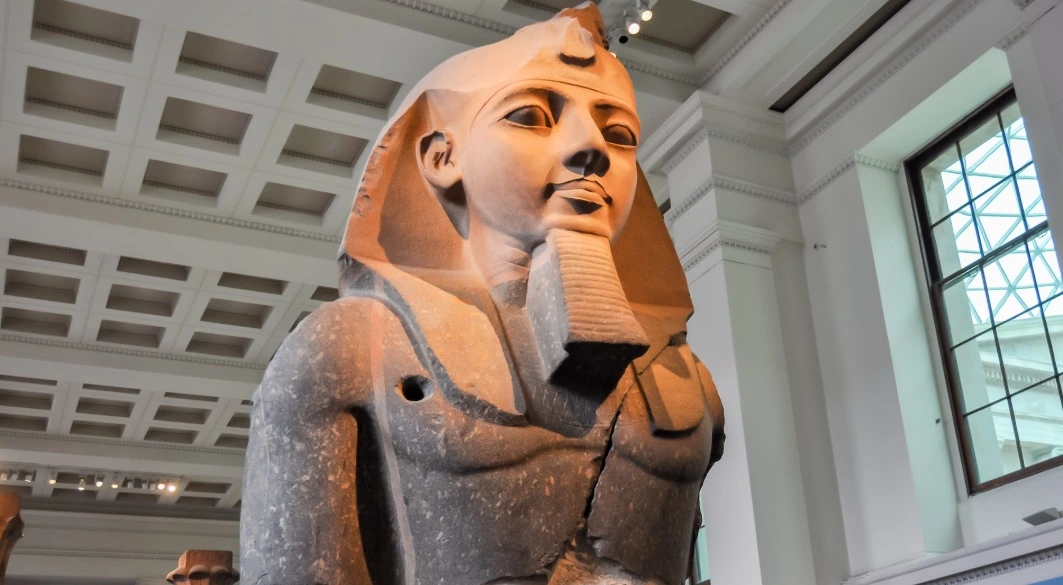
The British Museum explains that Ramses II's colossal sculptures were more than decoration. They functioned as powerful religious and political images, presenting the king's presence at important sacred locations.
What to Expect When Visiting Ramses II Sites
Travelers should expect very different experiences depending on the location.
At Abu Simbel, the main attraction is monumental scale. The four seated statues dominate the landscape, while the interior offers detailed reliefs and a remarkable sanctuary.
At the Ramesseum, the experience is more archaeological. You see ruins, fallen statues, columns, reliefs, and the remains of a huge temple complex.
Luxor Temple provides another perspective because Ramses II's additions are integrated into a monument that was developed by several rulers.
At NMEC in Cairo, the experience becomes more personal. The Royal Mummies Hall allows visitors to see the preserved remains of Ramses II rather than simply his idealized royal image.
Crowds, Distances and Weather
Crowds
Major Ramses II sites can become busy during peak sightseeing hours.
Abu Simbel is particularly popular because many travelers visit as a day trip from Aswan. Starting early can make the experience more comfortable and allow more time to explore the temples.
Luxor's West Bank also attracts many visitors because several major attractions are located close together.
Distances
Abu Simbel is far south of Aswan, so it requires more planning than visiting the monuments within Luxor.
The Ramesseum is on Luxor's West Bank, while Luxor Temple is on the East Bank. These sites can be combined with other attractions in a well-planned Luxor itinerary.
Cairo's NMEC is located in the Fustat area, making it easy to include alongside other Cairo attractions.
Weather
Egypt is generally hot and sunny, especially during summer.
For archaeological sightseeing, the cooler months from approximately October through April are often more comfortable. Summer visitors should plan outdoor sightseeing earlier in the morning, carry water, wear sun protection, and take breaks when needed.
Practical Travel Tips for Visiting Ramses II Sites
Start Early
Morning visits are especially useful at outdoor archaeological sites. Temperatures are generally more comfortable, and early hours can help reduce exposure to the strongest midday sun.
Wear Comfortable Shoes
Ramses II's monuments involve walking over archaeological grounds, stone surfaces, and sometimes uneven paths. Comfortable shoes can make a significant difference.
Carry Water
Egypt's dry climate means staying hydrated is important, particularly during visits to open-air temples.
Bring Sun Protection
A hat, sunglasses, and sunscreen are useful throughout much of the year.
Hire a Qualified Guide
A professional Egyptologist can explain the inscriptions, religious symbolism, royal titles, and historical background that may otherwise be difficult to understand.
Allow Enough Time
Do not rush Abu Simbel, the Ramesseum, or NMEC. Each offers a different perspective on Ramses II and ancient Egyptian civilization.
Check Prices Before Traveling
Entrance fees and opening arrangements can change. The official Ministry of Tourism and Antiquities website provides current monument information, while museums publish their own visitor information.
Real Insights from Travelers
One of our travelers mentioned that seeing Abu Simbel in person was completely different from seeing photographs because the scale of the statues was difficult to appreciate beforehand.
Visitors often say that the Ramesseum feels particularly interesting when combined with other West Bank attractions because it helps put Ramses II's temple-building program into a broader context.
Another common observation is that seeing Ramses II's mummy at NMEC creates a strong contrast with his enormous statues. The monuments present an idealized image of the king, while the mummy provides a tangible connection to the historical ruler.
For many visitors, this combination makes a Ramses II itinerary much more meaningful.
How to Plan a Ramses II Tour in Egypt
A Ramses II-focused journey can be arranged as part of a wider Egypt vacation.
Day 1: Cairo
Begin with the National Museum of Egyptian Civilization and visit the Royal Mummies Hall to see the mummy of Ramses II.
You can then explore other Cairo attractions depending on your schedule.
Day 2: Luxor West Bank
Travel to Luxor and explore the Ramesseum alongside other important West Bank sites such as the Valley of the Kings, Hatshepsut Temple, and Medinet Habu.
Day 3: Luxor East Bank
Visit Luxor Temple and Karnak Temple. Pay particular attention to the monuments and additions associated with different pharaohs, including Ramses II.
Day 4: Aswan and Abu Simbel
Travel south toward Aswan and arrange a visit to Abu Simbel.
For travelers with additional time, Aswan itself offers several attractions that can be incorporated into the itinerary.
This itinerary can also be expanded with a Nile cruise between Luxor and Aswan.
Why Visit Ramses II's Monuments?
Ramses II's monuments offer a way to experience several aspects of ancient Egyptian civilization at once.
You can learn about royal power through his colossal statues, military history through the Kadesh reliefs, diplomacy through the Egyptian-Hittite peace agreement, religion through temple architecture, and ancient burial traditions through his mummy at NMEC.
His monuments also demonstrate how ancient rulers used architecture to preserve their names and achievements for future generations.
More than 3,000 years later, travelers are still following the story he wanted to leave behind.
Frequently Asked Questions
Who was Ramses II?
Ramses II was a king of Egypt's 19th Dynasty and one of the longest-reigning pharaohs of ancient Egypt. He ruled for approximately 67 years and became famous for his military campaigns, diplomacy, monuments, and colossal statues.
Where is the mummy of Ramses II?
The mummy of Ramses II is displayed at the National Museum of Egyptian Civilization in Cairo as part of the Royal Mummies collection.
Where can I see the most famous statue of Ramses II?
Some of his most famous colossal statues are at Abu Simbel. The Ramesseum in Luxor also contained enormous statues of the king, while other statues and representations are found at various sites and museums.
Is Abu Simbel connected to Ramses II?
Yes. The Great Temple of Abu Simbel was built by Ramses II, while the nearby Small Temple was dedicated to Hathor and Queen Nefertari.
How long should I spend at Abu Simbel?
Most visitors can explore the two temples in a few hours. However, the total time needed depends on transportation and whether Abu Simbel is visited as a day trip from Aswan.
What is the Ramesseum?
The Ramesseum is the mortuary temple of Ramses II on the West Bank of Luxor. Its walls contain scenes associated with the Battle of Kadesh and religious ceremonies.
Did Ramses II really fight at Kadesh?
Yes. Ramses II participated in the Battle of Kadesh against the Hittites during his fifth regnal year. Egyptian monuments recorded the battle extensively. Modern historical interpretation considers the military outcome more balanced than the triumphal royal inscriptions suggest.
What is the best time to visit Ramses II monuments?
The cooler months, generally from October through April, are often more comfortable for outdoor sightseeing. Early morning is particularly useful for major archaeological sites.
Can I visit Ramses II sites during a Nile cruise?
Yes. A Nile cruise between Luxor and Aswan can provide access to several places connected with his reign. Abu Simbel usually requires a separate excursion from Aswan.
Final Thoughts
Ramses II's story is spread across Egypt, making his monuments an ideal theme for travelers interested in history, architecture, archaeology, and ancient culture.
From the enormous façade of Abu Simbel to the remains of the Ramesseum, from the additions at Luxor Temple to his mummy at the National Museum of Egyptian Civilization, each location reveals a different side of the famous pharaoh.
If you want to explore these remarkable sites with a carefully planned itinerary, professional guides, comfortable transportation, and expert assistance, Flying Carpet Tours can help you create an unforgettable journey through the world of Ramses II and ancient Egypt.
Explore Ramses II's monuments in Egypt Classic Tours with Flying Carpet Tours and discover the temples, royal history, and archaeological treasures that continue to make his legacy one of Egypt's most fascinating stories.