
Queen Nefertari: Facts, Tomb & How to Visit
A Traveler’s First Impression
“I had visited the Valley of the Kings earlier that morning, so I thought I already understood what an ancient Egyptian royal tomb would feel like. Then I learned about Queen Nefertari and her famous tomb in the Valley of the Queens. The descriptions of the paintings sounded almost unbelievable. Bright colors, elegant figures, goddesses, hieroglyphs, and scenes from the afterlife seemed to cover every wall. I was disappointed to discover that the tomb was temporarily closed during my visit, but learning its story made me realize why conservation is so important. I still visited the Valley of the Queens, and seeing the surrounding landscape helped me understand why Nefertari’s burial place is such an important part of Luxor’s ancient history.”
Queen Nefertari is one of the most celebrated queens of ancient Egypt, and her tomb is considered one of the masterpieces of New Kingdom funerary art. Located in the Valley of the Queens on Luxor’s West Bank, the tomb is known as QV66.
The tomb was created for Nefertari, the Great Royal Wife of Pharaoh Ramesses II, and its beautifully preserved paintings depict her journey through the afterlife and her relationship with the gods.
For travelers planning a trip to Luxor, Queen Nefertari offers an opportunity to explore a different side of ancient Egyptian history. Instead of focusing only on kings and monumental temples, her story reveals the important role of royal women, religion, artistic achievement, and beliefs about life after death.
There is also an important practical point for travelers today: QV66 is currently closed to visitors while conservation and environmental conditions are being monitored. The Egyptian Ministry of Tourism and Antiquities announced that the tomb had been closed in March 2024 to monitor humidity and evaluate conditions for a possible controlled reopening.
Discover the fascinating world of Queen Nefertari, explore the Valley of the Queens, and uncover the treasures of ancient Luxor with Egypt Classic Tours. Enjoy expertly planned itineraries, professional Egyptologist guides, comfortable transportation, and unforgettable visits to Egypt’s most iconic historical sites. From the magnificent temples of Luxor to the legendary royal tombs, let us create an authentic journey through ancient Egyptian history. Book your Egypt Classic Tours experience today and explore the timeless wonders of Egypt with us!
What Is Queen Nefertari’s Tomb?
The Tomb of Queen Nefertari, designated QV66, is located in the Valley of the Queens, a royal necropolis on the west bank of Luxor.
Nefertari was the Great Royal Wife of Ramesses II, one of the best-known pharaohs of the 19th Dynasty. Her position at the royal court was important, and she appears in monuments and inscriptions connected with Ramesses II.
Her tomb is particularly famous for its extensive painted decoration.
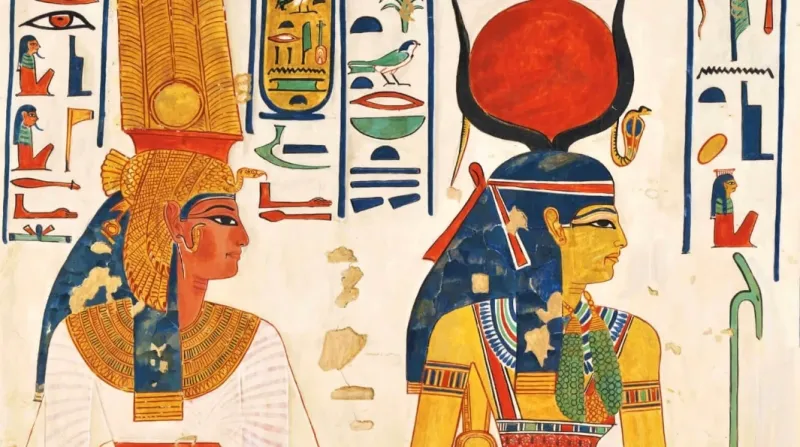
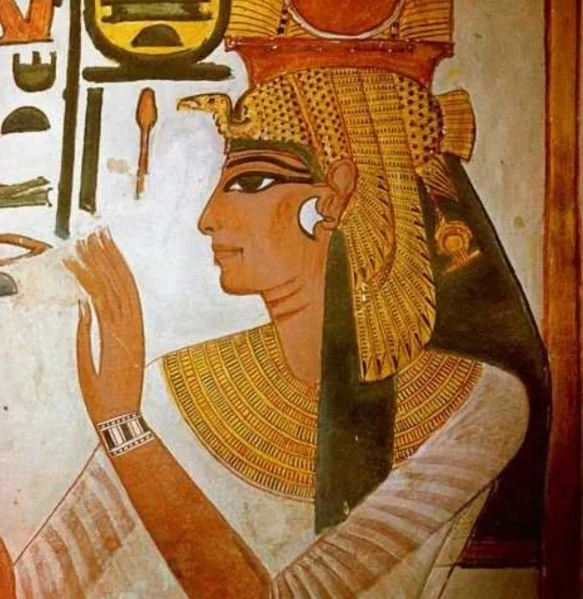
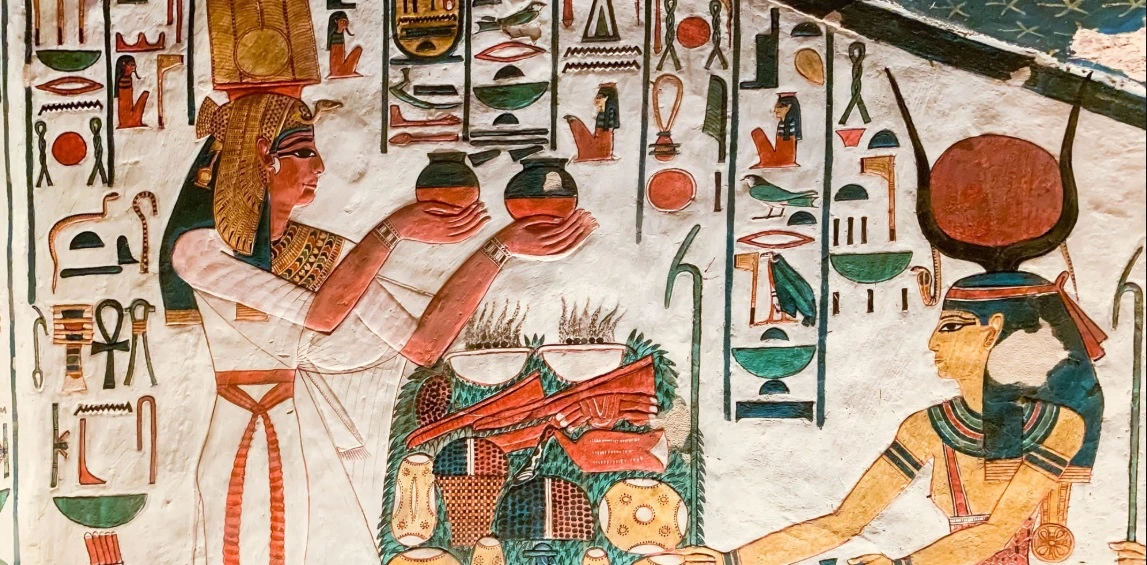
Unlike many ancient monuments where visitors mainly see weathered stone reliefs, QV66 became famous for the quality, richness, and color of its wall paintings. Scenes show Nefertari interacting with deities and participating in religious rituals associated with her journey into the afterlife.
The tomb was discovered in 1904 by the Italian archaeological mission led by Ernesto Schiaparelli. The Egyptian Ministry of Tourism and Antiquities recognizes November 1904 as the discovery period and describes Nefertari as the principal wife of Ramesses II.
Quick Facts About Queen Nefertari
| Category | Information |
|---|---|
| Tomb | QV66 |
| Location | Valley of the Queens, Luxor, Egypt |
| West Bank | Luxor West Bank |
| Dynasty | 19th Dynasty |
| Husband | Ramesses II |
| Royal Title | Great Royal Wife |
| Tomb Discovered | 1904 |
| Discoverer | Ernesto Schiaparelli’s archaeological mission |
| Known For | Exceptionally detailed and colorful tomb paintings |
| Current Tomb Status | Closed to visitors as of September 2026 |
| Valley Opening Hours | Generally 6:00 AM–5:00 PM according to current visitor information |
| Visit Duration | Around 1–2 hours for the Valley of the Queens; QV66 access will depend on future reopening rules |
| Best Season | October to April |
| Nearby Attractions | Valley of the Kings, Hatshepsut Temple, Medinet Habu, Deir el-Medina |
The Valley of the Queens has its own admission arrangements, separate from the individual special access that has historically applied to Nefertari’s tomb. Current ticketing information should always be checked before travel because prices, opening arrangements, and access to individual tombs can change.
Who Was Queen Nefertari?
Queen Nefertari lived during the 19th Dynasty of ancient Egypt and was the principal wife of Pharaoh Ramesses II.
Ramesses II ruled for many decades and became one of the most powerful and recognizable kings of ancient Egypt. His reign is associated with enormous building projects, military campaigns, temples, statues, and monuments throughout Egypt and Nubia.
Nefertari held an important position within this royal world.
Her name appears on monuments and inscriptions, and her image can be seen alongside Ramesses II. One of the most famous examples is the Temple of Nefertari at Abu Simbel, where she was honored alongside the goddess Hathor.
Her tomb in the Valley of the Queens provides another indication of her status.
The scale and artistic quality of QV66 show that considerable resources were invested in her burial and in preparing her for the afterlife.
Nefertari and Ramesses II
The relationship between Nefertari and Ramesses II is one of the most interesting aspects of her story.
Ramesses II had several wives and a large royal family, but Nefertari held the distinguished title of Great Royal Wife.
She appears in several important royal monuments.
At Abu Simbel, the smaller temple beside the famous temple of Ramesses II was dedicated to Nefertari and the goddess Hathor. The temple contains large statues of Nefertari standing alongside images of Ramesses II.
Her prominence in monumental art is unusual and helps explain why historians and travelers continue to be fascinated by her.
Nefertari was not simply remembered because she was married to a famous pharaoh. She was represented as an important royal woman in her own right.
The Valley of the Queens
The Valley of the Queens lies on the west bank of Luxor, south of the better-known Valley of the Kings.
It served as a burial area for members of the royal family during the New Kingdom.
The valley contains more than 90 known tombs and was used across several dynasties. Its tombs include those of queens, princes, princesses, and other members of the royal family.
The Valley of the Queens has a different atmosphere from the Valley of the Kings.
The Valley of the Kings is famous for the tombs of pharaohs such as Tutankhamun, Seti I, and Ramesses VI. The Valley of the Queens focuses more heavily on royal wives and children.
For travelers, visiting both areas can provide a broader understanding of how ancient Egyptian royal burials were organized.
Why Is Nefertari’s Tomb So Famous?
Exceptional Wall Paintings
The most important feature of QV66 is its decoration.
The walls are covered with scenes, inscriptions, gods, goddesses, and representations of Nefertari.
The colors are especially famous.
Blue, yellow, red, green, white, and black were used to create detailed scenes against carefully prepared backgrounds.
The artists created elegant figures with carefully drawn clothing, jewelry, hairstyles, and facial features.
The result is an interior that feels remarkably different from many other ancient tombs.
The Journey Into the Afterlife
The decoration of Nefertari’s tomb was not created simply to make the tomb beautiful.
The paintings had a religious purpose.
Ancient Egyptians believed that the deceased needed protection, guidance, and divine assistance during the journey into the afterlife.
The scenes in QV66 reflect these beliefs.
Nefertari is shown encountering gods and participating in religious scenes intended to help ensure her successful transition into the next world.
Nefertari and the Gods
Several major Egyptian deities appear in the tomb’s decoration.
Among them are figures associated with protection, wisdom, judgment, regeneration, and the afterlife.
Nefertari is represented in religious contexts, demonstrating her relationship with the divine world.
One particularly famous scene shows the queen engaged in the ancient Egyptian game of Senet, a board game that could also carry symbolic associations with the journey into the afterlife.
The Architecture of QV66
Nefertari’s tomb was cut into the rock of the Valley of the Queens.
The layout includes descending passages, chambers, and a large burial chamber supported by pillars.
The design created a progression from the entrance toward the deeper spaces associated with burial and the afterlife.
The deeper visitors moved into the tomb, the more closely the spaces became connected with the religious journey of the deceased.
The decoration was integrated into the architecture rather than simply added as separate artwork.
This combination of architecture, painting, text, and religious symbolism is one of the reasons QV66 is so important.
What Happened to the Tomb’s Paintings?
The preservation of Nefertari’s paintings has been a major concern for archaeologists and conservation specialists.
The tomb was restored through an important conservation project involving the Getty Conservation Institute and the Egyptian authorities.
The work helped stabilize and preserve the fragile painted surfaces.
The tomb has also experienced periods of closure and controlled access.
In 2024, the Egyptian Ministry of Tourism and Antiquities announced that the tomb had been closed to monitor humidity and assess whether it could safely reopen under controlled conditions.
This is especially important because human visitors can affect the environment inside a small enclosed tomb.
Breathing, body heat, humidity, dust, and repeated movement can gradually affect delicate ancient surfaces.
For this reason, access to QV66 has historically been more restricted than access to many other archaeological sites.
Can You Visit Queen Nefertari’s Tomb Today?
This is one of the most important questions for anyone planning a Luxor trip.
As of September 2026, the Tomb of Queen Nefertari remains closed to visitors.
The Ministry announced its closure in March 2024 to monitor humidity levels and evaluate the possibility of reopening under controlled conditions.
Some travel websites still publish older information saying that QV66 is open and providing ticket prices for entry.
Travelers should therefore be careful when reading older articles or tour pages.
The best approach is to confirm the tomb’s status shortly before your Luxor visit.
Even if QV66 is closed, the Valley of the Queens itself remains an important archaeological attraction, and travelers can explore other accessible tombs depending on the current opening schedule.
What to Expect at the Valley of the Queens
Although the main reason many visitors want to come here is Nefertari’s tomb, the valley offers more than QV66.
You can expect a quieter archaeological experience than some of Luxor’s most famous attractions.
The landscape is dry and mountainous, with rocky cliffs surrounding the ancient burial ground.
There are several tombs associated with royal children and other members of the royal family.
Depending on the current opening schedule, visitors may be able to explore tombs belonging to royal princes and queens from the New Kingdom.
Among the better-known tombs are those associated with the sons of Ramesses III, including Khaemwaset and Amunherkhepshef.
These tombs contain their own painted scenes and provide an interesting comparison with Nefertari’s monument.
Crowds and Atmosphere
The Valley of the Queens generally receives fewer visitors than the Valley of the Kings.
This can make the experience feel more relaxed.
The Valley of the Kings attracts travelers because of its famous royal tombs and its connection with major pharaohs.
The Valley of the Queens is less prominent on standard itineraries, although interest in Nefertari has made it increasingly popular.
One of the advantages of visiting earlier in the morning is that you can enjoy the archaeological area before the strongest heat of the day.
Distance From the Valley of the Kings
The Valley of the Queens is located only a short drive from the Valley of the Kings.
Travel sources generally place the distance at roughly 1.5 to 2 kilometers, depending on the exact route.
This makes it practical to combine both sites in a single West Bank itinerary.
A private vehicle is particularly convenient because it allows you to move between the archaeological sites without waiting for local transportation.
Weather in Luxor
Luxor has a hot desert climate.
From approximately October through April, temperatures are generally more comfortable for sightseeing.
The winter months are particularly popular because travelers can spend longer periods outdoors without facing the extreme heat experienced during summer.
During summer, temperatures can become very high.
If you travel between May and September, an early morning visit is strongly recommended.
Wear lightweight clothing, comfortable walking shoes, sunglasses, and a hat.
Always carry drinking water.
Practical Travel Tips
Check the Tomb’s Status Before Your Trip
Because QV66 is subject to conservation restrictions, do not assume that an old travel article reflects current access.
Check the latest information shortly before your visit.
Do Not Plan Your Entire Day Around QV66
Because the tomb is currently closed, build your Luxor itinerary around other attractions as well.
The Valley of the Kings, Hatshepsut Temple, Medinet Habu, Karnak Temple, and Luxor Temple can all form part of a comprehensive Luxor program.
Visit Early
The Valley of the Queens generally opens from the early morning, and the official Valley of the Kings currently lists opening hours of 6:00 AM to 5:00 PM. Opening schedules for individual sites can differ, so confirm the exact location before visiting.
Wear Comfortable Shoes
The archaeological areas contain uneven surfaces and require walking.
Comfortable shoes are essential.
Protect Yourself From the Sun
Luxor has strong sunshine for much of the year.
A hat, sunglasses, sunscreen, and water are useful.
Bring a Guide
A professional Egyptologist can explain the symbolism behind the paintings and help you understand the difference between royal tombs, private tombs, and religious monuments.
This is especially valuable when visiting the Valley of the Queens because many details can be difficult to understand without historical context.
One of Our Travelers Mentioned...
“One of our travelers mentioned that learning about Nefertari before arriving changed the entire experience. Instead of simply looking at colorful walls, they understood that every scene had a religious meaning and was connected to the queen’s journey into the afterlife.”
This is one of the best reasons to learn a little about Nefertari before visiting Luxor.
Ancient Egyptian tombs are full of symbols.
A figure, animal, crown, object, or gesture can have a specific religious meaning.
A guide can turn what initially looks like beautiful decoration into a story.
Visitors Often Say...
Visitors often say that the Valley of the Queens feels more intimate than the Valley of the Kings.
The scale is smaller, the landscape is quieter, and the connection to the royal family feels personal.
For many travelers, the story of Nefertari is also different from the stories of the great pharaohs.
Her tomb demonstrates how much attention could be given to a royal woman and how ancient Egyptian beliefs about the afterlife influenced art and architecture.
Combining Nefertari With Other Luxor Attractions
A visit to the Valley of the Queens works particularly well as part of a West Bank itinerary.
Valley of the Kings
Begin with the Valley of the Kings and explore the royal tombs that made Luxor famous.
The Ministry of Tourism and Antiquities currently lists the Valley of the Kings as open from 6:00 AM to 5:00 PM, with ticket prices subject to the current official schedule.
Hatshepsut Temple
Continue to the spectacular temple of Queen Hatshepsut.
Her monument provides another opportunity to learn about an influential Egyptian queen, although she lived several centuries before Nefertari.
Valley of the Queens
Continue south toward the Valley of the Queens.
If QV66 is reopened in the future, check the current special access requirements before your visit.
Medinet Habu
The temple of Ramesses III is another excellent addition to a Luxor West Bank itinerary.
Its reliefs and architecture provide a different perspective on New Kingdom history.
Deir el-Medina
The ancient workers’ village of Deir el-Medina is also nearby.
The site helps explain who designed, built, and decorated the tombs of the royal necropolises.
Why Queen Nefertari Still Matters
Queen Nefertari's importance goes beyond the beauty of her tomb.
Her monuments provide evidence of the status of royal women during the 19th Dynasty.
Her appearance alongside Ramesses II demonstrates her importance within the royal family.
Her temple at Abu Simbel connects her with the goddess Hathor.
And her tomb provides an extraordinary example of New Kingdom funerary art.
Together, these monuments allow modern travelers to understand Nefertari as a historical figure rather than simply the name attached to a famous tomb.
Frequently Asked Questions
Who was Queen Nefertari?
Queen Nefertari was the Great Royal Wife of Pharaoh Ramesses II during Egypt’s 19th Dynasty. She was an important royal figure whose image and name appear on several monuments.
Where is Queen Nefertari’s tomb?
Her tomb, QV66, is located in the Valley of the Queens on the west bank of Luxor.
When was Nefertari’s tomb discovered?
The tomb was discovered in 1904 by the Italian archaeological mission led by Ernesto Schiaparelli.
Is Queen Nefertari’s tomb open?
As of September 2026, QV66 remains closed while conservation and humidity conditions are being monitored.
Why is Nefertari’s tomb famous?
It is famous for its exceptionally detailed and colorful wall paintings depicting Queen Nefertari and her journey through the afterlife.
Can I visit the Valley of the Queens even if Nefertari’s tomb is closed?
Yes. The Valley of the Queens is a larger archaeological area containing numerous royal tombs. Access to individual tombs depends on the current opening schedule.
How long should I spend at the Valley of the Queens?
Around one to two hours is a useful starting point, depending on which tombs are open and how much time you spend studying the paintings and inscriptions.
What is the best time to visit?
October through April is generally the most comfortable period for sightseeing in Luxor. Early morning is also preferable during hotter months.
Can I combine the Valley of the Queens with the Valley of the Kings?
Yes. The two archaeological areas are relatively close to each other and can be combined in a West Bank itinerary.
What other places are connected with Nefertari?
One of the most important is the Temple of Nefertari at Abu Simbel, which was dedicated to Nefertari and the goddess Hathor.
Plan Your Luxor Journey With Flying Carpet Tours
Queen Nefertari’s story is one of the most fascinating chapters of ancient Egyptian history. From her role as the Great Royal Wife of Ramesses II to the extraordinary paintings created inside QV66, her legacy reveals the artistic skill, religious beliefs, and royal traditions of the New Kingdom.
Although Queen Nefertari’s Tomb is currently closed for conservation monitoring, the Valley of the Queens remains an important part of a Luxor sightseeing program. Once the tomb officially reopens, travelers should check the latest ticketing and visitor regulations before planning their visit.
Whether you are visiting Luxor as part of a Nile cruise, a private Egypt vacation, or a longer Egypt itinerary, Flying Carpet Tours can help organize your West Bank sightseeing with professional guides, comfortable transportation, and carefully planned visits.
Explore the Valley of the Queens, discover the world of ancient Egyptian queens, and experience the history of Luxor with Flying Carpet Tours.
Plan your Egypt Tour Packages adventure with Flying Carpet Tours today and discover the stories behind Egypt’s legendary monuments.