
King Tutankhamun: Tomb, Treasures & How to Visit
A Traveler’s First Impression
“I had seen pictures of King Tutankhamun’s golden mask for years, but nothing prepared me for standing in the Valley of the Kings in Luxor. Walking through the desert landscape toward the tomb, I kept thinking about how Howard Carter must have felt when he discovered it. Inside, the tomb was smaller than I expected, but that somehow made the experience more personal. Later, seeing Tutankhamun’s treasures in the Grand Egyptian Museum brought the story together. It was no longer just a famous golden mask; it was the story of a young king, an extraordinary burial, and one of archaeology’s most famous discoveries.”
That feeling is common among travelers visiting Luxor and Cairo. King Tutankhamun’s tomb, treasures, and story connect two major Egyptian destinations: the Valley of the Kings in Luxor, where the king was buried, and the Grand Egyptian Museum in Giza, where visitors can now explore his extraordinary collection.
If you are planning an Egypt holiday, understanding the difference between the tomb and the treasures will help you make the most of your visit.
What Is King Tutankhamun’s Tomb?
King Tutankhamun’s tomb is KV62, located in the Valley of the Kings on the west bank of the Nile in Luxor. Tutankhamun was an 18th Dynasty ruler who became king while still very young and died after a relatively short reign.
The tomb became world-famous after British archaeologist Howard Carter discovered it in 1922. Unlike many other royal tombs in the Valley of the Kings, KV62 was found with an exceptionally large collection of objects still inside. The Egyptian Ministry of Tourism and Antiquities describes it as the only royal tomb in the Valley of the Kings discovered relatively intact.
The discovery changed the world's understanding of ancient Egypt and turned Tutankhamun into one of the most recognizable pharaohs in history.
However, there is an important detail to remember: the famous treasures are not all displayed inside the tomb today. The tomb remains in the Valley of the Kings, while Tutankhamun’s collection is being presented in the Tutankhamun Galleries at the Grand Egyptian Museum.
Quick Facts About King Tutankhamun
| Information | Details |
|---|---|
| Location of Tomb | Valley of the Kings, West Bank, Luxor |
| Tomb Number | KV62 |
| Discovery | 1922 |
| Discoverer | Howard Carter and his team |
| Dynasty | 18th Dynasty |
| Approximate Reign | Around 1336–1327 BC |
| Tomb Opening Hours | 6:00 AM–5:00 PM |
| Current Foreign Adult Ticket | EGP 700 |
| Recommended Tomb Visit | Around 30–60 minutes |
| Treasures | Displayed at the Grand Egyptian Museum |
| Best Time to Visit Luxor | October to April |
| Main Experience | Tomb + Valley of the Kings + Tutankhamun Galleries at GEM |
The Ministry of Tourism and Antiquities currently lists the Tomb of Tutankhamun at EGP 700 for foreign adults and EGP 350 for foreign students, with the Valley of the Kings open daily from 6:00 AM to 5:00 PM. Prices and access arrangements can change, so checking official information before traveling is recommended.
The Story of Tutankhamun
Tutankhamun lived during the New Kingdom, one of the most powerful periods of ancient Egyptian history. He belonged to the 18th Dynasty and became pharaoh when he was still a child.
His reign was relatively short, and historically he was not considered one of Egypt’s most powerful rulers. Yet his name eventually became more famous than many kings who ruled for much longer.
One reason is the extraordinary discovery of his burial.
The tomb contained thousands of objects associated with royal life, religion, burial traditions, and the afterlife. According to the Egyptian Ministry of Tourism and Antiquities, approximately 5,000 artifacts were discovered inside the tomb.
These objects included clothing, jewelry, furniture, cosmetics, vessels, weapons, chariots, and other items that reflected the lifestyle of the royal palace.
This makes Tutankhamun's story especially fascinating because the collection was not simply a group of beautiful objects. Together, the objects provide an unusually detailed picture of royal life in ancient Egypt.
The Discovery of the Tomb in 1922
The discovery of KV62 is one of the most famous moments in archaeological history.
Howard Carter had spent years searching for Tutankhamun’s tomb in the Valley of the Kings. His excavation work was supported by Lord Carnarvon.
In November 1922, Carter's team discovered the entrance to the tomb.
The discovery attracted worldwide attention because the burial had survived with an extraordinary quantity of objects.
The excavation itself was not a quick process. The small tomb was densely packed with artifacts, making documentation, photography, removal, and conservation a major undertaking.
The Egyptian Ministry of Tourism and Antiquities notes that the excavation and documentation of the collection continued over many years.
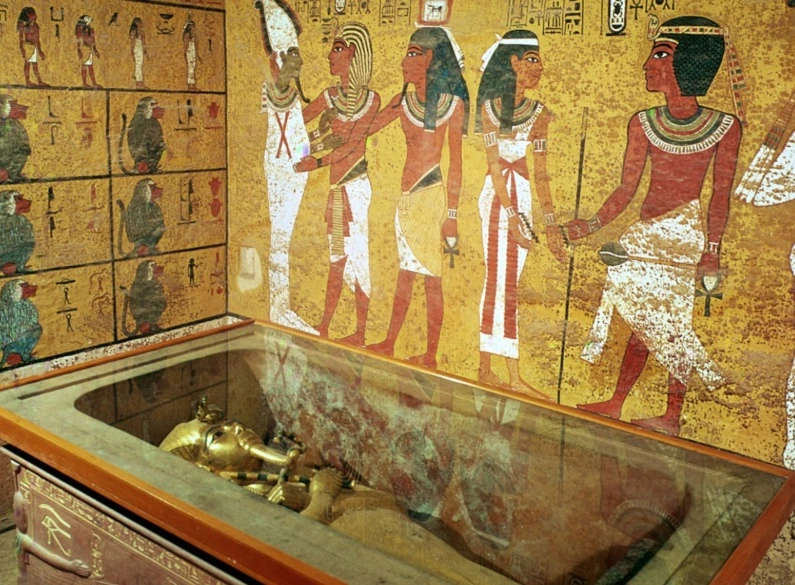
Today, visitors can still enter the original tomb and see the burial chamber and its wall decoration.
Why Is Tutankhamun’s Tomb So Important?
It Was Relatively Intact
Many ancient Egyptian royal tombs were robbed during antiquity. The Valley of the Kings contains more than sixty tombs and additional unfinished tombs, and ancient Egyptians themselves were aware of the danger of tomb robbery.
Tutankhamun’s tomb was different.
Although it had experienced disturbance, it preserved an extraordinary quantity of royal burial equipment.
This allowed archaeologists to study objects that might otherwise have disappeared or been scattered.
The Tomb Is Surprisingly Small
One of the biggest surprises for visitors is the size of KV62.
When people imagine Tutankhamun's tomb, they often picture an enormous royal complex filled with vast chambers. In reality, the tomb is relatively modest compared with several other royal tombs in the Valley of the Kings.
The Ministry of Tourism and Antiquities specifically notes that KV62 is modest in size and decoration compared with other royal tombs.
Its limited space makes the story of the thousands of objects discovered inside even more remarkable.
The Burial Chamber Has Unique Decoration
Unlike many larger royal tombs, Tutankhamun's tomb does not have extensive decoration throughout every corridor and chamber.
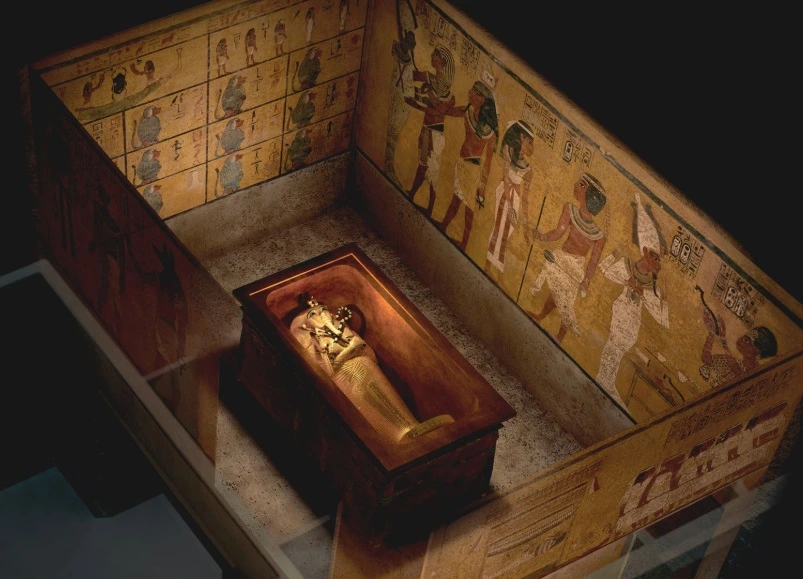
The burial chamber is the principal decorated area. Its scenes include Tutankhamun with deities and representations connected with his funeral and afterlife.
What to Expect When Visiting the Tomb
Visiting the tomb is different from visiting a large temple such as Karnak.
You enter the Valley of the Kings and then make your way toward the tomb entrance. KV62 leads visitors underground through a relatively compact series of spaces.
Inside, you can observe:
- The entrance and descending passage
- The antechamber area
- The burial chamber
- Wall paintings and ancient scenes
- The location of Tutankhamun's burial
- The atmosphere of a real royal tomb
The experience is more intimate than monumental.
You are not walking through huge courtyards or towering columns. Instead, you are entering a small archaeological space connected directly to one of the most famous discoveries in history.
Tutankhamun’s Treasures
The treasures found in KV62 are perhaps the most famous part of the Tutankhamun story.
The collection included thousands of objects, many made with extraordinary craftsmanship.
Among the best-known categories are:
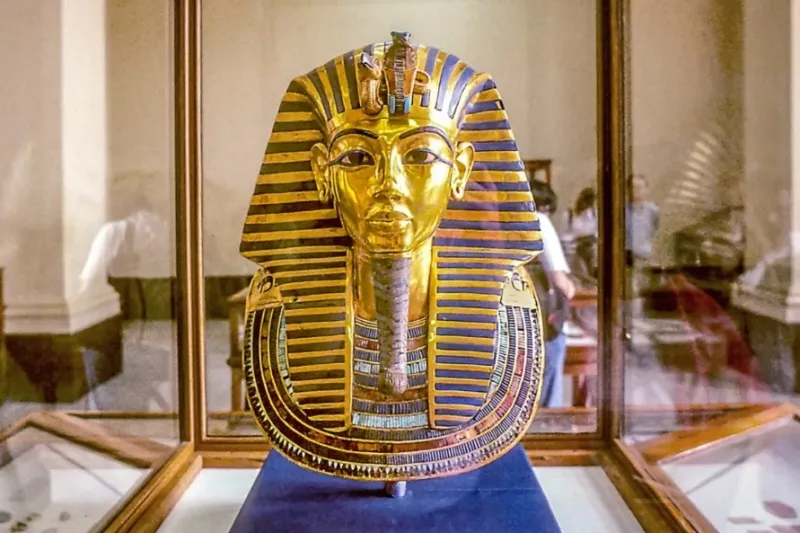
The Golden Burial Mask
The golden mask is perhaps the most recognizable object associated with ancient Egypt.
It represents Tutankhamun wearing the traditional royal nemes headdress, with the cobra and vulture symbols associated with kingship.
The mask became a global symbol of ancient Egyptian civilization.
Coffins and Burial Equipment
Tutankhamun was buried with a series of coffins and protective funerary equipment.
The Ministry of Tourism and Antiquities notes that the burial chamber contained the outer quartzite sarcophagus and nested anthropoid coffins.
Jewelry
The tomb contained an impressive range of jewelry and personal ornaments.
These objects demonstrate the skill of ancient Egyptian craftsmen and the importance of gold, precious materials, and symbolic decoration in royal burials.
Furniture
Tutankhamun’s burial equipment included chairs, beds, boxes, and other furniture.
Some objects were clearly associated with royal daily life, while others were created specifically for the burial.
Chariots and Weapons
Chariots, bows, arrows, weapons, and other equipment were among the objects discovered in the tomb.
These artifacts offer a different perspective on Tutankhamun, showing him not only as a young king but also as a member of Egypt's royal and military world.
Where Can You See Tutankhamun’s Treasures Today?
This is one of the most important questions for travelers.
The original tomb is in Luxor, but the major collection of Tutankhamun's treasures is displayed at the Grand Egyptian Museum near the Giza Pyramids.
The Grand Egyptian Museum's Tutankhamun Galleries are designed around several themes, including the discovery of the tomb, Tutankhamun's identity and family, his funeral, daily life, and journey into the afterlife.
The museum's official guided-tour information says that the Tutankhamun Galleries bring together more than 5,000 artifacts from the young king's tomb.
This creates an excellent opportunity for travelers to experience both sides of the story:
Luxor: See the original tomb.
Giza: Explore the treasures and learn more about Tutankhamun's life and burial.
Visiting the Tutankhamun Galleries at the Grand Egyptian Museum
The Grand Egyptian Museum is located at El Remayah Square along the Cairo-Alexandria Desert Road, close to the Giza Pyramids.
The galleries currently open from 9:00 AM to 6:00 PM, with extended hours until 9:00 PM on Wednesdays and Saturdays. The museum recommends booking tickets online in advance, with visitors selecting an entry time.
The official ticketing site states that admission includes access to the Tutankhamun Galleries along with the Main Galleries, Grand Hall, Grand Stairs, Khufu's Boats Museum, commercial area, and exterior gardens.
This makes the museum an important stop for anyone interested in Tutankhamun.
How Long Should You Spend Visiting Tutankhamun?
The answer depends on whether you are visiting only the tomb or combining the experience with other attractions.
Tomb Only
Allow approximately 30 to 60 minutes for the Tomb of Tutankhamun and the immediate Valley of the Kings experience.
You may want more time if you are also visiting other royal tombs.
Valley of the Kings
A broader visit can take around 2 to 3 hours, depending on the number of tombs you enter and how much time you spend exploring.
Tutankhamun Galleries at GEM
If Tutankhamun is your main interest, allow at least 1.5 to 2 hours for the galleries.
The museum itself can easily require several hours because there are many other collections to explore.
Crowds and the Best Time to Visit
Luxor is one of Egypt's most important archaeological destinations, and the Valley of the Kings can become busy during popular visiting hours.
An early start is therefore useful.
The official Valley of the Kings opening time is currently 6:00 AM, making early morning one of the most practical periods for travelers who want cooler temperatures and potentially fewer visitors.
For weather, the cooler months from October through April are generally more comfortable for exploring Luxor's outdoor archaeological sites.
Summer can be extremely hot, particularly when walking around the west bank.
If you travel during the hotter months, start early, carry water, wear suitable clothing, and plan indoor or shaded activities for later in the day.
Distances and Getting There
The Tomb of Tutankhamun is on the west bank of the Nile in Luxor, inside the Valley of the Kings.
If you stay in central Luxor on the east bank, you need to cross the Nile before continuing toward the archaeological sites.
The journey is straightforward by private car or organized tour.
For visitors arriving from Hurghada, Cairo, or a Nile cruise, the Valley of the Kings can easily be included in a larger Luxor itinerary.
A typical west-bank day can combine:
- Valley of the Kings
- Tomb of Tutankhamun
- Temple of Hatshepsut
- Colossi of Memnon
- Medinet Habu
This gives travelers a more complete understanding of ancient Thebes.
Ancient Thebes and its necropolis, including the Valley of the Kings, are part of the UNESCO World Heritage property of Ancient Thebes and its Necropolis.
Practical Travel Tips for Visiting Tutankhamun
Start Early
The Valley of the Kings opens early, so take advantage of the morning.
The temperature is generally more comfortable, especially during the warmer months.
Wear Comfortable Shoes
The Valley of the Kings involves walking over uneven and dry terrain.
Comfortable shoes can make a significant difference.
Carry Water
Luxor's climate can be hot and dry.
Bring drinking water and stay hydrated, especially when visiting several monuments on the same day.
Check Ticket Information
The Ministry's published prices can change, so check the latest official information before your visit.
The current published adult foreigner ticket for Tutankhamun's tomb is EGP 700.
Respect Photography Rules
Archaeological sites and museums can have different photography regulations.
At the Grand Egyptian Museum, personal photography is generally permitted, but the Tutankhamun Galleries have specific restrictions, including mobile photography only in those galleries. Flash photography is prohibited.
Consider a Guide
Tutankhamun's story includes ancient Egyptian religion, royal succession, burial traditions, archaeology, and modern archaeological history.
A knowledgeable Egyptologist can explain details that might otherwise be easy to miss.
One of Our Travelers Mentioned...
“One of our travelers mentioned that the most surprising part was not the gold, but the size of the tomb. After seeing pictures of the treasures, they expected enormous chambers. Instead, the tomb felt compact and personal. Visiting the tomb first and then seeing the treasures in Cairo helped them understand how much history was packed into such a small space.”
This is an important part of the experience.
The famous treasures can sometimes make people forget that Tutankhamun's tomb itself is relatively small.
Seeing both locations helps put the story into perspective.
Visitors Often Say...
Visitors often say that seeing the golden treasures is impressive, but entering the original tomb in the Valley of the Kings creates a different emotional experience.
The museum provides the scale and craftsmanship of the collection.
The tomb provides the archaeological setting.
Together, they tell a much more complete story.
Should You Visit the Tomb or the Museum?
If your itinerary allows enough time, visiting both is ideal.
The Tomb of Tutankhamun gives you the opportunity to stand inside the actual burial place discovered by Howard Carter.
The Grand Egyptian Museum gives you the opportunity to explore the objects and learn about the king's life, identity, funeral, and afterlife.
The official Tutankhamun Galleries are organized around these themes, including discovery, identity, funeral, lifestyle, and rebirth.
For travelers who love archaeology, history, photography, and ancient Egyptian culture, combining Luxor and Cairo provides a much richer experience.
A Suggested Tutankhamun Experience
If you have several days in Egypt, consider building your itinerary around the story of ancient Egypt.
Day 1: Cairo and Giza
Visit the Giza Pyramids and explore the Grand Egyptian Museum.
Spend time in the Tutankhamun Galleries and discover the treasures associated with the young king.
Day 2: Travel to Luxor
Travel to Luxor by flight, train, or as part of a Nile cruise itinerary.
Enjoy the evening beside the Nile or explore Luxor's East Bank.
Day 3: Valley of the Kings
Start early and visit the Valley of the Kings.
Enter Tutankhamun's tomb and explore additional royal tombs if included in your ticket or tour.
Continue to Hatshepsut Temple and the Colossi of Memnon.
Day 4: Ancient Thebes
Explore Karnak Temple and Luxor Temple, or continue your Luxor sightseeing before departing for your next destination.
This combination allows you to see Tutankhamun's story from discovery to display.
Frequently Asked Questions
Where is King Tutankhamun's tomb?
Tutankhamun's tomb, known as KV62, is located in the Valley of the Kings on the west bank of the Nile in Luxor.
When was Tutankhamun's tomb discovered?
Howard Carter discovered the tomb in 1922 with the support of Lord Carnarvon.
Can you enter Tutankhamun's tomb?
Yes. The tomb is open to visitors, subject to current access arrangements and ticket availability.
How much is the Tutankhamun tomb ticket?
The Ministry of Tourism and Antiquities currently lists the foreign adult ticket at EGP 700 and the foreign student ticket at EGP 350. Prices can change, so confirm before traveling.
Where are Tutankhamun's treasures?
The Tutankhamun collection is displayed in the Tutankhamun Galleries at the Grand Egyptian Museum. The museum states that more than 5,000 artifacts from the young king's tomb are presented there.
Is Tutankhamun's golden mask at the Grand Egyptian Museum?
The Grand Egyptian Museum's Tutankhamun collection includes the famous royal treasures associated with the king, and its official collection pages feature Tutankhamun's golden burial mask among its highlighted artifacts.
How long should I spend at the Valley of the Kings?
Plan approximately two to three hours if you want to explore several tombs, although the exact duration depends on your interests and itinerary.
What is the best time to visit Tutankhamun's tomb?
The cooler season from October through April is generally more comfortable for exploring Luxor's outdoor archaeological sites. Early morning is particularly useful because the Valley of the Kings currently opens at 6:00 AM.
Can I visit Tutankhamun's tomb and the Grand Egyptian Museum on the same day?
It is technically possible only with careful planning and suitable transportation, but it is generally more comfortable to visit them on different days because they are in different cities.
Is Tutankhamun's tomb suitable for children?
Older children interested in history can enjoy the experience, although parents should consider the heat, walking, and enclosed spaces inside the tomb.
Plan Your Tutankhamun Experience with Flying Carpet Tours
King Tutankhamun's story is much more than the famous golden mask. It is a story of a young pharaoh, an extraordinary burial, the archaeological discovery of 1922, and thousands of objects that continue to reveal details about ancient Egyptian royal life.
Visiting the Tomb of Tutankhamun in Luxor lets you experience the original archaeological setting, while the Tutankhamun Galleries at the Grand Egyptian Museum allow you to explore the treasures and learn more about the king's life and journey into the afterlife.
Whether you are planning a Luxor day tour, a Nile cruise, or a complete Egypt vacation, Flying Carpet Tours can help you include Tutankhamun's tomb, the Valley of the Kings, the Grand Egyptian Museum, and other important ancient Egyptian attractions in a well-organized itinerary.
Discover Egypt Tour Packages and royal history and plan your Tutankhamun experience with Flying Carpet Tours today.