
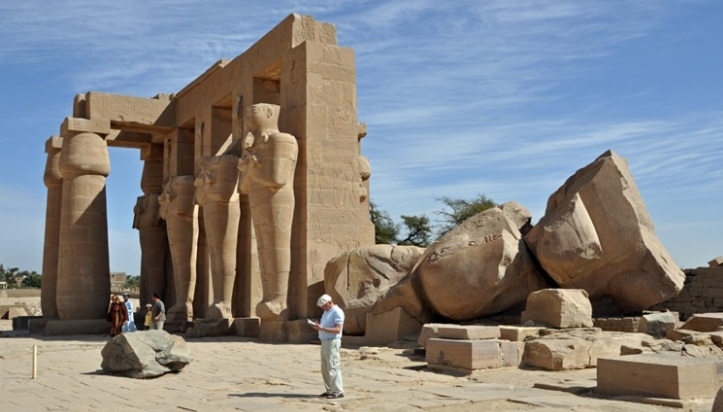
Ramesseum | Temple of Ramses II – A Complete 2,500-Word Guide for Travelers
The Ramesseum, the mortuary temple of Ramses II on Luxor’s west bank, stands as one of the most impressive and emotionally powerful monuments of Ancient Egypt. Though time has weathered parts of its grand structure, the Ramesseum still radiates majesty, storytelling, artistry, and architectural brilliance. For modern travelers eager to understand ancient history beyond the famous Valley of the Kings or Karnak Temple, the Ramesseum offers a more intimate journey—one filled with human stories, royal power, engineering mastery, and poetic beauty.
This long-form guide gives you everything you need: historical background, architectural details, cultural significance, what to expect during your visit, what to look for, and practical tips to help you experience the Ramesseum like a true explorer. Whether you're a traveler planning your itinerary, a history lover, or someone fascinated by Ramses II, this 2,500-word article will take you deep into the world of ancient Egypt.
A Temple Built for Eternity: What Is the Ramesseum?
The Ramesseum is the magnificent mortuary temple constructed by Ramses II, one of ancient Egypt’s most celebrated pharaohs. Located in the Theban Necropolis, directly across the Nile from modern Luxor, the temple was designed to preserve the king’s legacy forever, allowing priests and worshippers to honor him long after his death.
Ramses II, known as “Ramses the Great,” ruled for 66 years during the 19th Dynasty, and his reign is remembered for military campaigns, diplomatic achievements, and an extraordinary number of architectural projects. The Ramesseum was one of his greatest achievements—a massive complex dedicated not only to the king himself but also to the god Amun-Ra.
The temple’s ancient name, “House of Millions of Years of Usermaatre-Setepenre”, expressed Ramses II’s desire for eternal remembrance. Through monumental art, inscriptions, and architecture, the temple was intended to celebrate his military victories, divine birth, and rightful place among the gods.
Where History Meets Ruins: First Impressions of the Temple
Approaching the Ramesseum is a mesmerizing experience. The monumental pylons, though partially collapsed, still tower above you. Huge courtyards stretch wide, framed by colonnades and massive statues. The blend of warm desert tones, the quiet hum of the winds, and the shadows cast by ancient stone create an atmosphere that feels sacred and timeless.
Perhaps the most iconic sight is the fallen colossus of Ramses II, once a 20-meter-high statue of the king seated proudly on his throne. Today, its shattered remains lie across the temple’s first courtyard, but even in pieces, it is breathtaking. Ancient travelers like the Greek historian Diodorus Siculus were awestruck by its size, comparing it to the marvels of the world.
As you walk deeper into the temple, you notice how the art becomes more refined. The reliefs on the walls illustrate stories of Ramses II's triumphs. Scenes from the famous Battle of Kadesh, depictions of religious rituals, offerings to the gods, and images of the royal family decorate the surfaces. Every corner, pillar, and block tells a story—some grand, some beautifully intimate.
.jpg)
A Triumph of Architectural Brilliance
The Ramesseum’s architecture reflects the height of New Kingdom engineering. It combines traditional Egyptian temple design with innovations that showcase the ambition of Ramses II.
The First Pylon
The entrance was once flanked by two enormous statues of the king, with scenes of military victories carved into the stone. Today, the remains are fragmented, yet the Southern part still stands tall, revealing dramatic reliefs of Ramses II charging into battle, bow pulled back as he rages against his enemies.
The First Courtyard
The courtyard is dominated by the remains of the colossal seated statue of Ramses II. Its size is staggering—you stand beside the fragments knowing the original weighed over 1,000 tons. Archeologists still debate how such a massive sculpture was transported and lifted into place.
Pillars line the courtyard, some still standing with elegant papyrus capitals. The walls around you show scenes of festivals, offerings, and royal ceremonies.
The Second Courtyard
This area was once surrounded by Osiride pillars—columns carved with the pharaoh depicted as Osiris, god of the afterlife. Many remain intact, their artistic detail still visible after 3,200 years.
On the walls, you’ll find scenes of the Feast of Min, a celebration of fertility and kingship, as well as inscriptions praising Ramses II’s military dominance.
.jpg)
The Hypostyle Hall
Further inside lies one of the Ramesseum’s most beautiful features: the hypostyle hall. Its massive columns, arranged in tight rows, were once covered by a stone ceiling decorated with celestial imagery. Some columns still bear vibrant traces of original paint—reds, blues, greens, and golds.
Walking through this hall, you feel the shift from bright sunlight to soft, filtered shade. It’s an intimate, almost spiritual moment, as if stepping closer to the god Amun-Ra.
The Inner Sanctuaries
At the heart of the temple lies its sanctuary, where priests performed daily rituals. Several side rooms branch off from here, once used for storing sacred items or preparations for ceremonies.
Although not all sections remain intact, the layout reveals how the space guided visitors from public areas to increasingly sacred zones, embodying a symbolic journey from earthly life to divine presence.
The Battle of Kadesh: Power Carved in Stone
One of the great highlights of the Ramesseum is the elaborate depiction of the Battle of Kadesh, the most famous military conflict of ancient Egypt, fought between Ramses II and the Hittites. These reliefs serve both as historical record and royal propaganda.
The carvings show the king as a heroic figure, single-handedly defeating enemy chariots. You can see his chariot racing into battle, his bow drawn with dramatic tension. The Hittites appear as scattered, overwhelmed opponents, emphasizing Ramses II’s power and divine protection.
Even if you’re not a historian, the emotion and dynamism in these scenes are striking. They breathe life into events that shaped ancient diplomacy and warfare.
.jpg)
A Temple That Inspired Poets and Explorers
The Ramesseum is perhaps most famously associated with Percy Bysshe Shelley’s poem "Ozymandias." The poem’s subject—an ancient statue shattered in the sand—is widely believed to have been inspired by the fallen colossus of Ramses II.
Shelley never visited Egypt himself, but 19th-century explorers brought back vivid descriptions of the statue, which helped spark one of English literature’s most iconic poems. Travelers today still find a deep emotional resonance in the ruins, sensing the same themes of time, power, and human legacy that Shelley captured centuries ago.
Why the Ramesseum Is a Must-Visit in Luxor
While giants like Karnak and the Valley of the Kings dominate most itineraries, the Ramesseum offers a completely different experience:
-
It is quieter and less crowded, giving you the chance to explore without rush.
-
Its artwork is detailed and surprisingly well-preserved, with clear inscriptions and beautiful reliefs.
-
The presence of the massive fallen colossus is awe-inspiring and makes for incredible photos.
-
The temple provides powerful insight into Ramses II’s personality, ambitions, and vision.
-
Its atmosphere feels personal and contemplative, making it a favorite among historians, writers, and culture lovers.
Visiting the Ramesseum feels like discovering a hidden treasure—one that many tourists overlook.
Nearby Attractions to Complete Your Experience
The Ramesseum sits in a rich archaeological zone. Consider combining your visit with:
-
Medinet Habu – the mortuary temple of Ramses III, known for its vivid reliefs.
-
Deir el-Medina – the worker’s village where artisans of the Valley of the Kings lived.
-
Valley of the Nobles – beautifully decorated tombs with vivid colors.
-
The Valley of the Kings – home to the tombs of pharaohs like Tutankhamun.
-
The Colossi of Memnon – two giant statues marking the ancient entrance to Amenhotep III’s temple.
Together, these sites create an unforgettable picture of life, death, and artistry in ancient Thebes.
.jpg)
Tips for Visiting the Ramesseum
To enjoy the temple fully, keep these practical suggestions in mind:
-
Visit early morning for cooler weather and great photography.
-
Bring water—shade is limited.
-
Hire a local guide to understand the stories behind the reliefs.
-
Wear good shoes; the ground is uneven in places.
-
Combine your visit with nearby sites to maximize your day.
Final Thoughts: The Ramesseum’s Enduring Legacy
Walking through the Ramesseum, with its towering ruins and powerful silence, you cannot help feeling humbled. Despite being partially destroyed, the temple continues to speak across the ages. It is a place where stone meets poetry, where art meets ambition, where a pharaoh’s desire for immortality still echoes among broken pillars.
Ramses II succeeded in many things, but perhaps his greatest achievement is this: thousands of years later, travelers still walk into his temple and feel the awe he intended.
Call to Action
Ready to explore the timeless legacy of Ramses II? Plan your visit to the Ramesseum today and discover one of Luxor’s most atmospheric and unforgettable ancient temples!