
Siwa Oasis, Egypt: How to Get There & What to See
My First Impression of Siwa Oasis
When I first arrived at Siwa Oasis, I immediately felt that I had left the busy side of Egypt far behind. The long desert road seemed to go on forever, but then palm trees appeared on the horizon, followed by salt lakes, small villages, and golden dunes. It was one of those moments when the journey itself became part of the experience.
Siwa Oasis is one of Egypt’s most distinctive desert destinations, combining ancient history, Amazigh culture, palm-filled landscapes, natural springs, salt lakes, and vast desert scenery. Located in Egypt’s Western Desert near the Libyan border, the oasis is remote compared with Cairo, Alexandria, Luxor, and other major tourist destinations. That distance is exactly what gives Siwa its special atmosphere.
The Egyptian Tourism Authority describes Siwa as a desert sanctuary known for its peaceful landscapes, fertile palm and olive groves, salt lakes, archaeological sites, and access to the Great Sand Sea.
If you are wondering how to get to Siwa Oasis, what to see, how many days you need, and when to visit, this guide covers the essential information before you start your journey.
Ready to discover the beauty of Siwa Oasis? Let Egypt Classic Tours help you explore its ancient sites, peaceful salt lakes, natural springs, and breathtaking desert landscapes with comfortable transportation and a well-planned itinerary. Start planning your unforgettable Siwa adventure today!
What Is Siwa Oasis?
Siwa Oasis is a large desert oasis in Egypt’s Matrouh Governorate, surrounded by the Western Desert and located close to the Great Sand Sea and the Libyan border. It is famous for its natural springs, salt lakes, date palms, olive trees, traditional architecture, ancient ruins, and distinctive local culture.
Unlike the busy archaeological centers of Cairo and Luxor, Siwa offers a slower style of travel. You can spend one morning exploring ancient ruins, another floating in a salt lake, and an afternoon driving through enormous sand dunes.
The oasis is also known for its Amazigh heritage. Local traditions, crafts, architecture, food, and community life give Siwa a cultural identity that feels different from many other Egyptian destinations.
The effort required to reach the oasis is considerable, but this is one of its greatest attractions. Siwa still feels peaceful, spacious, and relatively far from mass tourism.
Quick Facts About Siwa Oasis
Location
Siwa Oasis is in Egypt’s Western Desert, approximately 300 to 320 kilometers southwest of Marsa Matrouh and roughly 750 kilometers by road from Cairo, depending on the route and starting point.
Opening Hours
Siwa Oasis itself is an open destination rather than a single attraction, so it does not have one official opening or closing time.
Individual archaeological sites, museums, springs, restaurants, and desert activities can have different schedules. Always confirm the current hours locally or with your tour operator before visiting.
Prices
There is no general entrance fee simply to enter Siwa Oasis.
However, individual attractions, archaeological sites, museums, private transfers, desert safaris, guides, and salt lake or spring experiences may have separate costs. Prices can change, so it is best to confirm current fees before your visit.
Recommended Duration
A stay of 3 days and 2 nights is a good starting point for first-time visitors. Travelers who want a slower experience can stay 4 days or longer.
Because the journey from Cairo takes many hours, visiting Siwa as a very short day trip is not practical.
Best Time to Visit
The most comfortable periods are generally autumn, winter, and spring, especially from October through April. Daytime conditions are usually more pleasant for sightseeing and desert activities than during the hottest summer months.
Winter nights can be surprisingly cold, particularly in the desert, so bring warm layers.
How to Get to Siwa Oasis
Getting to Siwa is part of the adventure. The oasis does not have a convenient passenger airport or railway connection, so visitors generally travel overland.
From Cairo to Siwa
The most common option is an overnight bus or private vehicle.
The road distance is roughly 750 kilometers, and a direct journey can take around 9 to 12 hours depending on the vehicle, stops, road conditions, and departure point. Current transport information varies by operator, so schedules and fares should always be checked before departure.
An overnight bus can save daytime hours and may be suitable for budget-conscious travelers. However, if comfort and flexibility are more important, a private vehicle is often a better choice.
A private transfer allows you to stop when necessary, take breaks, carry luggage comfortably, and adjust the itinerary around your accommodation and activities.
From Marsa Matrouh to Siwa
Marsa Matrouh is the main coastal gateway to Siwa.
The distance is around 300 kilometers, and the journey generally takes about 3.5 to 4 hours by road. Buses and other road transportation are available, while private transfers provide greater flexibility.
This route is particularly useful for travelers who want to combine a Siwa visit with a stay along Egypt’s Mediterranean coast.
From Alexandria to Siwa
Travelers starting in Alexandria can travel west toward Marsa Matrouh and then continue south toward Siwa.
Because the overall journey is long, many visitors prefer to organize private transportation or divide the journey rather than attempting to rush through it.
Can You Fly to Siwa?
Siwa does not have a regular commercial passenger airport serving typical tourist routes. For most travelers, road transportation is therefore the practical choice.
This may sound inconvenient, but it also explains why Siwa retains much of its quiet atmosphere.
What to See in Siwa Oasis
Siwa is not about one monument. Its appeal comes from the combination of archaeology, desert scenery, water, culture, and traditional life.
1. Shali Fortress
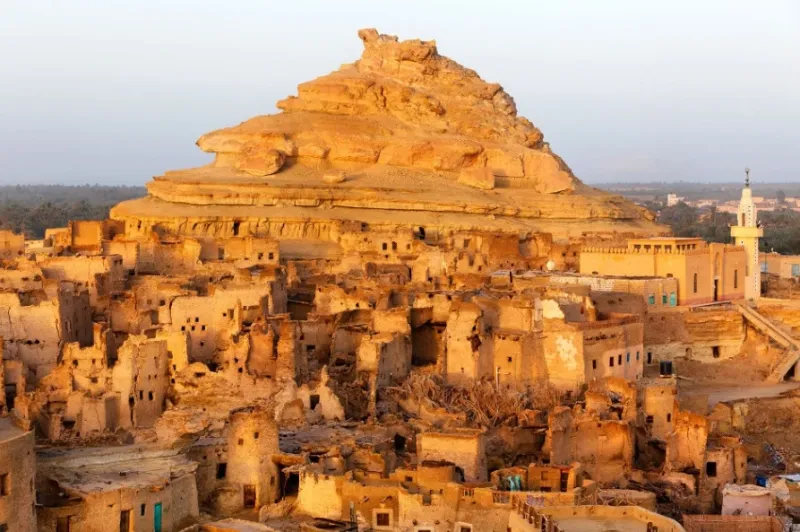
Shali is one of the most recognizable places in Siwa.
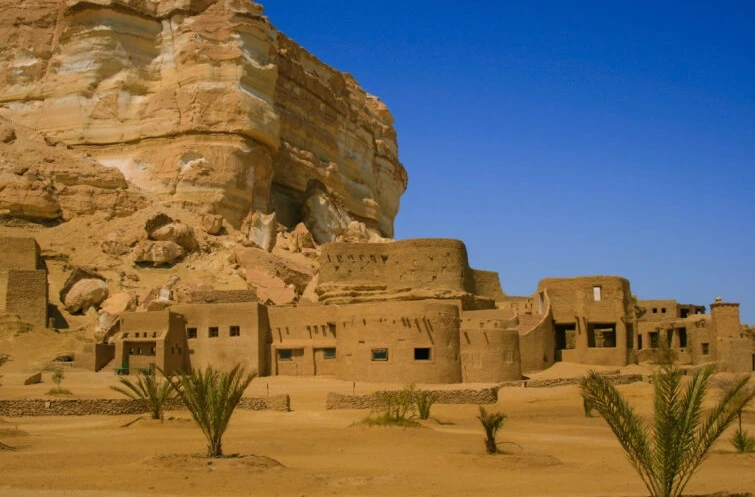
The historic settlement was built largely from local mud and salt materials, creating distinctive earth-colored walls and structures. Over time, parts of the old settlement were damaged by weather and erosion, leaving atmospheric ruins that overlook the oasis.
Walking around Shali gives you a chance to understand how people historically adapted architecture to the harsh desert environment.
The higher sections also provide beautiful views over the palm groves and surrounding landscape.
Visit around late afternoon when the light becomes softer and the temperature is more comfortable.
2. Temple of the Oracle
The Temple of the Oracle is one of Siwa’s most famous historical attractions.
The site is associated with the ancient Oracle of Amun and with Alexander the Great, who visited Siwa after his conquest of Egypt.
The ruins sit on a hill overlooking the surrounding landscape, and the location itself helps explain why the site was so important. The remains include ancient architectural elements, inscriptions, and the famous association with the oracle.
For history lovers, this is one of the most important stops in Siwa.
It is also a good place to combine history with photography because the elevated position provides wide views across the oasis.
3. Mountain of the Dead
Mountain of the Dead, also known as Gebel al-Mawta, contains numerous ancient tombs.
The tombs date from different historical periods, including the Late Period and the Greco-Roman era. Some contain decorative elements and scenes that provide insight into ancient beliefs and funerary traditions.
The site is especially interesting for travelers who want to see something beyond temples and pyramids.
The landscape surrounding the tombs is also striking, with the desert rising around the oasis.
4. Cleopatra's Spring
Cleopatra's Spring is one of Siwa's best-known natural attractions.
The spring is associated by local tradition with Queen Cleopatra, although the historical connection should be treated as a popular tradition rather than a confirmed fact.
The clear water and surrounding palm trees make it a pleasant place to relax after sightseeing.
The Egyptian Tourism Authority specifically highlights Cleopatra's Bath as one of Siwa's popular springs.
5. Salt Lakes
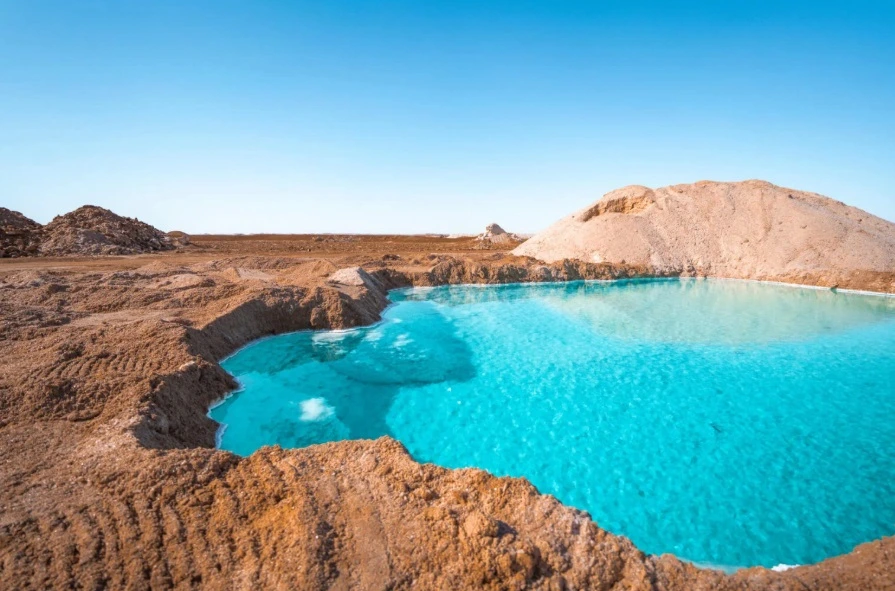
Siwa's salt lakes have become one of its most photographed natural attractions.
The high salt concentration allows visitors to float easily, creating an experience that many travelers compare with floating in the Dead Sea.
The lakes are surrounded by desert landscapes and can look particularly beautiful under the changing light of sunrise and sunset.
If you visit a salt lake, follow local instructions and avoid getting salt water in your eyes.
6. Great Sand Sea
For many visitors, the Great Sand Sea is the adventure highlight of Siwa.
This enormous desert region contains huge dunes and dramatic open landscapes. The Egyptian Tourism Authority describes the Great Sand Sea as a vast desert area stretching between Siwa and Al-Farafra, with some of the region's most impressive dunes.
A typical excursion can include a 4x4 desert drive, dune driving, sandboarding, sunset views, and time at a desert lake or spring depending on the selected route.
The best part is often the feeling of complete isolation. Once you are surrounded by dunes, the oasis seems like another world.
7. Bir Wahed
Bir Wahed is a desert spring area associated with hot sulfur-rich water and a nearby lake.
It is commonly included in Great Sand Sea excursions and can be a memorable way to finish a desert safari.
Because desert excursions depend on local conditions and access arrangements, organize the trip with an experienced local operator rather than attempting remote desert travel independently.
8. Fatnas Island
Fatnas Island is another popular Siwa location, especially for sunset.
Surrounded by water and palm trees, the area offers a peaceful setting to sit, relax, and watch the sky change colors.
It is a good contrast to the more adventurous activities in the Great Sand Sea.
9. Siwan Culture and Local Crafts
A visit to Siwa should not be limited to archaeological attractions.
Spend time walking through local streets, meeting residents, tasting traditional food, and exploring handmade crafts.
Siwan handicrafts include textiles, baskets, pottery, jewelry, and other locally produced items.
The local Amazigh heritage is an important part of the destination's identity, and visitors often remember the cultural experience as much as the scenery.
What to Expect in Siwa Oasis
A Peaceful Atmosphere
Siwa is considerably quieter than Egypt's most visited cities.
You should not expect the same level of traffic, crowds, shopping malls, or large tour groups found in Cairo.
Instead, expect palm groves, narrow roads, desert landscapes, traditional buildings, small restaurants, local shops, and a slower pace.
Limited Crowds
Crowds are generally lighter than at major Egyptian attractions.
However, popular natural locations and archaeological sites can become busier during peak travel periods, weekends, and holiday seasons.
Early morning visits are usually more peaceful and more comfortable.
Long Distances
Distance is one of the most important facts to understand before visiting.
From Cairo, the road journey can take most of a day. The final stretch from Marsa Matrouh to Siwa crosses a remote desert environment.
For this reason, Siwa works best as a dedicated trip rather than something added casually between two major destinations.
Desert Weather
Siwa has a desert climate.
Summer days can become extremely hot, while winter nights can be cold.
Spring and autumn usually offer a comfortable balance for sightseeing and outdoor activities.
During desert excursions, sun protection is essential regardless of the season.
Practical Travel Tips for Siwa
1. Give Yourself Enough Time
Do not plan Siwa as a rushed overnight stop if you can avoid it.
At least two nights gives you enough time to experience the main historical attractions, natural springs, salt lakes, and a desert excursion.
2. Book Transportation in Advance
Because Siwa is remote, transportation should be organized before your journey.
This is particularly important for private transfers, families, groups, or travelers carrying significant luggage.
3. Carry Cash
Although some hotels and businesses may accept electronic payments, carrying Egyptian pounds is useful for smaller purchases, local services, snacks, transportation, and markets.
Do not assume that every small business will accept a bank card.
4. Dress Comfortably and Respectfully
Siwa has a distinctive local culture, so modest and comfortable clothing is recommended.
Light, breathable clothing works well during the day, while warmer layers are useful during cooler evenings and winter nights.
5. Bring Sun Protection
Pack sunglasses, sunscreen, a hat, and comfortable walking shoes.
The combination of desert sun and reflective sand can feel stronger than expected.
6. Protect Your Phone and Camera
Dust and sand are common during desert excursions.
Use a protective bag for electronics and keep spare batteries or a power bank with you.
7. Do Not Travel Into the Desert Alone
Remote desert areas should be explored with experienced local drivers and authorized operators.
A professional driver understands the terrain, routes, local access requirements, and practical safety considerations.
8. Respect Local Traditions
Ask permission before photographing people, particularly in residential areas.
A respectful attitude will make your interaction with the local community much more enjoyable.
9. Check Site Conditions
Opening hours, entrance arrangements, transportation schedules, and local activity prices can change.
Confirm details shortly before your trip rather than relying entirely on old information found online.
When Is the Best Time to Visit Siwa Oasis?
The best time depends on what you want to do.
October to April
This is generally the most comfortable period for sightseeing, walking, desert excursions, and exploring archaeological sites.
Days can be pleasant, while nights may become cold, especially in the winter.
May to September
Summer can be very hot, particularly in the middle of the day.
If you visit during this period, plan outdoor activities for early morning or later afternoon and keep plenty of water with you.
For travelers who want to combine sightseeing with desert adventures, the cooler months are usually the more comfortable choice.
How Many Days Do You Need in Siwa?
A 3-day, 2-night trip is a practical option for first-time visitors.
You could use the first day for the journey and a relaxed introduction to the oasis. The second day can focus on Shali, the Temple of the Oracle, Mountain of the Dead, Cleopatra's Spring, and local cultural experiences. The final day can include a salt lake or Great Sand Sea experience before beginning the return journey.
If you have four days or more, you can slow down the schedule and enjoy more time at the springs, lakes, villages, and desert.
The key is not to treat Siwa like a checklist destination.
Its charm comes from having time to sit, explore, and enjoy the atmosphere.
Real Traveler Insights
One of our travelers mentioned that the road to Siwa felt long at first, but the moment the palm groves appeared, the journey suddenly felt worthwhile.
Visitors often say that the peaceful atmosphere is one of the biggest surprises. After experiencing the traffic and energy of Cairo, arriving in Siwa can feel like entering a completely different Egypt.
Another common observation is that the desert safari becomes more memorable when combined with sunset. Watching the sun disappear behind the dunes creates a completely different experience from simply driving through the desert during the day.
Travelers also frequently appreciate the opportunity to experience local culture rather than spending the entire trip around major archaeological monuments.
Is Siwa Oasis Worth Visiting?
Absolutely, especially if you want to experience a quieter and less conventional side of Egypt.
Siwa is worth visiting for its combination of history, nature, culture, and adventure.
You can explore the place connected with Alexander the Great's famous visit, walk through the ruins of Shali, visit ancient tombs, swim in natural springs, float in salt lakes, and watch the sunset over enormous desert dunes.
Few destinations in Egypt combine all these experiences in one location.
The main consideration is the distance.
If you only have a few days in Egypt and want to focus on Cairo, Luxor, and Aswan, Siwa may require too much travel time. But if you have additional time and want to explore beyond the classic route, it can become one of the most memorable parts of your journey.
Frequently Asked Questions About Siwa Oasis
How far is Siwa Oasis from Cairo?
Siwa is roughly 750 kilometers from Cairo by road, although the exact distance depends on the route and starting point. The journey can take approximately 9 to 12 hours depending on transportation and stops.
How do you get to Siwa Oasis?
Most travelers reach Siwa by road from Cairo, Alexandria, or Marsa Matrouh. Options include public buses, private cars, and organized tours.
Is there an airport in Siwa?
Siwa does not have a regular commercial passenger airport for standard tourist travel. Road transportation is the main way to reach the oasis.
How many days should I spend in Siwa?
Two nights and three days is a good minimum for a first visit. Four days allows you to travel at a slower pace.
What is Siwa Oasis famous for?
Siwa is famous for the Temple of the Oracle, Shali Fortress, Mountain of the Dead, Cleopatra's Spring, salt lakes, the Great Sand Sea, desert safaris, and its distinctive local culture.
Is Siwa good for families?
Yes. Families can enjoy the oasis, springs, salt lakes, cultural experiences, and selected desert activities. The itinerary should be adjusted according to children's ages and comfort.
Can I visit Siwa as a day trip from Cairo?
It is technically possible to travel long hours for a short visit, but it is not recommended. The distance makes a multi-day stay much more enjoyable.
Is Siwa safe for tourists?
Siwa is a well-known Egyptian tourist destination, but visitors should use reputable transportation and licensed or experienced local operators, especially for remote desert excursions.
What should I pack for Siwa?
Bring comfortable walking shoes, sun protection, light clothing, warmer layers for winter evenings, water, personal medications, a power bank, and protection for electronics during desert activities.
What is the best time to visit Siwa?
Autumn, winter, and spring are generally the most comfortable seasons for exploring the oasis and participating in outdoor activities.
Final Thoughts: Why Siwa Belongs on Your Egypt Travel List
Siwa Oasis offers a side of Egypt that many first-time visitors never experience.
Here, ancient history meets Amazigh culture, palm groves meet salt lakes, and traditional settlements sit beside an immense desert landscape. The journey from Cairo is long, but that remoteness is part of the attraction.
Whether you are interested in the history of Alexander the Great, ancient tombs, traditional culture, desert adventures, natural springs, or unforgettable sunsets, Siwa gives you plenty of reasons to stay longer.
If you are planning a trip to Egypt and want to include Siwa Oasis without worrying about transportation, accommodation, sightseeing, and desert logistics, consider arranging your journey with Egypt Classic Tours. A well-planned itinerary can make the long journey easier while giving you enough time to experience the oasis at a comfortable pace.
Explore Egypt beyond the famous monuments and discover the peaceful landscapes of Siwa Oasis with a journey designed around your interests.