
The Desert of Egypt: A Complete Guide to Egypt’s Most Beautiful Desert Adventures
The first time I left the busy streets of Cairo behind and headed toward the desert, I honestly did not know what to expect. I imagined endless golden sand and a few dunes, but the reality was completely different. As the city disappeared behind me, the landscape slowly transformed into wide open spaces, rocky mountains, golden dunes, unusual white formations, and small green oases surrounded by nothing but desert.
When I finally reached the White Desert, I remember standing beside the strange chalk formations and wondering how such shapes could exist in the middle of Egypt. Later, watching the sunset from the desert and seeing the sky fill with stars made the experience even more memorable.
That journey changed the way I looked at Egypt. The country is not only about pyramids, temples, museums, and the Nile. The Desert of Egypt is another world waiting to be explored, especially for travelers who enjoy nature, adventure, photography, camping, and experiences away from the usual tourist routes.
What Is the Desert of Egypt?
The Desert of Egypt refers to the enormous desert landscapes that cover much of the country, including large areas of the Western Desert, Eastern Desert, and Sinai. For travelers, the Western Desert is especially famous for its spectacular oases, dunes, rock formations, and safari experiences.
The Egyptian tourism authority highlights several desert and oasis destinations, including Fayoum, Siwa Oasis, Bahariya Oasis, Farafra Oasis, Dakhla, Kharga, and Saint Catherine.
Among the most popular desert experiences are the White Desert, Black Desert, Great Sand Sea, and the oasis landscapes surrounding destinations such as Bahariya and Siwa.
What makes Egypt’s desert special is its variety. You can see bright white limestone formations in one area, dark volcanic-looking hills in another, huge sand dunes somewhere else, and then suddenly arrive at a green oasis filled with palm trees and springs.
It is this contrast that makes a desert trip in Egypt much more than simply looking at sand.
Quick Facts About the Desert of Egypt
Location
Egypt’s major desert travel destinations are spread across different regions. The Western Desert stretches west of the Nile Valley and includes Bahariya, Farafra, Dakhla, Kharga, and Siwa. The Eastern Desert lies between the Nile Valley and the Red Sea, while Sinai offers dramatic mountain and desert landscapes.
Opening Hours
There are no universal opening hours for the Desert of Egypt because it is a huge geographical region rather than one attraction. Desert safaris operate according to the itinerary, weather, permits, local regulations, and the tour operator.
Specific archaeological attractions inside oasis areas may have their own opening schedules.
Entrance Prices
There is no single entrance ticket for the Desert of Egypt. Safari prices depend on the destination, number of travelers, transportation, accommodation, meals, camping arrangements, guide services, permits, and activities.
For this reason, it is better to book a complete desert program rather than trying to arrange every element separately.
Recommended Duration
A short desert experience can take one day, while a proper Western Desert adventure may last several days.
Bahariya and the White Desert can work well as a short safari from Cairo. Longer journeys can include Farafra, Dakhla, Kharga, or Siwa.
The official Egyptian tourism platform notes that excursions around the White Desert can range from half-day experiences to trips lasting a week or more, depending on the activities and route.
Best Time to Visit
For most travelers, the cooler months from October through April are the most comfortable for desert exploration, camping, hiking, and safari activities. Summer can be extremely hot, especially during the middle of the day.
Winter is pleasant for daytime sightseeing but remember that desert nights can become surprisingly cold.
Why Should You Visit the Desert of Egypt?
One of the biggest reasons to visit the Egyptian desert is simply the feeling of space.
In large cities, you are surrounded by traffic, buildings, people, and noise. In the desert, the experience changes completely. You can drive for long stretches surrounded by open landscapes where the horizon seems endless.
The desert also offers a different side of Egyptian culture.
Oases have traditionally been important settlements in the desert because they provide water and fertile land. Today, destinations such as Siwa and Bahariya allow visitors to experience oasis life, local traditions, natural springs, palm groves, and archaeological sites.
The Egyptian tourism authority describes Siwa as a remote desert oasis known for its salt lakes, springs, palm landscapes, and archaeological heritage.
For adventure lovers, the desert provides another attraction: the opportunity to get away from ordinary sightseeing.
Instead of simply walking through a museum or archaeological site, you can ride across dunes in a 4x4 vehicle, climb a sand dune, watch the sunset, camp beneath the stars, or wake up surrounded by extraordinary rock formations.
The Most Beautiful Desert Destinations in Egypt
The White Desert
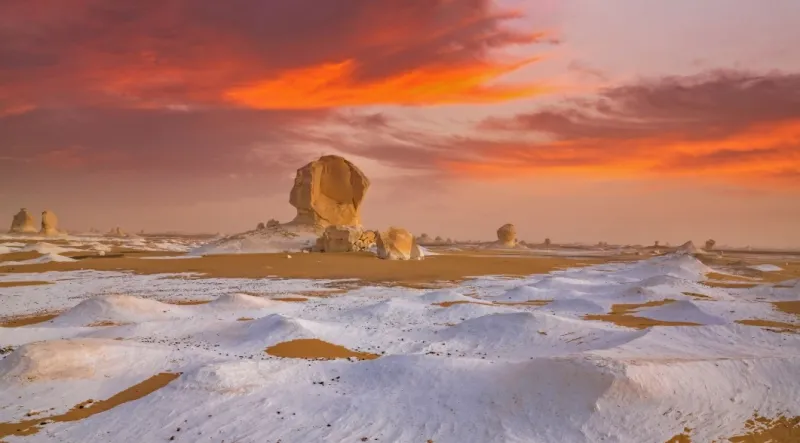
The White Desert is probably the most recognizable desert landscape in Egypt.
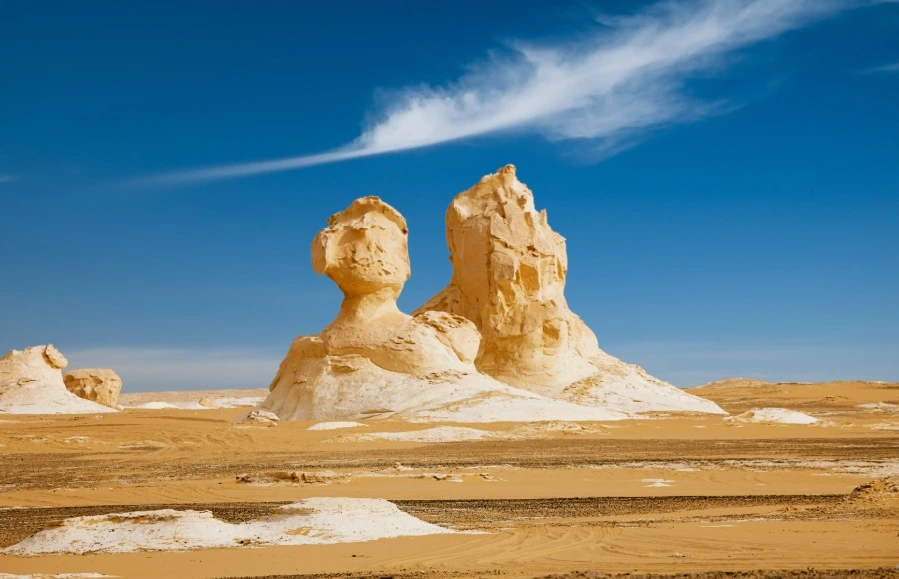
Located near Farafra Oasis, it is famous for its unusual white limestone formations. Wind and erosion have shaped the rocks into strange forms, including formations that resemble mushrooms and other natural sculptures.
The official Egyptian tourism platform describes the White Desert as one of the major attractions accessible from Farafra and highlights its famous mushroom-shaped white rocks.
The experience is particularly beautiful around sunrise and sunset when the changing light creates different shades across the white landscape.
For many visitors, spending a night here is the highlight of their desert adventure.
Imagine sitting around a desert camp after sunset, looking upward and seeing a sky filled with stars with almost no city lights nearby.
That is something you cannot easily experience in Cairo.
The Black Desert
The Black Desert provides a dramatic contrast to the White Desert.
Instead of bright white limestone formations, visitors encounter dark hills and volcanic-looking stones scattered across the landscape.
It is one of the main natural attractions explored during desert trips from Bahariya Oasis.
The Egyptian tourism authority recommends the Black Desert alongside the White Desert as an important area to explore from Bahariya.
Photography lovers will particularly enjoy the contrast between the dark hills, golden sand, blue sky, and sunlight.
Bahariya Oasis
Bahariya Oasis is one of the most convenient gateways to Egypt’s Western Desert.
According to Egypt’s official tourism platform, Bahariya is approximately 370 kilometers southwest of Cairo and is the closest Western Desert oasis to the capital.
The journey from Cairo can take approximately five hours by road, depending on traffic, stops, and transportation.
Bahariya is especially useful for travelers who want to experience the desert without committing to a very long expedition.
From here, visitors can explore the Black Desert, White Desert, natural springs, sand dunes, and other desert landscapes.
Siwa Oasis
Siwa feels completely different from Cairo and the major tourist cities.
It is a remote oasis in Egypt’s Western Desert, known for its palm groves, salt lakes, natural springs, ancient sites, and peaceful atmosphere.
The official tourism platform describes Siwa as one of Egypt’s most remote oases and highlights its salt lakes, hot springs, palm trees, and archaeological sites.
Siwa is also connected with the Great Sand Sea, where travelers can experience enormous dunes and thrilling 4x4 adventures.
For travelers who have several days available, combining Siwa with other desert destinations can create an unforgettable Western Desert itinerary.
The Great Sand Sea
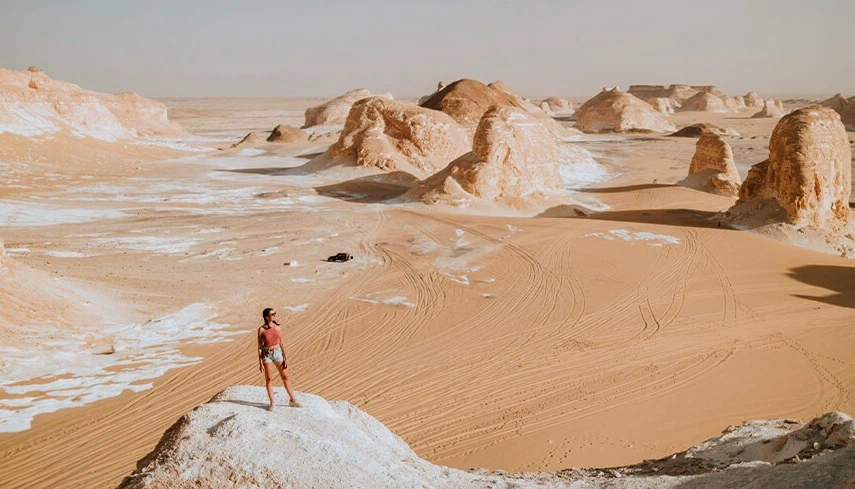
The Great Sand Sea is one of the most spectacular dune landscapes in Egypt.
The Egyptian tourism authority describes it as a huge desert area forming a natural barrier between Egypt and Libya, stretching across much of the desert between Farafra and Siwa.
This is the place to appreciate the scale of the desert.
The dunes appear to continue forever, creating an ideal setting for 4x4 driving, photography, sandboarding, and sunset experiences.
Dakhla and Kharga Oases
Travelers with more time can continue deeper into the Western Desert.
Dakhla and Kharga are part of the longer desert circuit and combine oasis scenery with historical attractions.
The official Egyptian tourism platform describes Dakhla as a collection of small settlements along the Western Desert highway, while Kharga is the largest and most southerly of the major oases along that route.
These destinations are particularly interesting for travelers who want to combine nature with history.
A Short History of Egypt’s Deserts and Oases
Egypt’s desert has always been closely connected with human settlement.
Although much of the landscape is extremely dry, oases provided valuable sources of water and fertile land. These areas became important stopping points for people, traders, farmers, travelers, and communities crossing the desert.
Over thousands of years, desert routes connected settlements across Egypt and beyond.
The oases also became home to agricultural communities that developed around natural water sources. Palm trees, olive trees, crops, and springs created pockets of green in otherwise dry surroundings.
Siwa provides an excellent example of how an oasis could develop its own identity and traditions.
The historic settlement of Shali, for example, was built using a traditional material made from local mud and salt. The Egyptian Ministry of Tourism and Antiquities dates the establishment of the old settlement to the medieval period.
The desert therefore should not be viewed as empty land.
It is a landscape with a long history of movement, settlement, trade, agriculture, and cultural exchange.
What to Expect on a Desert Safari in Egypt
A desert safari is usually much more varied than first-time visitors imagine.
4x4 Desert Adventure
A 4x4 vehicle is one of the most exciting ways to explore the desert.
Instead of staying on paved roads, experienced drivers can take you across suitable desert routes, dunes, rocky landscapes, and natural attractions.
The official tourism authority recommends using licensed guides and experienced 4x4 operators when traveling outside the oasis areas.
Sandboarding
If you enjoy adventure, sandboarding can be a fun addition to your safari.
The experience is simple: climb a suitable dune, place your board on the sand, and slide down.
It is usually easier than it looks, although climbing back up the dune can be the real workout.
Desert Camping
Overnight camping changes the entire experience.
During the day, the desert can feel bright, warm, and expansive. After sunset, the landscape becomes quiet and dramatically darker.
A traditional desert camp may include dinner, a campfire, seating areas, and sleeping arrangements.
If you are camping during winter, bring warm clothing because temperatures can drop considerably after sunset.
Sunset and Sunrise
Sunrise and sunset are among the best moments in the Egyptian desert.
The low sunlight changes the appearance of the sand and rocks, creating shadows and warm colors.
Photographers should keep their camera ready during these periods because the landscape can look completely different within minutes.
Stargazing
One of the most memorable things about desert camping is the night sky.
Far away from large cities, there is much less artificial light.
On a clear night, the stars can appear remarkably bright.
You do not need to be an expert photographer or astronomer to enjoy the experience.
Sometimes simply sitting quietly and looking upward is enough.
Facts About Crowds and the Desert Experience
The desert generally offers a quieter experience than Egypt’s major archaeological attractions.
Places such as the Giza Plateau, Karnak Temple, and popular museums can become busy during peak tourist periods.
By comparison, remote desert areas have much lower visitor density.
However, popular destinations such as the White Desert can become busier during the high travel season, especially around holidays and winter travel periods.
If you prefer a more peaceful experience, ask your tour operator about departure times, private safaris, and less busy camping locations.
A private desert tour can also give you more flexibility with photography stops and sunset locations.
Weather in the Desert of Egypt
Weather is one of the most important things to consider before booking a desert safari.
The desert climate can be extreme.
During the cooler season, daytime conditions are generally much more comfortable for walking and sightseeing, while nights can become cold.
From October through March, Western Desert conditions are generally more suitable for outdoor exploration, with daytime temperatures often comfortable and nighttime temperatures noticeably cooler.
Summer is another story.
The combination of strong sunlight and high temperatures can make long outdoor activities exhausting.
For most first-time visitors, the cooler season is the better choice.
What to Wear
During the day, lightweight clothing, comfortable trousers, sunglasses, and a hat are useful.
For overnight trips, bring a warm jacket or fleece, especially during winter.
Closed and comfortable shoes are preferable for walking on rocky terrain and climbing dunes.
Practical Travel Tips for Visiting the Desert of Egypt
Book With an Experienced Operator
Do not underestimate the desert.
It is not an environment where visitors should simply rent a vehicle and drive into remote areas without proper preparation.
The Egyptian tourism authority specifically recommends licensed guides and experienced operators for desert excursions.
Carry Enough Water
Always have sufficient drinking water.
Even when temperatures feel comfortable, walking and outdoor activities can cause dehydration.
Protect Yourself From the Sun
Wear sunglasses, sunscreen, and a hat.
The sunlight can be strong even during cooler months.
Bring Warm Clothes for Camping
This is one of the most important tips.
Many first-time desert visitors prepare for hot weather and forget that nighttime temperatures can be surprisingly low.
Keep Your Phone Charged
Remote desert areas may have limited access to electricity.
A portable power bank is a useful addition to your luggage.
Do Not Leave Waste Behind
The desert environment may look tough, but it is fragile.
Carry your waste with you and avoid damaging rocks, plants, or natural formations.
Responsible tourism helps protect these landscapes for future visitors.
Check Permits and Local Regulations
Certain desert areas may require permits or specific arrangements.
The official tourism authority advises travelers to check with hotels, tour operators, or authorized travel agencies before heading into desert areas.
Real Traveler Insights
One of our travelers mentioned that the most surprising part of their desert trip was not the 4x4 adventure but the silence after sunset. After spending several days in busy Egyptian cities, they found the quietness of the desert almost as impressive as the landscapes.
Visitors often say that photographs do not fully capture the White Desert.
During the day, the formations appear bright and almost surreal. At sunset, they take on warmer colors, and after dark, they become silhouettes beneath the stars.
Another common reaction is surprise at the variety of the Western Desert.
Many travelers arrive expecting endless sand but discover mountains, rocks, springs, palm trees, salt lakes, archaeological sites, and unusual geological formations.
That variety is exactly what makes a desert journey worthwhile.
How Many Days Do You Need?
The answer depends on how much of Egypt’s desert you want to experience.
One Day
A short desert excursion can work for travelers with limited time.
You can experience a nearby desert landscape, enjoy a 4x4 ride, watch the sunset, and return to your accommodation.
Two to Three Days
This is a better option if you want to explore Bahariya and the White Desert without rushing.
It allows more time for desert activities and possibly an overnight camp.
Four to Seven Days
A longer itinerary allows you to explore several landscapes and oases.
You could combine Bahariya, the White Desert, Farafra, and other Western Desert destinations.
One Week or More
Travelers with more time can consider a larger Western Desert circuit involving Bahariya, Farafra, Dakhla, Kharga, and potentially Siwa.
The official tourism authority specifically recommends longer desert circuits for travelers who have a week or more.
Is the Desert of Egypt Suitable for Families?
Yes, provided the itinerary is planned carefully.
Families can enjoy 4x4 rides, sunsets, short walks, sandboarding, oasis experiences, and camping.
However, very young children may find long road journeys or extended desert expeditions tiring.
For families, a shorter itinerary with comfortable accommodation and planned breaks may be better than an extremely remote multi-day expedition.
Is the Desert of Egypt Good for Couples?
Absolutely.
The desert can be particularly memorable for couples.
Imagine watching the sunset together from the top of a dune, having dinner at a desert camp, and looking at the stars away from city lights.
It offers a peaceful contrast to the busy atmosphere of Cairo or the sightseeing schedule of a Nile cruise.
Is the Desert Good for Photography?
The Desert of Egypt is excellent for photography.
You can photograph:
- White limestone formations
- Golden dunes
- Dark desert hills
- Palm-filled oases
- Salt lakes
- Sunsets
- Sunrise landscapes
- Traditional desert camps
- Night skies
- 4x4 vehicles against huge landscapes
The best natural light is generally around sunrise and sunset.
Try to avoid taking all your photographs in the harsh middle-of-the-day sunlight.
Frequently Asked Questions About the Desert of Egypt
What is the most famous desert in Egypt?
The Western Desert is particularly popular with tourists because it contains famous destinations such as the White Desert, Black Desert, Bahariya Oasis, Farafra, Dakhla, Kharga, and Siwa.
Is the White Desert worth visiting?
Yes. The White Desert is one of Egypt’s most unusual natural landscapes, famous for its bright limestone formations and dramatic scenery.
How far is Bahariya Oasis from Cairo?
Bahariya Oasis is approximately 370 kilometers southwest of Cairo, according to Egypt’s official tourism platform.
How long does it take to reach Bahariya Oasis from Cairo?
The journey can take approximately five hours by bus, taxi, or private vehicle, depending on road conditions and stops.
What is the best time to visit the Desert of Egypt?
October through April is generally the most comfortable period for desert travel. Winter provides pleasant daytime temperatures but cold nights.
Is desert camping safe?
Desert camping can be a safe and enjoyable experience when arranged through experienced, licensed guides and reputable tour operators. The Egyptian tourism authority recommends experienced licensed guides for desert excursions.
Is the Egyptian desert hot all year?
No. Summer can be extremely hot, but winter daytime temperatures are much more comfortable. Nighttime temperatures can become quite cold.
Can I visit the desert from Cairo?
Yes. Bahariya Oasis is the closest major Western Desert oasis to Cairo and is an excellent starting point for a desert adventure.
Can I combine the desert with a classic Egypt itinerary?
Definitely. A desert adventure can be combined with Cairo, the pyramids, Luxor, Aswan, a Nile cruise, or Red Sea destinations.
Should I visit the desert with a private guide?
A private guide can be particularly useful for remote areas because transportation, permits, timing, meals, camping, and activities can all be arranged as part of one itinerary.
Final Thoughts: Why the Desert of Egypt Belongs on Your Itinerary
After visiting Egypt’s famous monuments, museums, temples, and cities, the desert offers a completely different perspective of the country.
It is quieter, more spacious, and more connected to nature.
From the extraordinary white formations of the White Desert to the dark landscapes of the Black Desert, from the green palm groves of Bahariya and Siwa to the enormous dunes of the Great Sand Sea, the Desert of Egypt offers experiences that are difficult to find anywhere else.
If you want adventure, photography, camping, nature, local culture, or simply a break from crowded tourist attractions, a desert safari can become one of the most memorable parts of your Egypt vacation.
For a professionally organized experience, Flying Carpet Tours can help create a personalized Egypt adventure based on your interests, travel style, and budget. Their customized travel service is designed around individual itineraries and interests.
Ready to explore a different side of Egypt? Visit Egypt Desert Tours and start planning your unforgettable desert adventure today.