
Egyptian Clothing: History, Tradition & Style
A Traveler’s First Impression
“When I first arrived in Egypt, I expected the ancient temples and pyramids to tell most of the story. But I quickly noticed that clothing was telling a story too. Walking through Cairo, visiting local markets, and traveling south toward Luxor and Aswan, I saw different fabrics, colors, scarves, robes, and traditional garments. Some looked simple and practical, while others were beautifully decorated. What surprised me most was discovering that Egyptian clothing is not just about fashion. It reflects climate, geography, religion, celebrations, family traditions, and centuries of cultural change.”
For travelers, Egyptian clothing offers an interesting way to understand everyday life in Egypt. From the linen garments represented in ancient Egyptian art to the modern galabeya worn in many communities, clothing has remained closely connected to Egyptian culture.
Today, visitors can see traditional clothing in markets, cultural areas, festivals, villages, museums, and local communities. You may also encounter beautifully embroidered garments in Upper Egypt, colorful Nubian styles around Aswan, and distinctive clothing traditions from Sinai and the Western Desert.
This guide explores the history of Egyptian clothing, traditional garments, fabrics, regional styles, what travelers can expect, practical tips, and the best ways to experience Egyptian dress respectfully during a trip.
Discover the beauty of Egyptian clothing, traditions, and heritage with Egypt Classic Tours. Experience authentic Egyptian culture on your next journey!
What Is Egyptian Clothing?
Egyptian clothing refers to the traditional and modern garments worn by people in Egypt, including styles influenced by the country's ancient heritage, Islamic traditions, local customs, climate, and regional identities.
The history of clothing in Egypt goes back thousands of years. Ancient Egyptians used linen extensively, and archaeological discoveries have preserved examples of shirts, cloth, mummy wrappings, and other textiles. The Metropolitan Museum of Art, for example, holds ancient Egyptian linen dating back to the Early Dynastic Period and New Kingdom garments from Thebes.
Traditional Egyptian clothing has changed significantly over time, but some principles remain familiar: comfortable fabrics, loose shapes, protection from the sun, and clothing adapted to the local climate.
The most recognizable traditional Egyptian garment today is the galabeya, a long, loose robe worn by men and, in different forms, by women. Women may also wear long dresses, embroidered garments, scarves, and regionally distinctive clothing.
The important thing to remember is that there is no single Egyptian outfit. Egyptian clothing varies according to location, age, occasion, community, personal preference, and whether someone is dressing traditionally or in contemporary urban fashion.
Quick Facts About Egyptian Clothing
Where Can You See Traditional Egyptian Clothing?
Egyptian clothing can be experienced throughout the country rather than at one specific attraction.
Travelers are likely to encounter traditional clothing in:
- Cairo and its historic markets
- Upper Egypt
- Luxor and Aswan
- Nubian villages
- Sinai
- Siwa Oasis
- Local festivals and celebrations
- Cultural performances
- Traditional markets and handicraft shops
- Museums and textile collections
The Egyptian Textiles Gallery at the Grand Egyptian Museum is particularly relevant for travelers interested in the history of Egyptian clothing. The gallery presents clothing, spinning, and weaving traditions across different historical periods and includes examples of folk clothing from areas such as Sinai, Siwa Oasis, and Nubia.
Opening Hours and Ticket Information
Because Egyptian clothing is a cultural tradition rather than one attraction, there are no universal opening hours or admission prices.
If you want to see historical and traditional textiles in a museum setting, the Egyptian Textiles Gallery at the Grand Egyptian Museum is an excellent option. Museum hours and ticket prices can change, so travelers should check the latest official information before visiting.
How Long Do You Need?
A clothing-focused cultural experience can take anywhere from one hour to half a day, depending on the activity.
A museum visit may take one to two hours, while a traditional market visit can take longer if you want to shop for textiles, scarves, galabeyas, or handmade items.
Best Time to Experience Egyptian Clothing
Traditional clothing can be experienced throughout the year.
For outdoor markets and cultural walks, the cooler months from approximately October through April are generally more comfortable.
During summer, lightweight clothing is especially useful because Egyptian temperatures can become very high, particularly in Upper Egypt.
The History of Egyptian Clothing
Clothing in Ancient Egypt
Egyptian clothing has one of the world's most fascinating textile histories.
Ancient Egyptians commonly used linen, which was made from flax. Archaeological evidence shows that linen was used for clothing and many other purposes.
The quality of the fabric could vary considerably. Fine linen was highly valued, while simpler textiles were used for everyday needs.
The Metropolitan Museum of Art preserves examples of extremely fine ancient Egyptian linen. One New Kingdom textile from Thebes is described as exceptionally fine and associated with royal-quality linen.
Ancient clothing was also influenced by social position.
Royal figures and wealthy members of society could wear finely made and elaborately pleated garments, while workers and ordinary people generally used simpler clothing.
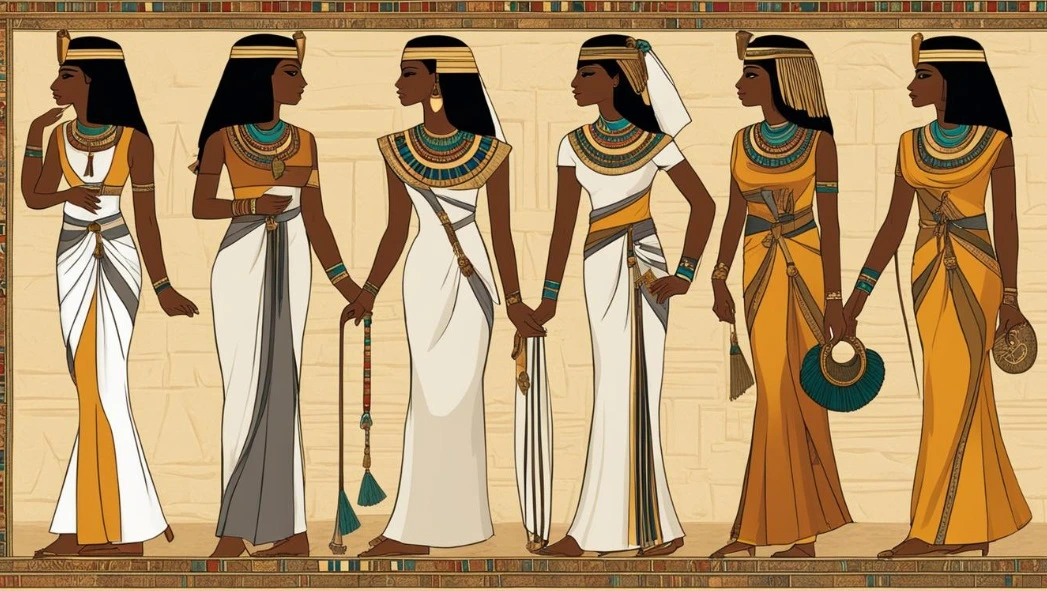
Men were often represented wearing kilts or wrapped garments, while women appeared in long dresses or wrapped clothing. During the New Kingdom, both men and women were depicted wearing more elaborate and flowing garments.
Linen and the Egyptian Climate
Linen was especially suitable for Egypt's climate.
The fabric could be lightweight and breathable, making it practical in a hot environment.
Ancient Egyptian artists frequently represented people wearing white or light-colored garments, sometimes complemented by colorful accessories and jewelry.
Textiles also had an important role beyond everyday clothing.
Linen was used for bedding, household materials, religious purposes, and mummification. Some linen preserved from the New Kingdom even carries inscriptions identifying rulers, dates, or textile quality.
This makes ancient Egyptian clothing more than a fashion subject. It is also an important source of information about technology, trade, social organization, and daily life.
Egyptian Clothing Through Later Periods
Egyptian clothing continued to evolve after the pharaonic period.
Greek and Roman influence introduced new textile traditions and styles. Later, Coptic communities developed distinctive textile designs, while Islamic Egypt brought additional influences in fabrics, patterns, and clothing.
Over centuries, Egyptian clothing became a mixture of local traditions and outside influences.
The country's position between Africa, the Mediterranean, the Middle East, and the Red Sea helped create a diverse cultural environment.
Today, this history can be seen in regional clothing traditions and textile designs throughout Egypt.
Traditional Egyptian Clothing Today
The Galabeya
The galabeya is perhaps the most recognizable traditional Egyptian garment.
It is a long, loose-fitting robe that can be made from cotton, linen, or other fabrics.
Men commonly wear galabeyas in rural communities and Upper Egypt, although styles and frequency of use vary.
The garment is practical because its loose shape allows air to circulate and provides comfort in hot weather.
Galabeyas can be simple and plain for everyday use or more decorative for celebrations and special occasions.
Travelers may see men wearing traditional galabeyas in villages, rural areas, and parts of Upper Egypt.
Women's Traditional Dresses
Women's traditional clothing varies considerably across Egypt.
Depending on the region, traditional dresses may include embroidery, colorful fabrics, decorative patterns, scarves, and long flowing silhouettes.
Some communities have distinctive designs that identify their regional heritage.
Upper Egyptian clothing, Nubian clothing, and Bedouin-inspired clothing can look very different from one another.
This regional diversity is one of the most interesting aspects of Egyptian dress.
Headscarves and Shawls
Scarves are common throughout Egypt and can be worn for practical, cultural, religious, or fashion reasons.
A scarf may protect the head and neck from the sun and dust, provide warmth during cooler weather, or complement an outfit.
Visitors will notice a wide variety of colors, fabrics, patterns, and styles.
Regional Styles of Egyptian Clothing
Nubian Clothing
Nubian clothing is particularly recognizable for its use of vibrant colors and distinctive decorative elements.
Nubian communities in southern Egypt, especially around Aswan, have preserved many elements of their cultural identity.
Visitors exploring Nubian villages may encounter colorful dresses, scarves, accessories, and textiles.
A cultural visit to a Nubian village can therefore provide a different perspective on Egyptian clothing compared with what travelers see in Cairo.
Upper Egyptian Clothing
Upper Egypt has strong traditional clothing traditions.
In rural areas, men may wear galabeyas, particularly for everyday activities and social occasions.
Women's clothing can include long dresses and beautifully decorated textiles.
Because Upper Egypt has its own distinctive cultural identity, clothing is often closely connected to local customs and family traditions.
Sinai Clothing
Sinai has distinctive clothing traditions influenced by Bedouin heritage.
Women's garments can feature intricate embroidery, colorful patterns, and carefully arranged decorative details.
Embroidery may carry cultural significance and can be connected with community identity.
Siwa Oasis Clothing
Siwa Oasis in Egypt's Western Desert has its own distinctive traditions.
Traditional Siwan women's clothing is known for detailed embroidery and colorful decoration.
The designs and materials reflect the oasis environment and the cultural history of its communities.
The Grand Egyptian Museum's Egyptian Textiles Gallery includes examples of folk clothing associated with regions including Sinai, Siwa Oasis, and Nubia.
What to Expect When Exploring Egyptian Clothing
Travelers can experience Egyptian clothing in several different ways.
You may encounter traditional clothing while walking through local neighborhoods or visiting rural areas.
You may also see traditional garments for sale in markets.
In tourist areas, shops often sell galabeyas, scarves, cotton clothing, embroidered items, and other garments inspired by Egyptian traditions.
Cultural performances may also feature traditional costumes.
However, it is useful to understand the difference between clothing used in everyday life and clothing designed primarily for tourists.
Some garments sold in tourist markets are modern interpretations rather than historically accurate traditional clothing.
That does not necessarily make them less interesting, but travelers should understand that Egyptian fashion today combines tradition with contemporary design.
Egyptian Clothing and Modern Fashion
Egyptian fashion is not frozen in the past.
In Cairo and other major cities, modern Egyptian clothing is similar in many ways to international fashion.
People wear jeans, shirts, dresses, suits, sportswear, contemporary modest clothing, and many other styles.
At the same time, traditional elements remain visible.
A modern outfit may include a traditional scarf, embroidery, local textile, or handmade accessory.
Fashion designers in Egypt have also incorporated Egyptian patterns, colors, embroidery, and historical inspiration into contemporary collections.
This combination of old and new is an important part of understanding Egyptian style today.
Egyptian Clothing, Weather and Comfort
Egypt's climate has influenced clothing for thousands of years.
The country is predominantly dry, and temperatures can become particularly high during the summer.
For travelers, lightweight and breathable clothing is generally practical.
Cotton and linen are popular choices because they can feel comfortable in warm conditions.
Loose-fitting clothes can also be more comfortable when walking through archaeological sites.
In winter, evenings can be cooler, especially in desert areas and Upper Egypt, so carrying a light jacket or sweater can be useful.
Clothing Tips for Travelers in Egypt
Dress Respectfully
Egypt is a culturally diverse country, and modest clothing is generally appreciated when visiting religious and traditional areas.
Travelers do not need to wear traditional Egyptian clothing, but choosing clothing that covers the shoulders and knees can be a respectful option, especially outside resort areas.
Choose Breathable Fabrics
Cotton and linen are useful choices for Egypt's climate.
Lightweight fabrics can make sightseeing much more comfortable.
Carry a Scarf
A lightweight scarf can be surprisingly useful.
It can protect you from strong sunlight, dust, or cool evening air and may also be useful when visiting religious sites.
Comfortable Shoes Matter
Egyptian sightseeing often involves walking over uneven ground.
Comfortable footwear is therefore more important than following a particular fashion style.
Bring Layers in Winter
Winter days can be pleasantly warm while evenings can become cool.
A light layer is useful when traveling between Cairo, Luxor, Aswan, and desert areas.
Shopping for Egyptian Clothing
Buying traditional clothing can be a memorable part of an Egypt trip.
Markets and local shops often offer galabeyas, scarves, embroidered garments, cotton clothing, and handmade textiles.
When shopping, take your time.
Look closely at stitching, fabric quality, embroidery, and whether an item is handmade or factory-produced.
If you are purchasing a traditional garment as a souvenir, ask the seller about its origin and how it is made.
You may discover that the story behind the garment is as interesting as the garment itself.
Bargaining
Bargaining is common in many traditional markets, especially where prices are not fixed.
Keep the process friendly and respectful.
If you do not want to negotiate, look for shops that display fixed prices.
Egyptian Clothing and Cultural Experiences
One of the best ways to understand traditional clothing is to experience it within its cultural context.
Instead of simply buying a galabeya from a souvenir shop, consider visiting a local community, textile exhibition, cultural center, or museum.
A guided cultural experience can explain why certain garments are worn, how fabrics are produced, and how clothing differs between regions.
For travelers visiting Cairo, the Egyptian Textiles Gallery at the Grand Egyptian Museum provides a particularly useful historical perspective because it follows clothing and textile traditions across several periods of Egyptian history.
Real Insights From Travelers
One of our travelers mentioned that seeing traditional clothing in everyday Egyptian life was more memorable than simply buying a souvenir because it helped connect modern communities with the country's long history.
Visitors often say that the colorful clothing seen in Nubian villages is especially memorable, particularly when combined with the music, architecture, and hospitality of the community.
Another common observation is that travelers quickly realize there is no single definition of Egyptian clothing.
A galabeya in Upper Egypt, an embroidered dress in Sinai, a colorful Nubian garment, and a modern Cairo outfit can all be part of the country's contemporary cultural landscape.
Egyptian Clothing for Special Occasions
Traditional clothing can become particularly important during celebrations.
Weddings, religious festivals, family gatherings, and community events may feature more decorative garments than everyday clothing.
Women may wear beautifully embroidered dresses or elegant modern outfits, while men may choose traditional galabeyas or contemporary formal clothing depending on the occasion.
Colors, embroidery, jewelry, and accessories can all contribute to the overall appearance.
For travelers, this is another reminder that clothing is often connected to social identity and celebration rather than simply practical needs.
How to Experience Egyptian Clothing on Your Trip
A traveler interested in Egyptian clothing can create a cultural itinerary around textiles and local traditions.
In Cairo
Visit the Grand Egyptian Museum and explore its Egyptian Textiles Gallery. Then explore traditional markets where you can see modern garments and textile products.
In Luxor
Combine archaeological sightseeing with an appreciation of traditional Upper Egyptian clothing.
In Aswan
Visit Nubian communities and experience the colorful clothing and textile traditions of southern Egypt.
In the Western Desert
A trip to Siwa can introduce visitors to distinctive oasis traditions and embroidered clothing.
In Sinai
Travelers can learn more about Bedouin-inspired clothing and embroidery through respectful cultural experiences.
This approach allows you to see Egyptian clothing not as one isolated tradition but as a collection of regional identities.
Why Egyptian Clothing Is Important
Clothing can tell us a great deal about a society.
Egyptian clothing reveals how people adapted to climate, developed textile technologies, expressed social status, practiced religion, and maintained regional identities.
Ancient linen preserved in archaeological contexts provides direct evidence of textile production and clothing. Some ancient garments have survived for thousands of years, offering researchers information that written records alone cannot provide.
Modern traditional clothing continues that story.
The fabrics may be different, the designs may evolve, and modern fashion may be increasingly international, but regional clothing traditions remain an important part of Egyptian cultural identity.
FAQ About Egyptian Clothing
What is the most traditional Egyptian clothing?
The galabeya is one of the best-known traditional Egyptian garments. It is a long, loose-fitting robe commonly associated with men in rural areas and Upper Egypt, although variations exist.
What did ancient Egyptians wear?
Ancient Egyptians commonly wore linen garments. Men were often represented wearing kilts or wrapped garments, while women wore dresses and wrapped styles. Clothing became more elaborate during the New Kingdom.
Why was linen important in ancient Egypt?
Linen was well suited to Egypt's climate and was used for clothing, household textiles, and religious and funerary purposes. Archaeological discoveries demonstrate the importance and quality of Egyptian linen production.
Do Egyptians still wear traditional clothing?
Yes. Traditional garments such as the galabeya remain part of everyday and ceremonial life in some communities, particularly in rural areas and Upper Egypt. Modern Egyptian fashion, however, is highly diverse.
What should tourists wear in Egypt?
Lightweight, comfortable clothing is practical because of Egypt's warm climate. Modest clothing is generally a respectful choice, especially when visiting religious sites and traditional communities.
Can tourists buy Egyptian traditional clothes?
Yes. Traditional garments, scarves, textiles, and embroidered clothing can be found in markets, local shops, handicraft stores, and tourist areas.
Where can I learn about the history of Egyptian textiles?
The Egyptian Textiles Gallery at the Grand Egyptian Museum presents clothing and textile traditions from ancient Egyptian times through later historical periods and the modern era.
Is the galabeya only worn by men?
The term is strongly associated with the long robe commonly worn by men, but women in Egypt also have long traditional dresses and garments that vary considerably by region and community.
Is Egyptian clothing different by region?
Yes. Nubian, Upper Egyptian, Sinai, and Siwan communities have distinctive clothing and textile traditions. Regional embroidery, colors, patterns, and fabrics can vary considerably.
Is Egyptian clothing suitable for hot weather?
Many traditional Egyptian garments use loose shapes and lightweight fabrics, making them practical for warm conditions. Linen and cotton are particularly useful materials for hot weather.
Final Thoughts on Egyptian Clothing
Egyptian clothing is much more than a collection of traditional garments.
It is a visual record of the country's history, climate, communities, craftsmanship, and cultural diversity. From the fine linen of ancient Egypt to the colorful clothing of Nubia, the embroidery of Sinai, the traditional garments of Upper Egypt, and contemporary Cairo fashion, clothing reveals another side of the Egyptian experience.
For travelers, discovering Egyptian clothing can add depth to a trip. A museum visit can explain the ancient textile tradition, a local market can introduce modern craftsmanship, and a cultural experience can show how regional styles remain part of everyday life.
Whether you are interested in ancient history, textiles, fashion, photography, or local culture, Egyptian clothing offers an engaging way to see Egypt from a different perspective.
Plan your Egypt adventure with Flying Carpet Tours and combine iconic historical attractions with authentic cultural experiences. From Cairo and the Grand Egyptian Museum to Luxor, Aswan, Nubian villages, and beyond, discover Egypt Classic Tours that make Egypt unique and experience the country with comfortable travel and professional guidance.