
A Traveler’s First Experience Inside the Pyramids
“I had seen hundreds of photographs of the pyramids before coming to Egypt, but none of them prepared me for the moment I entered one. From the outside, the Great Pyramid looks enormous and almost impossible to understand. Inside, the experience is completely different. There are no grand rooms filled with treasures as I had imagined. Instead, I found narrow passages, steep climbs, enormous stone walls, and a strange silence. When I finally reached the King’s Chamber, I realized that the real experience was not about finding gold or a mummy. It was about standing inside one of the greatest architectural achievements of the ancient world.”
For many travelers, seeing the Pyramids of Giza from the outside is already a dream come true. But one question often remains: What is actually inside the pyramids?
The answer may surprise you.
The interiors of the Giza pyramids are much simpler than many visitors imagine. There are no enormous treasure rooms, colorful walls covered with paintings, or piles of royal gold waiting to be discovered. Instead, visitors encounter passages, chambers, stone corridors, ventilation or relieving spaces, and carefully engineered structures designed as royal funerary monuments.
Entering a pyramid gives you an opportunity to experience the monument from a completely different perspective. You are no longer looking at the enormous limestone structure from the desert. You are moving through the spaces created inside it thousands of years ago.
This guide explains what you can really see inside the Giza pyramids, how the interiors differ, what the experience feels like, ticket information, practical advice, and what to expect before you decide to enter.
Discover the wonders of ancient Egypt with Egypt Classic Tours. Explore iconic landmarks, fascinating history, and unforgettable experiences with carefully planned Egypt tours and expert local guides. Start your Egyptian adventure today!
What Is Inside the Pyramids?
The pyramids of Giza were built as royal funerary complexes during Egypt’s Fourth Dynasty. The three main pyramids belong to Khufu, Khafre, and Menkaure, with the Great Pyramid of Khufu being the oldest and largest of the three.
Inside these monuments, visitors can encounter various corridors, chambers, passageways, and architectural features connected with their original funerary purpose.
The Great Pyramid is particularly famous for its interior.
According to Egypt’s Ministry of Tourism and Antiquities, the Great Pyramid contains three chambers: one chamber cut into the bedrock beneath the pyramid and two chambers positioned higher within the masonry. The upper chamber is known as the King’s Chamber and contains the granite sarcophagus traditionally associated with Khufu’s burial.
The interior experience is therefore not about viewing a museum-like collection of objects.
It is about experiencing ancient architecture.
Quick Facts About Visiting Inside the Pyramids
Location
The Pyramids of Giza are located on the Giza Plateau, on the western side of Greater Cairo.
The Great Pyramid, Pyramid of Khafre, and Pyramid of Menkaure form the central attractions of the plateau, alongside the Great Sphinx and numerous smaller monuments and tombs.
Current Giza Plateau Opening Hours
Current information from Egypt’s Ministry of Tourism and Antiquities lists the Giza Plateau opening hours as approximately:
8:00 AM to 4:00 PM
The schedule can change, particularly during special periods or official adjustments, so confirm the current opening hours before visiting.
Great Pyramid Interior Ticket
The Ministry of Tourism and Antiquities currently lists the Great Pyramid interior ticket for foreign visitors at EGP 1,000 for adults and EGP 500 for students, in addition to the required Giza Plateau area entrance ticket.
The current Giza Plateau area ticket for foreign visitors is listed separately at EGP 700 for adults and EGP 350 for students.
Ticket prices are subject to change, so travelers should check the official information before their visit.
How Long Does It Take?
The actual time spent inside a pyramid may be relatively short compared with the entire Giza visit.
Allow around 30 to 60 minutes for exploring a pyramid interior, depending on the pyramid, queues, walking pace, and how long you spend inside each chamber.
However, a complete Giza Plateau experience normally requires several hours.
Best Time to Visit
Early morning is generally a comfortable choice.
Temperatures are lower, sunlight is softer, and arriving early can help you avoid some of the busiest periods.
The cooler months from approximately October through April are generally more comfortable for exploring the Giza Plateau, although the pyramids can be visited throughout the year.
The Great Pyramid: What You Really See Inside
The Entrance
The experience begins at the entrance.
The original entrance of the Great Pyramid is positioned high on the northern face, while the route currently used by visitors leads into the pyramid through an established passage.
As soon as you move inside, the atmosphere changes.
The bright desert landscape disappears, and the environment becomes darker, narrower, and quieter.
The contrast between the enormous exterior and the confined interior is one of the most memorable parts of the experience.
The Descending Passage
One of the first architectural features visitors encounter is a passage that descends into the pyramid.
The passage is relatively narrow and can require visitors to bend or move carefully.
This is one of the reasons that entering the pyramid can feel physically different from simply walking around the Giza Plateau.
You are not entering a spacious modern building.
You are moving through an ancient stone structure designed thousands of years ago.
The Grand Gallery
The Grand Gallery is one of the most impressive spaces inside the Great Pyramid.
It is a tall, ascending passage constructed with large stone blocks and a distinctive corbelled design.
Egypt’s Ministry of Tourism and Antiquities describes the Grand Gallery as the route leading toward the upper chambers and highlights its importance as an extraordinary example of ancient engineering.
Walking through it gives you a sense of the engineering required to create a large internal space while supporting the enormous weight of the pyramid above.
For many visitors, this is the architectural highlight of the interior.
The King’s Chamber
At the upper end of the Grand Gallery is the King’s Chamber.
This is one of the most famous spaces inside the Great Pyramid.
The chamber is constructed primarily from large granite blocks and is relatively simple compared with what many travelers expect.
There are no piles of treasure.
There are no brightly painted walls.
There is no royal mummy.
Instead, visitors see a large stone chamber containing the granite sarcophagus traditionally associated with Khufu.
The simplicity is part of what makes the room interesting.
After climbing through narrow passages and the Grand Gallery, entering this relatively large chamber creates a striking change in atmosphere.
The room also demonstrates the scale and precision of ancient stone construction.
The Queen’s Chamber
The Great Pyramid also contains a chamber commonly known as the Queen’s Chamber.
Despite its traditional name, there is no clear evidence that the chamber was actually intended as the burial chamber of a queen.
The name comes from later interpretation rather than definitive evidence about its original function.
The chamber is smaller than the King’s Chamber and has a different architectural character.
Visitors should also remember that the exact purpose of some internal spaces remains a subject of archaeological discussion.
This uncertainty is part of the fascination of the Great Pyramid.
Even after centuries of investigation, researchers continue to study its design and construction.
The Subterranean Chamber
Deep below the pyramid is another chamber cut into the bedrock.
This space is often referred to as the Subterranean Chamber.
Its unfinished appearance contrasts with the more carefully constructed upper chambers.
The existence of multiple internal spaces demonstrates that the pyramid's interior was not simply a single burial room hidden inside a giant stone structure.
Instead, it was a complex architectural system involving different passages, chambers, and structural solutions.
What Is NOT Inside the Great Pyramid?
This is one of the most important things to understand before visiting.
Many people imagine that entering the Great Pyramid means discovering a treasure-filled tomb.
That is not what you will see.
There are:
- No piles of gold
- No ancient furniture displayed inside
- No preserved royal mummy
- No colorful wall paintings covering the chambers
- No large museum collection
- No secret treasure room open to tourists
The pyramid was looted in antiquity, and the objects associated with the original burial were not preserved inside for modern visitors to see.
The experience is therefore architectural and historical rather than museum-like.
What About the Pyramid of Khafre?
The Pyramid of Khafre is the second-largest pyramid at Giza.
Khafre was the son of Khufu and the builder of the second great pyramid.
Its exterior remains particularly impressive because portions of the original smooth limestone casing survive near the summit.
The interior is very different from the Great Pyramid.
Visitors who enter Khafre's pyramid encounter descending and ascending passages and chambers, including spaces cut partly into the bedrock.
The interior is generally more confined and does not contain the monumental Grand Gallery of Khufu's pyramid.
The experience can therefore feel more like exploring a subterranean passage system
What About the Pyramid of Menkaure?
The Pyramid of Menkaure is the smallest of the three major Giza pyramids.
Its original height was approximately 65 meters, considerably smaller than the original height of the Great Pyramid.
Menkaure's pyramid also has an interesting internal arrangement involving descending passages and burial chambers.
Its lower exterior originally included granite casing, with limestone used higher up. The granite was transported from Aswan, more than 800 kilometers from Giza.
The interior experience is different again from Khufu and Khafre.
If your interest is architectural variety, comparing the three pyramids can be fascinating.
Why Are the Interiors So Different?
The pyramids were built during different stages of ancient Egyptian architectural development.
Although Khufu, Khafre, and Menkaure were all Fourth Dynasty kings and their pyramids form the famous Giza skyline, their internal layouts are not identical.
Ancient architects experimented with:
- Burial chambers
- Passageways
- Weight distribution
- Corbelled ceilings
- Granite construction
- Bedrock chambers
- Internal corridors
- Structural reinforcement
The Great Pyramid represents one of the most sophisticated achievements of this period.
Its Grand Gallery, multiple chambers, and internal relieving structures demonstrate the extraordinary engineering challenges faced by its builders.
What to Expect When You Go Inside
Tight Spaces
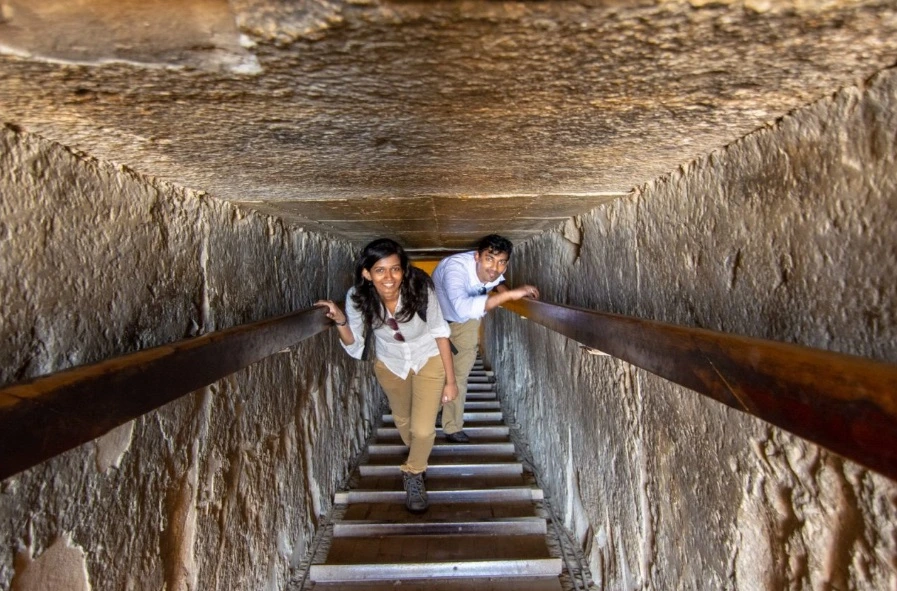
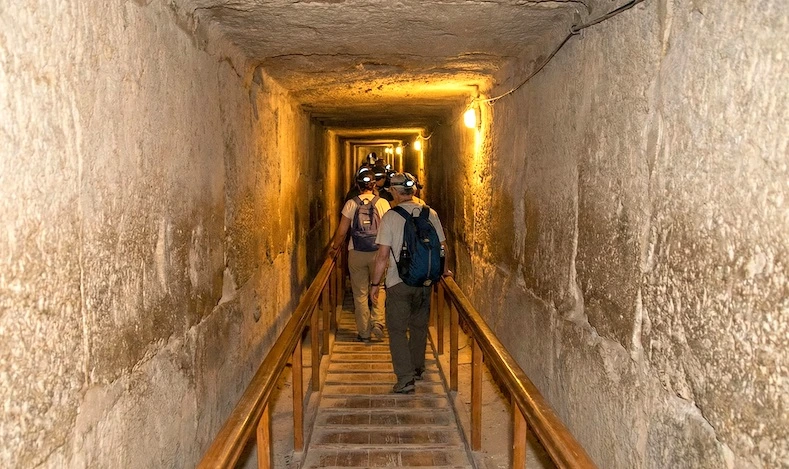
The first thing many travelers notice is that the interior is not spacious.
Several passages are narrow and require visitors to bend or climb.
If you are uncomfortable in confined spaces, you should consider whether entering is right for you.
Climbing
Some parts require physical effort.
You may need to climb inclined passageways and use steps or wooden walkways.
The experience is not suitable for everyone, particularly travelers with significant mobility difficulties.
Heat and Humidity
The interior can feel warm and enclosed, particularly when many visitors are inside.
The temperature can feel noticeably different from the open desert outside.
Take your time and avoid rushing.
Darkness
The interiors are much darker than the outside environment.
Artificial lighting helps visitors navigate, but the atmosphere remains dim.
This adds to the feeling of entering an ancient structure rather than a modern attraction.
Limited Decorative Material
Visitors expecting painted walls may be surprised.
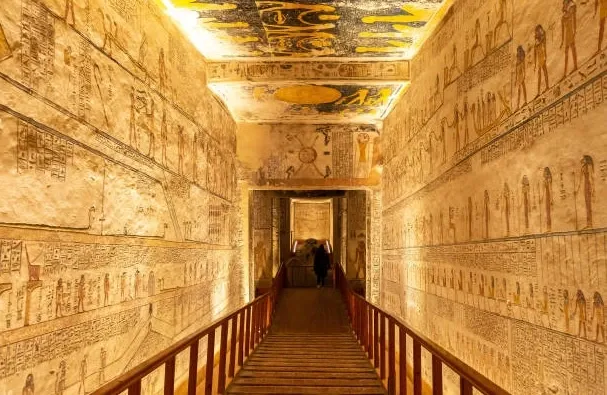
Unlike many New Kingdom tombs in the Valley of the Kings, the main chambers of the Great Pyramid are relatively undecorated.
The architecture itself is the attraction.
Crowds Inside the Pyramids
The Giza Plateau is one of Egypt's most visited archaeological sites, so crowds are normal.
The number of people inside a pyramid can vary considerably.
Peak travel periods, organized tour groups, and popular morning hours can result in busier conditions.
If you want a quieter experience, arriving early can help.
Inside the pyramid, crowds can feel more noticeable because the passageways are narrow.
Even a moderate number of visitors can make a corridor feel busy.
Distances and Getting Around Giza
The Giza Plateau is extensive.
Although the pyramids appear close together from many viewpoints, walking between them can take longer than expected, particularly in hot weather.
The Great Pyramid stands at the heart of the plateau, while Khafre and Menkaure are positioned nearby.
The Great Sphinx is also part of the broader archaeological landscape.
A private vehicle can be useful when exploring the plateau, particularly for travelers who want to conserve energy for walking and entering the pyramids.
Weather and Visiting Conditions
Giza has a hot desert climate.
During summer, daytime temperatures can become very high.
Walking around the plateau under strong sunlight can be tiring, especially when combined with climbing inside a pyramid.
The cooler season is generally more comfortable.
October through April is often preferred by travelers for sightseeing, although conditions can still vary.
During summer, consider scheduling your pyramid visit early in the day.
Practical Travel Tips Before Going Inside a Pyramid
1. Wear Comfortable Shoes
The interior involves climbing and walking over uneven or inclined surfaces.
Comfortable shoes are essential.
2. Avoid Large Bags
Large bags can be difficult to carry through narrow passages.
Travel as lightly as possible.
3. Carry Water
Keep hydrated during your Giza visit, especially during hot weather.
However, follow the site's rules regarding what can be taken inside the monument.
4. Be Prepared to Bend
Some passages are low.
Do not assume you will be able to walk upright throughout the entire experience.
5. Take Your Time
There is no advantage to rushing through the interior.
Move slowly, especially on steep sections.
6. Consider Your Comfort Level
If you are uncomfortable in narrow or enclosed spaces, the exterior experience may be more enjoyable.
You can still appreciate the engineering and history without entering.
7. Book the Correct Ticket
The standard Giza Plateau admission does not automatically include entry inside the individual pyramids.
The Ministry of Tourism and Antiquities lists the interior tickets separately.
Make sure your tour or ticket arrangement clearly states whether pyramid entry is included.
Is Going Inside the Great Pyramid Worth It?
That depends on what you want from your visit.
If you are fascinated by ancient engineering and want to physically experience one of the world's most famous monuments from the inside, the experience can be extremely memorable.
If you prefer open spaces, elaborate artwork, and decorated ancient interiors, you may find the pyramid interior less visually impressive than the tombs in the Valley of the Kings.
The Great Pyramid is about scale, engineering, atmosphere, and mystery.
The Valley of the Kings is more about decorated chambers and religious imagery.
Both experiences are very different.
Inside a Pyramid vs. Inside an Ancient Egyptian Tomb
Understanding this difference can improve your expectations.
Pyramids
The interiors are generally characterized by:
- Stone corridors
- Chambers
- Massive masonry
- Engineering features
- Relatively plain surfaces
- Dark and enclosed spaces
New Kingdom Tombs
Many tombs in the Valley of the Kings feature:
- Painted walls
- Hieroglyphic texts
- Religious scenes
- Colorful figures
- Elaborate burial decoration
For travelers who have time, visiting both provides a much fuller understanding of Egyptian funerary architecture.
Real Insights From Travelers
One of our travelers mentioned that the most surprising part of entering the Great Pyramid was how different the interior felt from the enormous exterior. The narrow passages made the monument feel much more personal and mysterious.
Visitors often say that they expected to find a decorated burial chamber but were surprised by the simplicity of the spaces.
Another common reaction is that the climb itself becomes part of the memory.
You are not simply looking at an archaeological object behind a barrier. You are physically moving through an ancient architectural structure.
That makes the experience very different from viewing the pyramids from outside.
How to Include Pyramid Interiors in Your Egypt Itinerary
A well-planned Giza day can combine several experiences.
Morning: Giza Plateau
Begin early with the three pyramids.
Explore the exterior areas and viewpoints before the strongest heat of the day.
Mid-Morning: Enter a Pyramid
If you have purchased the appropriate ticket, enter the Great Pyramid or another pyramid that is open for interior visits.
Allow enough time to climb and explore without rushing.
Late Morning: Great Sphinx
Continue toward the Great Sphinx and its surrounding temple area.
Lunch
Take a break at a nearby restaurant or return to your hotel.
Afternoon: Additional Giza Experiences
Depending on your interests and schedule, you can visit additional tombs or archaeological areas.
The official Giza Plateau information notes that the pyramid complexes include numerous additional monuments beyond the three main pyramids, including subsidiary pyramids, mastabas, temples, and boat-related features.
Frequently Asked Questions
Can you go inside the Pyramids of Giza?
Yes. Interior access is available for certain pyramids, subject to current opening arrangements, tickets, conservation requirements, and visitor regulations.
What can you see inside the Great Pyramid?
Visitors can see passages, the Grand Gallery, the King’s Chamber, the granite sarcophagus, the Queen’s Chamber, and other internal architectural spaces. The Ministry of Tourism and Antiquities confirms that the Great Pyramid contains three principal chambers.
Is there a mummy inside the Great Pyramid?
Visitors should not expect to see Khufu's mummy inside the Great Pyramid. The famous sarcophagus remains in the King’s Chamber, but the original burial remains are not preserved there for visitors to view.
Are there treasures inside the pyramids?
No. The pyramids do not contain the treasure-filled chambers many popular stories suggest. The experience today focuses on the architecture and surviving internal spaces.
Is entering the Great Pyramid difficult?
Some passages are narrow, steep, and physically demanding. Visitors may need to bend, climb, and move through confined spaces.
How long does it take to go inside the Great Pyramid?
A typical interior visit can take around 30 to 60 minutes, although the actual duration depends on crowd levels, walking pace, and how much time you spend in the chambers.
How much does it cost to enter the Great Pyramid?
Current official information lists the Great Pyramid interior ticket for foreign adults at EGP 1,000 and foreign students at EGP 500, in addition to the Giza Plateau entrance ticket.
Does the Giza Plateau ticket include pyramid interiors?
No. The official Giza Plateau information states that the area ticket does not include the Great Pyramid, Khafre, Menkaure, and several other separately ticketed monuments.
Can children enter the pyramids?
Access rules can vary, and the physical demands of the interior should be considered carefully. Families should check the current rules and consider whether narrow passages and climbing are appropriate for their children.
Is the Great Pyramid interior claustrophobic?
It can feel confined because several passages are narrow and enclosed. Travelers who are uncomfortable in tight spaces may prefer to explore the pyramid from outside.
Can I take photos inside?
Photography rules can change and may differ by location. Follow the current instructions given by site staff and avoid using flash where prohibited.
What should I wear when entering a pyramid?
Wear comfortable shoes and lightweight clothing. Avoid anything that makes climbing or bending difficult.
Which pyramid should I enter?
The choice depends on which interiors are open, ticket availability, and your personal interests. The Great Pyramid offers the most famous interior experience, including the Grand Gallery and King’s Chamber.
Final Thoughts: The Real Experience Inside the Pyramids
The greatest surprise about going inside the pyramids is often what you do not see.
There are no treasure-filled rooms waiting behind a hidden door. Instead, you encounter enormous stone blocks, narrow corridors, ancient chambers, steep passages, and engineering solutions created thousands of years ago.
Inside the Great Pyramid, the Grand Gallery and King’s Chamber demonstrate an extraordinary level of architectural planning. The smaller chambers and passages reveal another side of the monument, while the Pyramid of Khafre and Pyramid of Menkaure offer different interior experiences.
The experience is physical as well as historical.
You climb.
You bend.
You walk through darkness.
You stand inside chambers built thousands of years ago.
And for a few moments, the enormous pyramid that you have seen in photographs becomes something you are actually experiencing from within.
If you want to explore the Pyramids of Giza with a carefully planned itinerary, professional Egyptologist guidance, private transportation, and time to experience the monuments beyond the usual viewpoints, Flying Carpet Tours can arrange your Egypt journey around your interests.
Discover the pyramids from the outside, step inside their ancient passages, visit the Great Sphinx, and experience the remarkable history of Giza with Egypt Classic Tours with Flying Carpet Tours