
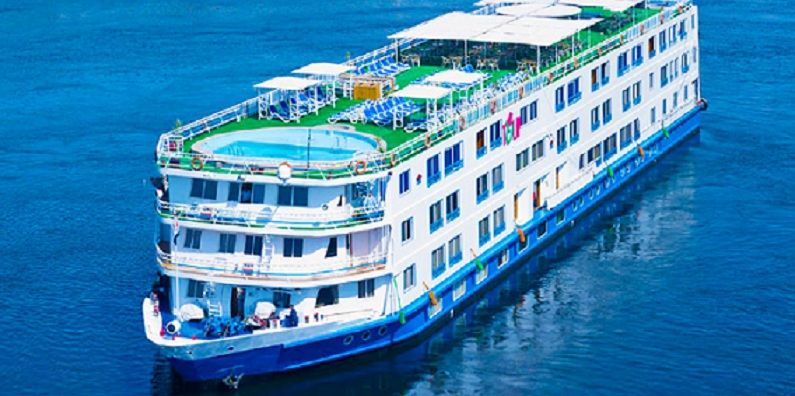
Egypt Nile Cruise: A Complete Guide to Cruising the Nile River
“I thought the pyramids would be the highlight of my Egypt trip, but watching the sunset from the deck of our Nile cruise completely changed my mind. Every morning brought a new temple, and every evening we sailed past peaceful villages and golden desert landscapes. It felt like history was moving with us.”
This is the kind of experience travelers often describe after taking an Egypt Nile cruise. Instead of staying in one city and traveling long distances by road every day, a Nile cruise allows you to wake up somewhere new while your floating hotel carries you through one of the world's most historic landscapes.
An Egypt Nile cruise is a multi-day river journey, most commonly between Luxor and Aswan, connecting some of the country's most famous ancient monuments. Along the route, travelers can discover magnificent temples, ancient tombs, colorful reliefs, Nubian landscapes, and traditional riverside life.
For many visitors, cruising the Nile is one of the best ways to experience Egypt because it combines sightseeing, relaxation, history, and beautiful scenery in one journey.
What Is an Egypt Nile Cruise?
An Egypt Nile cruise is a sightseeing vacation aboard a cruise ship sailing along the Nile River between Luxor and Aswan. Most itineraries last between three and seven nights, depending on the route and whether additional days in Cairo, Luxor, or Aswan are included.
The most popular cruise route is Luxor to Aswan, although cruises can also operate from Aswan to Luxor. Along the way, ships typically stop at important archaeological sites such as Karnak Temple, Luxor Temple, Edfu Temple, Kom Ombo Temple, and Philae Temple.
The cruise provides accommodation, meals, entertainment, and organized sightseeing while traveling between destinations.
Instead of packing and unpacking at every hotel, you can settle into your cabin and let the Nile become part of the journey.
That is what makes an Egypt Nile cruise so appealing.
Quick Facts About Egypt Nile Cruises
Before booking your cruise, it helps to understand the basics.
Location
Most Nile cruises operate between Luxor and Aswan in southern Egypt. The route follows the Nile Valley and includes some of the country's most important ancient sites.
Typical Duration
Standard Nile cruises usually last 3 to 7 nights, depending on the ship and itinerary. A common option is a four-night cruise from Luxor to Aswan or a three-night cruise from Aswan to Luxor.
Cruise Prices
Prices vary depending on the ship category, cabin type, season, itinerary, and inclusions. Budget, standard, deluxe, and luxury Nile cruises are available. As a general planning guide, travelers may find standard cruises starting from several hundred US dollars per person, while premium and luxury cruises can cost significantly more.
Always request a current quotation because cruise prices can change according to travel dates, availability, and ship category.
Opening Hours
A Nile cruise does not have traditional opening hours. The ship operates according to its sailing schedule, while individual temples and archaeological sites have their own visiting hours.
Best Time to Take a Nile Cruise
The best period for a Nile cruise is generally from October through April, when temperatures are more comfortable for sightseeing.
The summer months can be very hot in Luxor and Aswan, although cruises continue operating during this period.
Main Attractions
A typical itinerary may include:
- Luxor Temple
- Karnak Temple
- Valley of the Kings
- Temple of Hatshepsut
- Colossi of Memnon
- Edfu Temple
- Kom Ombo Temple
- Philae Temple
- Aswan High Dam
- Unfinished Obelisk
The exact attractions depend on your itinerary.
A Brief History of Nile Cruising
Travel along the Nile has existed for thousands of years.
Ancient Egyptians relied heavily on the river for transportation, agriculture, trade, and communication. Boats carried people, goods, building materials, and even enormous stone blocks used to construct temples and monuments.
Modern Nile tourism developed much later.
During the nineteenth and early twentieth centuries, traveling along the Nile became increasingly popular among European travelers and explorers. Luxury river journeys eventually became an important part of Egypt's tourism industry.
Today, modern cruise ships combine comfortable accommodation with guided visits to some of the world's most famous archaeological treasures.
Although the experience is modern, the route itself follows the same river that connected ancient Egyptian cities and temples for thousands of years.
What to Expect on an Egypt Nile Cruise
Comfortable Accommodation on the River
Modern Nile cruise ships are designed as floating hotels.
Most cabins include private bathrooms, air conditioning, beds, storage space, and windows or balconies depending on the ship category.
Higher-category ships may offer larger cabins, panoramic windows, private balconies, swimming pools, restaurants, lounges, fitness facilities, and entertainment areas.
One advantage is that you do not have to change hotels every day.
Your cabin travels with you.
Daily Sightseeing
Most cruise programs combine sailing with organized excursions.
You may begin the morning visiting an ancient temple, return to the ship for lunch, and spend the afternoon relaxing on deck as the ship continues sailing.
This rhythm creates a comfortable balance between sightseeing and relaxation.
A typical day might include an early morning excursion, breakfast onboard, a guided temple visit, lunch, sailing, and an evening activity.
Some travelers enjoy this structure because it allows them to see several major attractions without constantly organizing transportation themselves.
The Highlights of an Egypt Nile Cruise
Luxor Temple
Luxor Temple is located on the east bank of the Nile and is one of the most impressive monuments in modern Luxor.
The temple was associated with several ancient Egyptian rulers and was expanded over different periods. Its monumental entrance, massive columns, statues, and ancient inscriptions provide an impressive introduction to the history of the Nile Valley.
Visiting Luxor Temple in the evening can be particularly memorable because the monument is beautifully illuminated.
Karnak Temple
Karnak is one of the largest temple complexes in Egypt.
Rather than being a single temple, Karnak developed over many centuries and contains enormous halls, columns, obelisks, statues, and sacred spaces.
The Great Hypostyle Hall is one of its most famous features, containing rows of enormous columns decorated with inscriptions and reliefs.
A knowledgeable Egyptologist can help explain how different pharaohs contributed to the development of the complex.
Valley of the Kings
The Valley of the Kings is located on Luxor's west bank and served as a burial ground for numerous New Kingdom rulers.
The valley contains dozens of tombs, many decorated with colorful scenes from ancient Egyptian religious texts.
The tomb of Tutankhamun is the most famous, although several other tombs are considered outstanding examples of ancient Egyptian funerary art.
Visitors should note that not every tomb is open at the same time, and special tickets may be required for certain tombs.
Temple of Hatshepsut
The Mortuary Temple of Hatshepsut is dramatically positioned beneath towering cliffs on Luxor's west bank.
Queen Hatshepsut was one of ancient Egypt's most famous female rulers, and her temple reflects her political power and connection to the gods.
Its terraces, columns, reliefs, and mountain setting make it one of the most photogenic stops on a Nile itinerary.
Colossi of Memnon
The Colossi of Memnon are two enormous stone statues standing on Luxor's west bank.
Although the surrounding temple complex has largely disappeared, the statues remain impressive reminders of ancient royal architecture.
The site is generally a short stop during west-bank sightseeing and is easy to combine with the Valley of the Kings and Hatshepsut Temple.
Edfu Temple
One of the great advantages of a Nile cruise is the opportunity to visit Edfu Temple.
Dedicated primarily to the falcon-headed god Horus, the temple is remarkably well preserved.
Its huge pylons, courtyard, columns, reliefs, and sanctuary offer visitors a clear impression of how ancient Egyptian temples looked.
Travelers commonly visit Edfu by organized excursion from the cruise ship.
Depending on the itinerary, transportation may be arranged using local vehicles because cruise ships cannot always dock directly beside the temple entrance.
Kom Ombo Temple
Kom Ombo is another fascinating stop.
The temple is unusual because it is dedicated to two groups of deities, including Sobek, the crocodile god, and Horus the Elder.
The temple's location beside the Nile provides beautiful views and excellent photography opportunities.
A small museum near the temple displays mummified crocodiles, offering another glimpse into the religious traditions associated with the site.
Philae Temple
Near Aswan, visitors can explore the beautiful Temple of Philae.
The temple complex was relocated to Agilkia Island as part of the effort to protect it from rising water after the construction of the Aswan High Dam.
Visitors reach the temple by boat, adding another memorable element to the experience.
The combination of ancient architecture, island scenery, and surrounding water makes Philae one of the most atmospheric attractions in southern Egypt.
Aswan
Aswan is usually the final destination on a Luxor-to-Aswan cruise.
The city has a different atmosphere from Luxor.
It is surrounded by water, desert, islands, and Nubian communities, creating a more relaxed environment.
Depending on your itinerary, you may visit the Aswan High Dam, Unfinished Obelisk, Philae Temple, and a Nubian village.
Many travelers choose to add extra nights in Aswan after their cruise because there is plenty to explore.
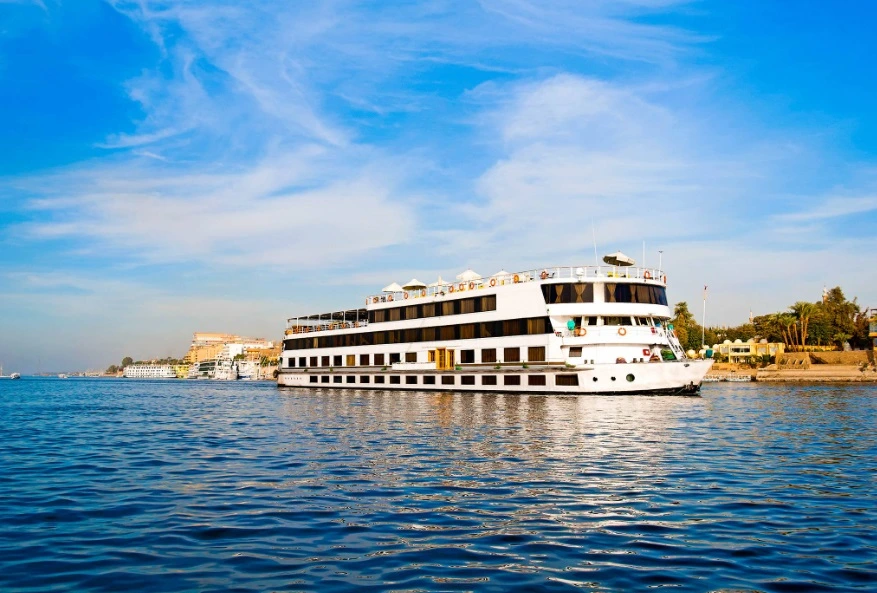
Experience the Nile Cruise adventure through our Egypt Nile Cruise packages and discover Egypt’s ancient treasures and unforgettable landscapes in 2026.
Crowds and Atmosphere
One of the biggest advantages of taking a Nile cruise is that sightseeing is organized around the cruise schedule.
However, popular attractions such as Karnak, Valley of the Kings, Edfu, and Kom Ombo can become busy, particularly during peak travel periods.
Early morning visits are often more comfortable because temperatures are lower and crowds can sometimes be lighter.
The cruise itself is generally peaceful.
During sailing periods, you can sit on the upper deck, read a book, enjoy a drink, or watch villages, palm trees, fields, and desert landscapes pass by.
Distances and Sailing Times
The distance between Luxor and Aswan is approximately 230 kilometers by river, although the actual sailing distance and duration depend on the route and docking schedule.
Cruises do not spend every hour sailing.
Ships may remain docked while passengers visit nearby attractions and then continue sailing later.
This means the daily experience is not simply about covering distance. The cruise is designed around sightseeing.
Weather During a Nile Cruise
Southern Egypt has a dry desert climate.
Winter is generally pleasant during the day but can become cool in the early morning and evening.
Spring and autumn offer warm conditions, although temperatures can rise significantly during the afternoon.
Summer is the hottest period, with temperatures in Luxor and Aswan frequently becoming extremely high.
If you are visiting during summer, plan outdoor sightseeing for early morning whenever possible and stay hydrated.
Practical Travel Tips
Choose Your Ship Carefully
Not all Nile cruise ships offer the same level of comfort.
Before booking, check:
- Ship category
- Cabin size
- Cabin location
- Balcony availability
- Restaurant facilities
- Swimming pool
- Onboard entertainment
- Guest reviews
- Cruise itinerary
- Included excursions
A higher-category ship can make a significant difference to your overall experience.
Consider Your Cabin Location
If you are sensitive to noise, ask for a cabin away from the engine room, nightclub, or other areas with evening activity.
Higher decks may provide better views, but lower-deck cabins can sometimes be more affordable.
Your tour operator can help you select a suitable cabin according to your priorities.
Pack Comfortable Shoes
You will spend plenty of time walking around ancient temples and archaeological sites.
Comfortable walking shoes are essential.
Some archaeological areas have uneven surfaces, stone steps, or sandy paths.
Bring Sun Protection
The southern Egyptian sun can be strong.
Pack:
- Sunscreen
- Sunglasses
- Hat
- Lightweight clothing
- Comfortable shoes
- Reusable water bottle
- Light jacket for winter evenings
Carry Small Cash
Although many expenses can be paid electronically, it is useful to carry some Egyptian pounds for small purchases, tips, drinks, souvenirs, and local experiences.
Listen to Your Guide
The monuments along the Nile contain thousands of years of history.
A professional Egyptologist can explain the meaning behind the inscriptions, statues, gods, ceremonies, and architectural features.
Without a guide, it is easy to admire the buildings without understanding the stories behind them.
Real Traveler Insights
One of our travelers mentioned that the best part of the cruise was the feeling of having "a hotel that moves with you."
Instead of spending hours checking out, loading luggage, driving to another city, and checking into another hotel, they could simply return to their cabin after each excursion.
Visitors often say that the sunset sailing experience becomes one of the most memorable parts of the trip.
Another traveler mentioned that they initially booked the cruise because of the temples but ended up enjoying the peaceful hours between excursions just as much.
That is an important part of understanding the Nile cruise experience.
It is not only about where the ship stops.
It is also about the journey between the stops.
Egypt Nile Cruise vs. Land Tour
Some travelers wonder whether they should take a cruise or explore Luxor and Aswan entirely by land.
A land tour provides greater flexibility.
You can spend multiple nights in one city, visit attractions at your own pace, and choose restaurants and hotels independently.
A Nile cruise, however, offers convenience.
Accommodation, transportation, meals, and sightseeing can all be combined into one experience.
For first-time visitors who want to see the major temples between Luxor and Aswan, the cruise is particularly convenient.
For repeat visitors who prefer slow travel and independent exploration, a land-based itinerary may be more suitable.
Another excellent option is to combine both.
Spend time in Cairo, explore Luxor, take a Nile cruise to Aswan, and then continue with additional days in Aswan or Abu Simbel.
Who Should Take an Egypt Nile Cruise?
A Nile cruise can suit many types of travelers.
History Lovers
If ancient civilizations fascinate you, the cruise route provides access to some of Egypt's most important monuments.
Couples
The combination of sunset views, comfortable accommodation, and historic sites makes the cruise popular with couples.
Families
Families can benefit from the convenience of having accommodation and transportation organized in one place.
First-Time Visitors
For first-time travelers to Egypt, a Nile cruise provides an easy way to see several major attractions without arranging every transfer independently.
Luxury Travelers
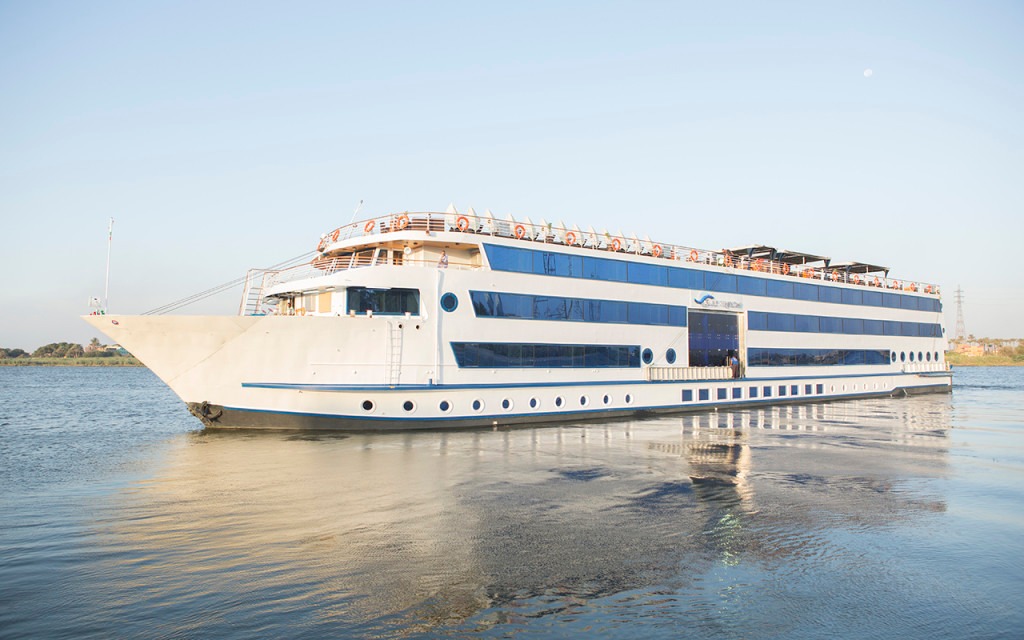
Luxury Nile ships offer spacious cabins, high-quality dining, swimming pools, lounges, and personalized service.
Frequently Asked Questions
How long should an Egypt Nile cruise be?
A three- or four-night cruise is enough to experience the main route between Aswan and Luxor. Longer cruises allow more time for additional sightseeing and relaxation.
Which is better, Luxor to Aswan or Aswan to Luxor?
Both directions offer essentially the same major attractions, but the number of nights and sailing schedule can differ. Your choice should depend on your wider Egypt itinerary.
Are meals included on a Nile cruise?
Most cruise packages include meals, often breakfast, lunch, and dinner. However, drinks and certain special dining options may cost extra. Always check the inclusions before booking.
Are drinks included?
Usually, soft drinks, bottled water, and alcoholic beverages are not automatically included in the standard cruise price. Policies vary by ship.
Is Wi-Fi available?
Many modern cruise ships offer Wi-Fi, but connection quality can vary while sailing through remote areas.
Is a Nile cruise safe?
Nile cruises are a well-established part of Egypt's tourism industry. As with any organized trip, travelers should follow their guide's instructions and normal travel safety precautions.
Can I visit Abu Simbel during a Nile cruise?
Abu Simbel is not included in every standard Nile cruise itinerary. It is commonly added as an excursion from Aswan by road or air, or combined with a separate Lake Nasser cruise.
Can I take a Nile cruise with children?
Yes. Families regularly take Nile cruises. However, consider the heat, walking distances, and early morning excursions when planning a family itinerary.
What should I wear?
Light, breathable clothing is ideal during warm weather. Comfortable shoes are important for sightseeing. When visiting temples and religious sites, modest clothing is recommended.
Is tipping expected on a Nile cruise?
Tipping is customary in Egypt for guides, drivers, cruise staff, and other service providers. Your tour operator can explain the recommended tipping arrangements for your specific cruise.
Why an Egypt Nile Cruise Should Be on Your Travel List
An Egypt Nile cruise brings together many of the experiences travelers come to Egypt to discover.
You can stand beneath the enormous columns of Karnak, explore the tombs of ancient pharaohs, admire the well-preserved Temple of Edfu, watch the Nile flow past palm-covered riverbanks, and end your journey surrounded by the beautiful landscapes of Aswan.
What makes the experience special is the balance.
You are exploring ancient history during the day and relaxing onboard in between.
You are traveling through one of the world's most historic landscapes without constantly changing hotels.
And every sailing day gives you another opportunity to watch Egypt from the water.
Whether you choose a standard cruise or a luxury experience, the Nile remains the centerpiece of the journey.
Plan Your Egypt Nile Cruise
An Egypt Nile cruise is one of the most memorable ways to discover the ancient wonders of southern Egypt. From the temples of Luxor to the peaceful waters of Aswan, every day offers a new landscape, story, and archaeological treasure.
If you are ready to experience the Nile for yourself, Flying Carpet Tours can help you plan the right cruise and combine it with Cairo, Luxor, Aswan, Abu Simbel, Hurghada, or other destinations across Egypt.
Visit our website today and start planning your unforgettable Egypt Nile cruise with Flying Carpet Tours.